Pomegra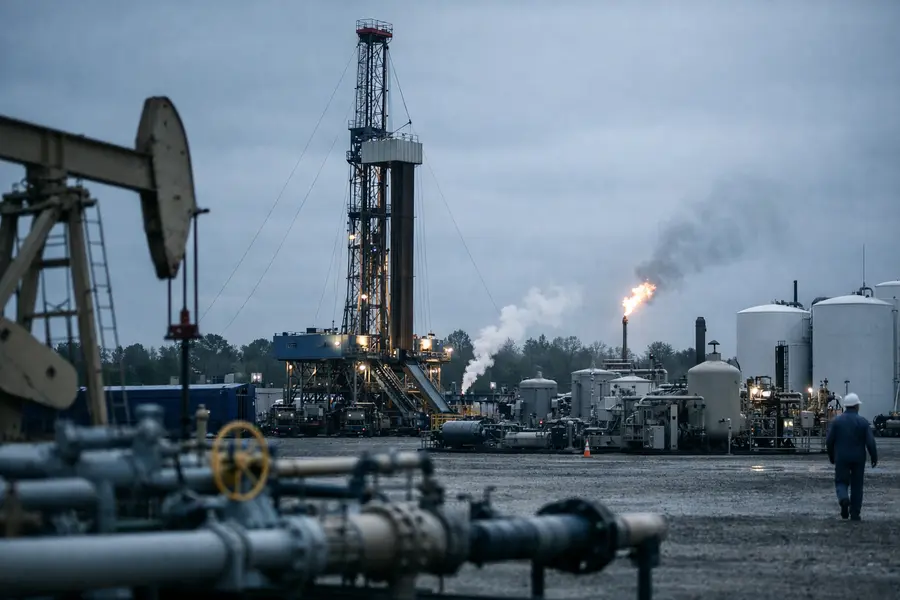
Gulfport Energy fell 4.3% on September 25 as Jefferies cut its rating to Hold and price target to $180, adding to J.P. Morgan's September Underweight call on near-term natural gas headwinds.
- Jefferies downgraded GPOR from Buy to Hold, cutting its price target to $180 from $239, citing natural gas price softness and a warmer winter outlook.
- J.P. Morgan double-downgraded GPOR from Overweight to Underweight on September 8, reducing its target to $194 from $240 over macro pessimism on near-term gas fundamentals.
- GPOR closed at $154.62, down 4.3%, with the Wall Street consensus price target standing at $210.50, implying more than 36% upside from the post-downgrade close.
Lead
Gulfport Energy Corp. (NYSE: GPOR) fell 4.3% on Thursday, September 25, 2026, closing at $154.62 after Jefferies downgraded the Appalachian Basin natural gas producer from Buy to Hold and cut its price target 25% to $180 from $239. The move compounded a September 8 double-downgrade from J.P. Morgan, which shifted GPOR from Overweight to Underweight in a single step - bypassing a Neutral rung entirely - while reducing its own price objective to $194 from $240. The back-to-back institutional reversals within a 17-day window concentrated selling pressure on the stock, which gapped open at $156.41 against a prior close of $161.91 before extending losses through the session.Why Did Jefferies Downgrade Gulfport Energy?
Jefferies downgraded GPOR because converging near-term pressures on natural gas pricing eroded the bullish case that had supported its Buy rating. The firm pointed specifically to natural gas price softness driven by growth in associated gas production - output that emerges as a byproduct of oil drilling and adds to supply regardless of gas-directed rig counts - and to an above-normal temperature outlook from the National Oceanic and Atmospheric Administration that dims heating demand prospects heading into winter. Because Gulfport Energy derives substantially all of its revenue from natural gas production across the Utica and Marcellus shale plays in eastern Ohio and the Appalachian Basin, any deterioration in Henry Hub spot prices flows directly into cash margins. Jefferies also cited elevated leverage stemming from recent acreage acquisitions as a secondary concern, flagging that recent capital outlays have reduced the financial cushion that underpinned its prior bullish stance.
What Did J.P. Morgan Say About GPOR?
J.P. Morgan framed its September 8 move as a macro call on near-term natural gas fundamentals rather than a company-specific critique. The bank double-downgraded GPOR from Overweight to Underweight, bypassing the intermediate Neutral rating - a move that is relatively rare in institutional equity research and signals high-conviction directional positioning. The firm's price target fell to $194 from $240, a 19% reduction, with elevated leverage from recent acreage purchases identified as an amplifying risk should spot prices disappoint. The double-downgrade structure offers no intermediate warning: from Overweight, investors were taken directly to the bank's most cautious available rating without the softening stage of a Hold.
Natural Gas Market Context
The dual downgrade reflects genuine softening in natural gas market conditions heading into the fourth quarter. The U.S. Energy Information Administration projects Henry Hub spot prices to average approximately $3.76 to $3.80 per MMBtu for full-year 2026, modestly above the $3.53 average of 2025 but well below the levels that would justify an aggressive capital deployment posture at an operator of Gulfport's scale. Associated gas supply has kept storage inventories ample through the shoulder season, and warmer-than-normal early winter temperatures would delay the storage draws that typically firm near-term pricing. NOAA's eight-to-fourteen-day outlook shows above-normal temperatures across most of the continental United States, the precise scenario both Jefferies and J.P. Morgan cited as a headwind.
Company Fundamentals
Despite the sell-off, Gulfport Energy's operating metrics remain intact. The company reported third-quarter earnings per share of $4.85 against a consensus estimate of $3.82, a 27% beat, on quarterly revenue of $323.23 million. Net margin stands at 32.28% and return on equity at 21.87%, reflecting the company's operational efficiency since emerging from Chapter 11 bankruptcy in 2021. GPOR trades at a price-to-earnings ratio of 6.24 times with a market capitalization of approximately $2.75 billion, below the broader energy sector average on both measures. CEO Domenic Dell'Osso purchased 1,600 shares at an average price of $160.61 on August 7, a vote of management confidence that preceded both institutional downgrades.