Pomegra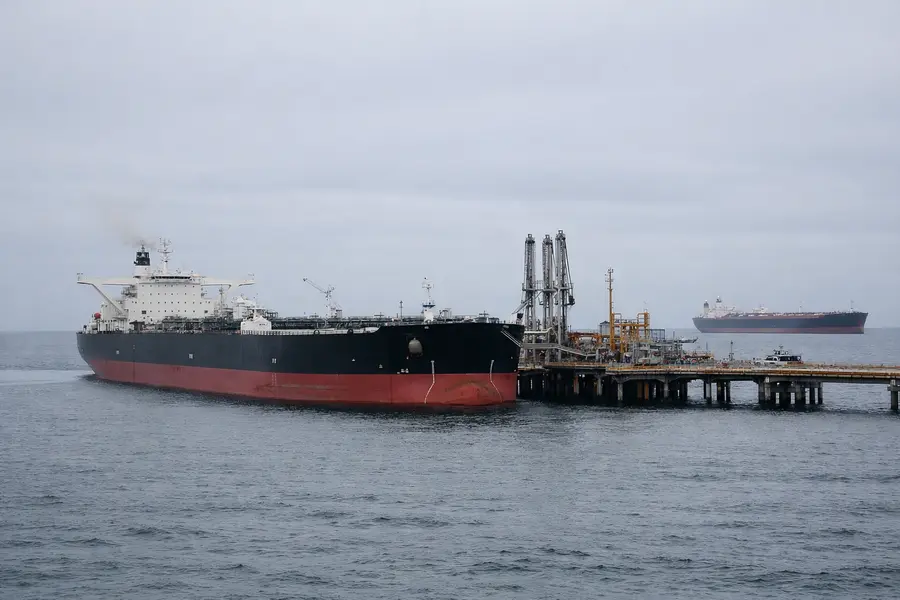
DHT Holdings stock climbed 18% in September as VLCC tanker spot rates breached $1 million per day, driven by Iran-conflict disruptions shutting down Strait of Hormuz crude flows.
- DHT Holdings (DHT) gained approximately 18% in September 2026, one of the strongest monthly moves in the stock's recent history.
- VLCC tanker spot rates breached $1 million per day as the Iran conflict effectively paralyzed Strait of Hormuz traffic and rerouted Persian Gulf crude flows globally.
- DHT locked in a 3-year time charter for the DHT Panther at $100,000 per day with a global energy major, securing contracted revenue well above historical VLCC time charter norms.
Lead
DHT Holdings (DHT) shares surged approximately 18% in September 2026 as very large crude carrier spot rates breached an unprecedented $1 million per day - a rate environment generated by the near-shutdown of Strait of Hormuz traffic following an escalation in the Iran conflict that has severely disrupted Persian Gulf crude flows. The Oslo-based crude tanker operator simultaneously announced a 3-year time charter for the DHT Panther at $100,000 per day with a global energy major, converting the historic rate spike into durable contracted cash flows at rates well above the long-run VLCC average.What Drove VLCC Tanker Spot Rates to Record Highs?
The near-paralysis of Strait of Hormuz traffic - through which roughly 20% of global crude oil and condensate flows - eliminated the most direct routing option for Persian Gulf crude exports. The Iran conflict has forced tankers onto significantly longer alternative routes, including the Cape of Good Hope and the Suez Canal corridor, sharply increasing voyage distances and absorbing VLCC capacity at an accelerated rate. Spot rates for VLCCs, which typically range between $30,000 and $70,000 per day in normalized market conditions, breached $1 million per day during the most acute phase of the disruption - a level without precedent in the modern crude tanker market. Cargo buyers in Asia and Europe, cut off from efficient Persian Gulf routing, have simultaneously competed for available Atlantic Basin and West African crude, further extending average haul distances and tightening effective fleet supply.
Why Did DHT Holdings Stock Jump So Sharply?
The 18% gain in DHT shares reflects a rapid repricing of the company's near-term earnings capacity. DHT operates an all-VLCC fleet, meaning the company carries maximum leverage to rate movements in that specific vessel class with no exposure to smaller segments that dilute the rate sensitivity. Investors recalibrated charter income forecasts upward for uncontracted vessels exposed to spot market rates at historic extremes. The DHT Panther 3-year charter announcement reinforced confidence that management is systematically converting the rate environment into long-term contracted revenue - insulating a portion of fleet cash flows even if spot rates normalize once the geopolitical situation stabilizes.
The DHT Panther Charter: Locking In the Cycle
The 3-year time charter at $100,000 per day with a global energy major sits well above the long-run average VLCC time charter rate and reflects the willingness of major crude buyers to pay a sustained premium for guaranteed lift capacity amid Hormuz uncertainty. While the fixed rate falls far below current extraordinary spot levels, the charter provides predictable cash generation and balance sheet visibility across a full three-year horizon. Energy majors sourcing crude from outside the Persian Gulf have demonstrated urgency in securing tonnage under long-term arrangements, strengthening DHT's contracting leverage across its broader fleet during the rate spike window.
Geopolitical Dimension: Iran Conflict and the Hormuz Chokepoint
The disruption to Persian Gulf crude flows originates from the armed conflict involving Iran, which has effectively closed - or severely restricted - the Strait of Hormuz, the narrow waterway between Iran and Oman that serves as the critical export corridor for Saudi Arabia, Iraq, Kuwait, the UAE, and Iran itself. The conflict-driven rerouting has compelled the largest crude-importing nations to source volumes from alternative origins, simultaneously increasing voyage lengths and volume competition across all deep-water tanker classes. The geopolitical dynamic has compressed the effective global VLCC supply available at any given time, creating the structural condition for the rate environment DHT is currently capitalizing on.
What Comes Next for Crude Tanker Markets?
The trajectory of VLCC tanker spot rates remains directly tied to the duration and intensity of the Iran conflict and the pace at which Strait of Hormuz traffic is restored. A sustained closure or even partial restriction maintains the underlying conditions for historically elevated freight rates. A rapid diplomatic resolution would compress spot rates sharply, though DHT's newly secured DHT Panther charter and any additional multi-year contracts executed during the spike would preserve a floor of contracted income. DHT's all-VLCC composition keeps it among the most direct publicly traded proxies for Persian Gulf supply chain disruption.
Outlook
DHT Holdings enters the final quarter of 2026 with significant earnings momentum driven by the Iran conflict's impact on Persian Gulf crude flows and the resulting VLCC spot rate environment. The DHT Panther charter at $100,000 per day anchors above-normal contracted income for three years, while the remainder of the fleet retains exposure to a spot market operating at extraordinary levels. The resolution or continuation of Strait of Hormuz disruptions remains the single most consequential variable for DHT's near-term stock performance and fleet-wide charter income trajectory.