Pomegra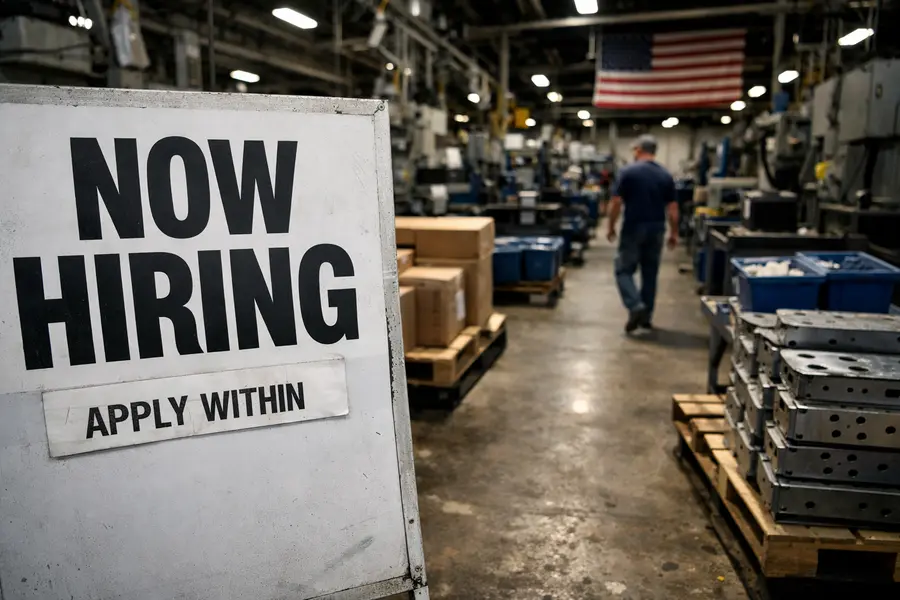
August JOLTS topped 7.23M consensus, amplifying fears of a Warsh Fed rate hike as 10-year Treasury yields hit 19-year highs and Brent crude holds above $105.
- August job openings rose to 7.227M, clearing the 7.110M consensus estimate and edging above July's revised 7.208M reading.
- Fed Chair Warsh already raised rates to 3.75%-4.00% in September; 16 of 19 FOMC members now project at least one further 2026 hike.
- The 10-year yield at 5.24%, a 19-year peak, and Brent crude at $106.89 compound pressure on rate-sensitive equity sectors.
Lead
Fresh evidence of U.S. labor market resilience is confronting investors who had hoped the cycle of higher interest rates might be nearly complete. The Bureau of Labor Statistics on Tuesday reported August job openings at 7.227 million - exceeding the 7.110 million consensus and rising from a revised 7.208 million in July - as equity markets already navigated a fragile backdrop of a 19-year Treasury yield peak and Brent crude above $105 per barrel. The Conference Board's September consumer confidence index, forecast at 90.1 against August's actual 89.4, is due at 10 a.m. ET, making Tuesday's session a back-to-back stress test of the macro narrative heading into the final quarter of 2026.
Why Does a Hot JOLTS Print Shift the Rate Outlook?
A job openings beat signals that labor demand remains robust enough to sustain wage pressure - exactly the dynamic that Federal Reserve Chair Kevin Warsh cited when he led an unanimous FOMC vote in September to raise the federal funds rate by 25 basis points to 3.75%-4.00%, the first hike since 2023. Warsh's post-meeting statement identified three factors justifying the move: a strengthening economy, inflation that has not decelerated as expected, and intensifying geopolitical tensions. All three remain present in September's data environment, and futures markets were pricing the fed rate reaching approximately 4.20% by December - consistent with the September dot plot median of 4.00%-4.25%. Sixteen of 19 FOMC members penciled in at least one further hike this year, with the November meeting the most likely venue.
How Are Equity Markets Absorbing the Double Pressure?
S&P 500 E-Mini futures fell 0.49% in Tuesday's pre-market session and Nasdaq 100 E-Mini futures dropped 0.91%, extending a selloff that pushed SPY and QQQ lower in Monday's cash session when the S&P 500 declined 0.77% to 7,683.69 and the Nasdaq Composite slipped 0.92% to 26,820.38. Elevated yields compress the present value of future earnings, making high-multiple technology names - including AI infrastructure leaders such as NVDA - disproportionately vulnerable to each incremental tick upward in the 10-year rate. The benchmark yield stood at 5.24% at Tuesday's open, up roughly 109 basis points year-over-year, with strategists flagging 5.25% as a critical threshold above which equity valuations struggle to hold.
What Is Oil's Role in the Fed's Calculus?
Brent crude rose 2.46% on Monday to $106.89 per barrel, driven by geopolitical uncertainty in the Middle East that offset late-session relief after reports of potential U.S.-Iran diplomatic progress. West Texas Intermediate settled above $93. Energy costs feed directly into headline and core inflation measures, complicating the Fed's ability to declare price stability and stand down. The combination of triple-digit Brent prices and a 10-year Treasury yield advancing on a trajectory that analysts identify as capable of reaching 6% - driven by fiscal deficits, AI-driven bond issuance, and term premium normalization - creates what markets are pricing as the most restrictive borrowing environment since the mid-2000s.
What Would a Consumer Confidence Miss Signal?
September's Conference Board reading carries particular weight given August's 89.4 print already missed its 90.3 forecast. A second consecutive disappointment would indicate that consumers are beginning to feel the cumulative weight of higher loan costs, elevated gasoline prices, and global instability. Such an outcome would paradoxically offer bonds short-term relief - softening demand expectations could ease the argument for a November hike - though it would simultaneously raise recession risk. Conversely, a beat above the 90.1 consensus would validate the JOLTS narrative and likely accelerate the yield ascent and equity selloff already in motion. The two readings together will frame how aggressively the market reprices a November move in the days ahead.
Outlook
Tuesday's opening macro data refreshed the most uncomfortable scenario for equity markets: an economy showing no meaningful signs of slowing that gives the Warsh Fed both the cover and the motivation to tighten further. With the 10-year yield at 5.24% and Brent crude above $105, the cost-of-capital environment is settling into its most restrictive territory in nearly two decades. Rate-sensitive sectors - real estate, utilities, and long-duration technology - face sustained pressure unless labor market data softens materially or consumer confidence disappoints sharply enough to stall the Fed's hand at November's meeting. The balance of risks, as of Tuesday morning, tilts toward one more hike.