Pomegra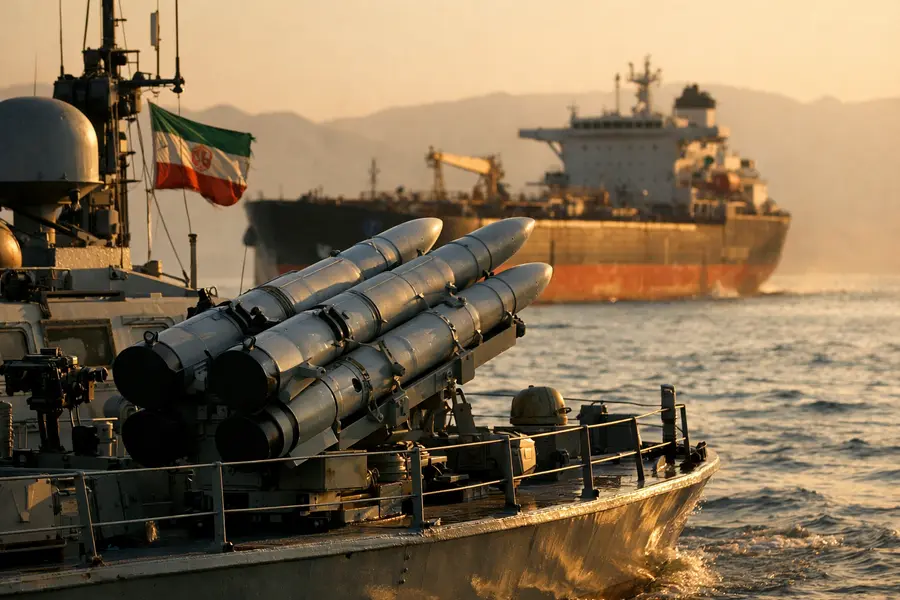
Tehran signals a shift to offensive posture over the Strait of Hormuz after U.S.-Iran talks deadline expires, sending Brent crude to $94 a barrel.
- Iran declared a shift from defensive to offensive posture over the Strait of Hormuz after a two-month diplomatic deadline expired Aug. 17.
- Trump threatened military strikes against Oman if Muscat obstructs Washington's efforts to negotiate Hormuz transit terms.
- Brent crude climbed to $94.24 on Aug. 21 as traders priced in diminishing prospects of a near-term Strait reopening.
Lead
Tehran announced a strategic shift from defensive to offensive operations over the Strait of Hormuz on Aug. 17, 2026, after a two-month window for U.S.-Iran peace negotiations expired without agreement, triggering a fresh surge in crude oil prices and raising the prospect of renewed attacks on commercial shipping in a waterway that once carried roughly one-fifth of the world's petroleum supply. The escalation followed President Donald Trump threatening military action against Oman - which has served as diplomatic intermediary throughout the conflict - if Muscat "gets in the way" of Washington's negotiations to reopen the strait.
Why Did Iran Shift to an Offensive Posture?
Iran's posture change follows months of stalled talks over the conditions under which Tehran would reopen the Strait of Hormuz, which it effectively closed when U.S. and Israeli military operations against Iran began in late February 2026. Senior Iranian officials have conditioned any reopening on a full cessation of hostilities, the withdrawal of U.S. forces from the region, and financial compensation - terms Washington has consistently rejected. With the Aug. 17 deadline passing without a framework, Iranian officials signaled that diplomatic tolerance had reached its limit and that Tehran would move from protecting its current positions to asserting greater direct control over the waterway.
Iran's Foreign Minister Abbas Araghchi described ongoing talks with Oman as "very close" to producing a management framework for the strait but stressed that a full reopening would not occur until U.S. demands were withdrawn. Oman's Foreign Ministry characterized the negotiations as "positive and constructive," while simultaneously warning that continuing attacks on commercial shipping could derail any accord.
How Did Oil Markets React?
Brent crude, the international benchmark, settled at $90.87 per barrel following Iran's offensive posture announcement - a gain of $2.35, or 2.65%, on the session. WTI settled at $84.50, up $2.10, or 2.55%. By Aug. 21, Brent had extended the rally to $94.24, its highest level since July, as energy traders priced in the diminishing probability of a near-term Strait resolution. Ultra-low sulfur diesel futures - a proxy for global transportation fuel costs - surged 3.60% to $4.4371 per gallon on the same session. Gold, tracked by the GLD exchange-traded fund, firmed alongside crude oil as institutional investors rotated into safe-haven assets.
The crude oil price surge compounds pressure on energy-importing economies already straining under supply disruptions that have persisted since commercial shipping through the Strait of Hormuz collapsed in late February. Alternative routing around the Cape of Good Hope has added weeks to delivery times and materially elevated freight costs across global supply chains.
What Is the Risk to Oman?
In remarks aired on Fox News, Trump warned the United States would use military force against Oman if Muscat interfered with Washington's direct negotiations with Tehran over Hormuz access. The threat represented a sharp break from longstanding U.S. diplomatic practice toward one of its most consistently reliable Gulf intermediaries. Senator Tim Kaine of Virginia announced plans to introduce a resolution barring unauthorized military action against Oman, reflecting immediate bipartisan concern in Congress over the threat's implications for regional stability.
Washington's core objection remains consistent: any transit framework that grants Iran effective control over Hormuz passage - including proposals to levy fees on vessels or require Iranian approval for entry - would hand Tehran a durable source of geopolitical leverage and revenue that could outlast any eventual peace settlement.
Strategic Context
The Strait of Hormuz is the world's most critical oil chokepoint. Before the conflict began, approximately 20% of globally traded petroleum transited the 33-kilometer-wide passage daily. Its effective closure since late February has diverted tanker traffic, inflated shipping costs, and sustained a persistent premium in global energy prices. The UAE's air defense systems detected a separate missile threat in the days surrounding the Aug. 17 deadline, signaling the risk of conflict broadening to Gulf state infrastructure - a scenario that would carry severe and immediate consequences for global crude oil supply.
Outlook
The expiration of the diplomatic deadline without agreement leaves the Strait of Hormuz in an extended state of effective closure, with Iran holding the primary lever over any resolution. Near-term crude oil price trajectory depends on whether Oman-mediated talks can produce a partial transit arrangement - even one short of full reopening - or whether Iran's newly declared offensive posture translates into direct action against shipping or regional energy infrastructure. A sustained Brent close above $90 would accelerate cost-of-living pressure in energy-importing economies and complicate central bank decisions globally. The probability of a rapid diplomatic resolution has declined materially since Aug. 17.