Pomegra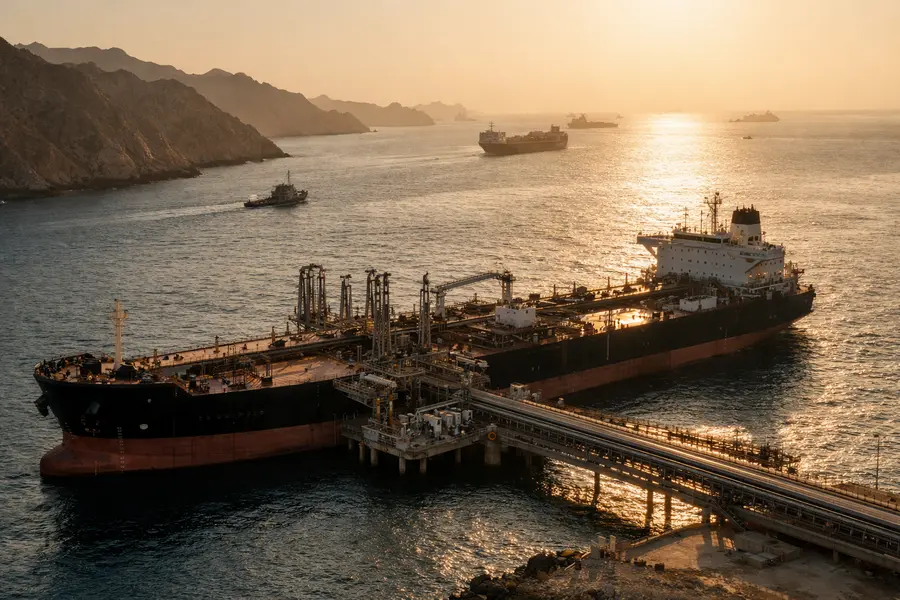
Iran confirmed Washington's reply to its seven-day Hormuz plan arrived via Qatar, with step order the sticking point as Brent crude eased to the high-$90s.
- Iran received the US reply to its seven-day Strait of Hormuz plan through Qatari mediators on September 30.
- The dispute is over the order of steps, not their content: Tehran wants Hormuz and sanctions first, Washington wants nuclear terms in parallel.
- Brent slipped to the high-$90s, down from about $108 after President Trump rejected the plan on September 28.
Lead
Iran said on September 30 that it had received Washington's response to its seven-day proposal for reopening the Strait of Hormuz, delivered through Qatari mediators. Government spokeswoman Fatemeh Mohajerani did not disclose the contents. The gap between the two sides now centers on sequencing. Brent crude, the global oil benchmark, eased to the high-$90s a barrel after trading near $108 two days earlier.
What Did Iran's Seven-Day Proposal Contain?
The proposal bundles a ceasefire covering Iran and Lebanon, the release of roughly $12 billion in frozen Iranian assets, an end to US oil sanctions and the lifting of the US naval blockade of Iranian ports. In return, Tehran would reopen the strait and resume talks on its nuclear programme.
Iran set the timetable: initial measures within four to five days, the strait reopened on day six, and direct talks with the United States beginning on day seven. Foreign Minister Abbas Araghchi met Qatari mediators in New York on September 29 and said there had been "no change in Iran's position" on the conditions for reopening.
What Is the US Reply and Why Does Sequencing Matter?
The US reply outlines its own seven-day period of confidence-building steps. These would move both governments toward an expanded version of the memorandum of understanding reached in June, including concrete measures on Iran's nuclear programme.
Neither side has objected to the individual components. The disagreement is over what comes first. Iran wants the strait, sanctions relief and the unfreezing of assets settled before nuclear issues are discussed. Washington wants a comprehensive package in which nuclear commitments move alongside, not after, those concessions.
The order matters because each step is leverage. Reopening Hormuz is Tehran's main bargaining asset. Sanctions relief and access to frozen funds are Washington's. Whoever moves first gives up leverage before the other side has delivered.
Trump rejected the plan publicly on September 28. On September 30 he denied reports that Washington would ease sanctions or release frozen funds in exchange for nuclear steps. Qatar's mediators have kept messages moving between the parties, and Araghchi said they would raise Iran's position with the American side again.
Why Did the Crude Oil Price Slip to the High-$90s?
Brent eased because the exchange of replies kept diplomacy alive, which trimmed some of the risk premium added after the rejection. The benchmark rose more than 3% to near $108 a barrel in Asian trade on September 28, with November futures at $107.35 at 08:00 GMT. It then retreated by roughly $10 as Qatar-brokered contacts continued.
The market is trading headlines, not supply. Before the conflict began in February, about one-fifth of global oil supply passed through the strait. Commercial traffic has fallen sharply since, though it has partly recovered. Transits reached 132 in the week of September 21 to 27, up from 116 the week before.
Brent remains roughly 7% higher over the past month, and the September rally was among the sharpest of the year. A move below $100 reflects relief that talks continue, not confidence in a settlement.
Geopolitical Dimension
The standoff sits at the intersection of energy security and domestic politics. The US midterm elections on November 3 limit Washington's room to offer visible concessions to Tehran, and Iranian officials have signalled doubts that an agreement can be reached before then.
Qatar's role is central. It hosts a major US military presence, has working channels to Tehran, and has a direct stake in reopened shipping lanes, since its liquefied natural gas exports also pass through the strait. Doha's mediation is the only route now carrying proposals in both directions.
What Comes Next for Oil Prices?
Three paths are visible over the next three to six months.
- Partial sequencing deal: a compromise that pairs an early Hormuz reopening with a defined set of nuclear steps would likely push Brent toward the low-$90s or below as shipping normalizes.
- Prolonged limbo: continued exchanges without agreement keep Brent in a broad $95 to $110 range, with prices moving on each public statement from Washington or Tehran.
- Breakdown: a collapse of the Qatari channel or renewed attacks on vessels would restore the premium seen earlier in the week and could push Brent back above $108.
Shipping data will signal the direction before any formal announcement. A sustained rise in daily transits would suggest the strait is reopening in practice.
Outlook
Both governments have now exchanged written positions through Qatar, and the substance is largely agreed. The unresolved question is who moves first. Brent in the high-$90s reflects that narrow gap, and the November 3 midterms add pressure on timing. Until sequencing is settled, the crude oil price will remain tied to diplomatic signals and Hormuz shipping volumes.
Mentioned tickers: None