Pomegra
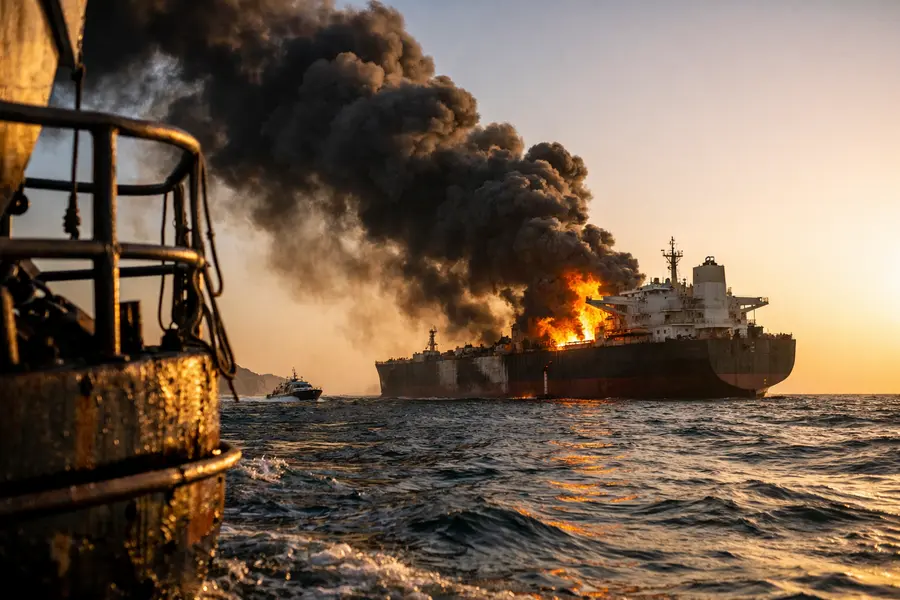
Tanker attacks around Hormuz hit a wartime weekly high as Houthi strikes killed 3 at Riyadh airport and Iran ruled out talks, keeping Brent near $109.
- At least 12 tanker attacks hit the Hormuz area from Sept. 28 to Oct. 5, the most in any week since the war began on Feb. 28.
- Houthi missiles killed three Saudis at Riyadh's King Khalid airport on Oct. 8, widening the conflict to the Arabian Peninsula.
- Brent settled at $108.79 on Oct. 20 after touching $111.99, a five-month high, as Iran set preconditions for talks.
Lead
Attacks on commercial shipping around the Strait of Hormuz reached their highest weekly level since the US-Iran war began on Feb. 28. At least 12 attacks on oil, liquefied natural gas and liquefied petroleum gas tankers were recorded between Sept. 28 and Oct. 5. Days later, Houthi missile strikes on Riyadh's main airport killed three Saudi nationals. Tehran has since said it will not negotiate with Washington until its conditions are met. The combined pressure on Gulf energy infrastructure and diplomacy has kept the crude oil price near multi-month highs.
What Happened to Tankers Around Hormuz?
Tanker attacks around Hormuz rose to a weekly record of at least 12 incidents in the week to Oct. 5, up from lower counts in earlier weeks of the conflict. The International Maritime Organization logged nine incidents over the same period, reflecting differences in how attempted attacks and harassment are classified.
The US Navy-led Joint Maritime Information Center has said attacks, attempted attacks and harassment of vessels continue in the strait. These include drone overflights, surveillance and radio hailing by the Revolutionary Guards. One Panama-flagged tanker, the On Peace, had 12 crew members injured by an unidentified projectile. Another tanker was struck by multiple projectiles 51 nautical miles north of Madinat ash Shamal on Oct. 7.
The attacks are changing how vessels are hit. Iran's Revolutionary Guards have increasingly targeted engine rooms, which can disable a ship for months while limiting the risk of a large oil spill. That approach raises repair costs and keeps tonnage off the market without sinking vessels.
How Much Oil Is Still Moving Through the Strait?
About 12.6 million barrels a day passed through Hormuz on Oct. 13, down from roughly 15 million at the end of September. The pre-war baseline was about 17 million barrels a day. The strait carries roughly a fifth of global oil consumption, so a shortfall of about 4.4 million barrels a day is large relative to spare capacity elsewhere.
Gulf exports had exceeded pre-war levels for roughly half of September, which made the October decline more visible. Shipowners now weigh crew safety, hull damage and higher war-risk premiums against freight rates, and fewer sailings tighten available supply.
Why Did Houthi Strikes on Riyadh Airport Matter?
The Houthi strikes on Riyadh matter because they hit civilian aviation infrastructure in the world's largest crude exporter, adding a second front to the Gulf conflict. Two attacks on King Khalid International Airport on Oct. 8 struck airport facilities and a Saudia aircraft. Saudi Arabia's civil aviation authority said an airline pilot and two other Saudi citizens were killed, and people of several nationalities were wounded.
Operations resumed and air traffic returned to normal within a day. The Houthis, aligned with Iran, said they fired cruise missiles at the airport. They say they are targeting the kingdom over its support for government forces in Yemen's renewed civil war. A Saudi-led coalition later said it destroyed rocket launch platforms, and Saudi Arabia and Yemen's recognized government asked the UN Security Council to act.
Regional alignments are shifting in response. Turkey has advanced a mutual defense arrangement with Saudi Arabia and Pakistan, and the UK has added RAF Typhoon jets for defensive operations. The Houthis have also warned airlines to avoid Saudi airspace except around Mecca and Medina, which, if enforced, would disrupt regional air traffic.
Why Is Iran Refusing to Negotiate?
Iran is refusing talks because it wants Washington to act first on a set of preconditions. Tehran has said it will not negotiate until the US lifts sanctions, ends its threats and takes steps to rebuild trust. Earlier statements listed seven conditions, including an end to the US blockade of Iranian ports, relief on oil export sanctions and a halt to hostilities on all regional fronts.
Iranian officials have also said that no enriched uranium will leave the country. US President Donald Trump has called military strikes insufficient without long-term guarantees against an Iranian weapon, a gap that leaves little room for a near-term deal. The White House has said the US will not attack Iran before the midterm elections, which lowers the odds of a sudden escalation from Washington in the next two weeks. It does not reduce the risk from Iran or its regional partners.
How Are Oil Markets Reacting?
Oil markets are reacting with sharp intraday swings and a persistent risk premium. Brent futures settled at $108.79 a barrel on Oct. 20, down 76 cents, or 0.7%, after touching $111.99 earlier in the session. Prices have risen roughly 80% this year. West Texas Intermediate has traded near $98.
Traders have been reversing moves on conflicting signals about talks. Reports that the US and Iran were close to an agreement were later disputed, and the benchmark gave up its gains. Each denial from Tehran or fresh tanker incident has pushed prices back toward the top of the recent range.
What Comes Next for Oil Prices and Gulf Shipping?
Over the next three to twelve months, Brent will depend on Hormuz throughput, the Houthi campaign against Saudi targets and whether talks open. If transit stays near 12 to 13 million barrels a day, inventories will keep drawing and the risk premium is likely to persist. A credible negotiating track would pull prices lower, but Iran's preconditions make that unlikely before the US elections. Further attacks on Saudi infrastructure would raise the risk of disruption at the kingdom's own export terminals, a larger threat than tanker harassment.
Structural effects are building. Insurers are repricing Gulf cargo, importers in Asia and Europe are seeking alternative supply, and Gulf producers are weighing routes that bypass Hormuz. Those adjustments take years, so near-term supply remains exposed to the strait.
Outlook
Record tanker attacks, the Riyadh airport strikes and Iran's refusal to negotiate leave Gulf energy supply under pressure from both the sea lanes and the Arabian Peninsula. Brent near $109 reflects a market pricing prolonged disruption rather than a quick settlement. The next signals are weekly attack counts, Hormuz transit volumes, further Houthi action against Saudi targets and any change in Tehran's preconditions.
Mentioned tickers: None