Pomegra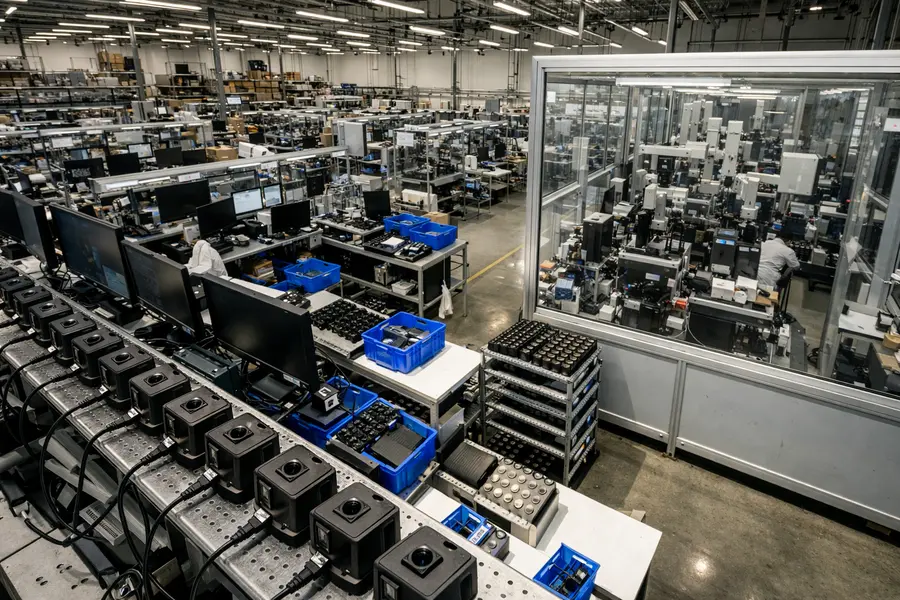
GoPro's $85 million acquisition of Starman Optical ends 24 years of consumer cameras and launches GPRO into AI data-center networking and defense hardware markets.
- GPRO surged as much as 50% in record volume after announcing an $85 million all-stock deal to acquire AI-optical startup Starman Optical.
- GoPro is exiting the consumer action-camera market entirely, redeploying its optics manufacturing base into AI data-center photonic interconnects.
- Starman Optical's short-reach photonic modules target GPU cluster buildouts and defense networking - two of the fastest-growing hardware capex pools.
Lead
GoPro (GPRO) shares surged as much as 50% on Tuesday, September 2, 2026, after the San Mateo, California-based company announced an $85 million all-stock merger with Starman Optical, an AI-optical startup specializing in photonic interconnect technology for data-center fabric switches. The deal represents one of the sharpest pivots in consumer-technology history: a 24-year-old brand synonymous with action cameras is exiting that market entirely to compete in AI data-center networking hardware and defense systems.Why Is GoPro Abandoning Cameras After 24 Years?
Prolonged financial pressure and a structural collapse in consumer action-camera demand forced the strategic break. GoPro, founded in 2002, once commanded the mass-market wearable-camera segment but has faced years of margin compression from smartphone camera improvements, eroding average selling prices, and decelerating unit volumes. Revenue contracted across several consecutive fiscal years, and the company had been evaluating strategic alternatives since early 2025. Management concluded that GoPro's core imaging optics expertise could be redeployed in a higher-margin, enterprise- and government-facing business - one where performance requirements, not consumer price sensitivity, determine competitive outcomes.
The Starman Optical Deal
Starman Optical develops short-reach photonic interconnect modules used inside AI training clusters and high-performance data-center switching fabric. Its core technology reduces latency and power draw between GPUs and top-of-rack switches - a bottleneck that has become critical as hyperscalers and defense contractors scale AI workloads. The $85 million consideration, paid entirely in GPRO stock, values Starman at a premium to recent comparable private-market transactions in the photonic-component space. GoPro plans to retain Starman's engineering team and integrate its photonic production process with GoPro's existing precision-optics manufacturing infrastructure, eliminating the need to build fabrication capability from scratch.Why Did GPRO Stock Surge 40-50%?
Investors treated the announcement as a category reclassification event. AI stocks tied to data-center hardware command multiples far above legacy consumer-electronics peers, and the market repriced GPRO against that cohort. GoPro's optical manufacturing base - lens fabrication, precision housing assembly, and miniaturized optics alignment - maps directly to photonic interconnect production requirements, lending the pivot industrial credibility. Trading volume in GPRO exceeded 40 times its 30-day average during the announcement session, reflecting broad participation across retail and institutional desks.
Defense and AI Infrastructure Markets
The dual-market strategy targets two of the fastest-growing hardware procurement pools in the global economy. Defense agencies have accelerated purchases of optical networking for secure, high-bandwidth command-center and battlefield connectivity. Simultaneously, Nvidia (NVDA)-driven GPU cluster buildouts have created acute demand for low-latency optical interconnects at the intra-rack and inter-rack layers. Marvell Technology (MRVL) and established photonic suppliers currently hold most of that enterprise business; GoPro's entry through Starman Optical introduces new competitive pressure at a moment when supply constraints remain a persistent concern for hyperscaler procurement teams.
What Happens to GoPro's Camera Business?
The consumer-camera line will be wound down or divested. GoPro has not specified a timeline for disposing of the HERO and MAX product families, though management outlined options including a brand sale, licensing arrangement, or controlled sunset. The camera division generated the bulk of GoPro's revenue as recently as fiscal 2024; its removal strips legacy revenue but also eliminates the cost structure - retail distribution, seasonal manufacturing cycles, and consumer marketing - that suppressed margins. Pro forma for the wind-down, management projects a leaner entity organized entirely around B2B hardware supply agreements.
Outlook
GoPro's $85 million bet on Starman Optical transfers the company's entire commercial identity from consumer entertainment to AI infrastructure and defense hardware - markets with structurally longer contract cycles, higher gross margins, and regulatory barriers that protect incumbents once qualified. The immediate challenge is revenue continuity during the camera wind-down, while the medium-term opportunity depends on Starman's ability to scale photonic interconnect output and secure enterprise supply contracts. GPRO's 40-50% single-session gain signals that investors are willing to price the company on the upside of the new market rather than the deteriorating trajectory of the old one.
Mentioned tickers: GPRO, NVDA, MRVL