Pomegra
Druckenmiller's Duquesne Family Office disclosed a $1.2 billion concentrated bet in three stocks, touching off a wave of copycat trading that propelled already-surging AI memory names to fresh records.
- Duquesne's Q1 2026 13F revealed a full exit of Alphabet and aggressive rotation into SanDisk, Micron, and Seagate.
- A six-week reporting lag between quarter-end and disclosure means copycat buyers paid triple-digit premiums over Druckenmiller's entry prices.
- Memory sector revenue is forecast to surge 134% to $552 billion in 2026, anchoring the AI hardware thesis underpinning the trades.
Lead
Stanley Druckenmiller's Duquesne Family Office LLC disclosed a concentrated $1.2 billion wager across three AI-infrastructure stocks in its Q1 2026 13-F filing, made public in mid-May, igniting a fresh round of institutional and retail copycat buying across SanDisk (SNDK), Micron Technology (MU), and Seagate Technology (STX). The filing confirmed Duquesne liquidated all 385,000 shares of Alphabet (GOOGL) during the March quarter and redeployed capital into a trio of memory and storage hardware names at the center of what analysts are calling an AI-driven supercycle. By the time the disclosure reached market participants on May 15, each of the three positions had already delivered returns ranging from 481% to 3,467% year-to-date.What Happened
Duquesne's 13F shows the fund initiated 38,155 shares of SanDisk, 23,400 shares of Micron, and 50,700 shares of Seagate in the first quarter of 2026. Combined with pre-existing holdings and valuation gains recorded between the March 31 quarter-close and mid-May disclosure, the three-stock cluster represents roughly $1.2 billion in reported market value inside the $3.38 billion portfolio.
The Alphabet exit was complete. Duquesne had steadily built its GOOGL position through Q3 and Q4 2025, adding $89 million worth of shares in the fourth quarter alone. The full reversal signals a deliberate pivot away from large-cap AI software infrastructure toward what Druckenmiller has framed as a "picks-and-shovels" positioning on accelerating data center build-out.
The move follows a broader pattern. In Q3 2025, Duquesne disclosed a $1.2 billion concentration in three other names — Natera (NTRA), Insmed (INSM), and Teva Pharmaceuticals (TEVA) — which together at peak represented approximately 30% of the portfolio. That biotech cluster similarly triggered copycat accumulation after the filing surfaced. NTRA rallied nearly 70% in the months following disclosure; INSM rose from $25 to $189 over the comparable holding period.
The Copycat Problem
Every quarterly 13F filing carries a structural delay embedded by regulation: funds managing over $100 million in U.S. equities must disclose holdings within 45 days of each quarter's close. That six-week gap creates a recurring pricing asymmetry. Druckenmiller's Q1 positions were established at March prices; the filing disclosed them in mid-May after the stocks had already moved dramatically.
SanDisk, which re-listed as a stand-alone company after separating from Western Digital, traded near $1,393 at disclosure — up 3,467% over twelve months and 483% year-to-date. Micron was priced around $710, up roughly 610% year-over-year. Seagate fetched approximately $745, up 581% on the year. Investors replicating the trade at disclosure prices were, in effect, paying entry multiples far above Druckenmiller's cost basis, underscoring a persistent tension in 13F-driven "clone" strategies.
Volume data reinforced the copycat dynamic. Within 48 hours of the filing's publication, all three names saw trading volume spike above three times their 30-day averages. Options markets recorded a surge in out-of-the-money call interest, consistent with speculative positioning by participants seeking leveraged exposure to the disclosed thesis.
Strategic Context and AI Memory Thesis
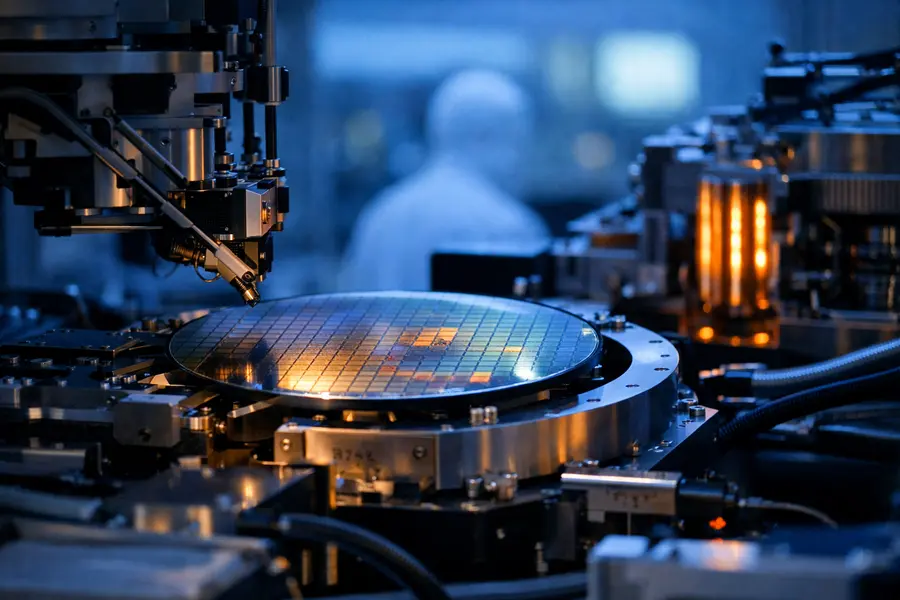
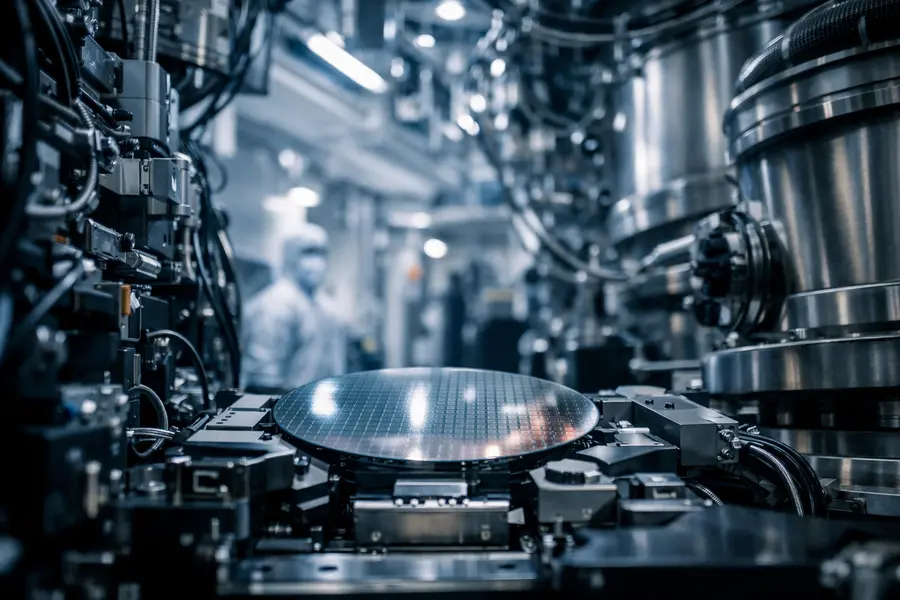
The investment rationale centers on the role of memory and storage hardware in AI data center architecture. DRAM and NAND flash are foundational components of every AI inference server; as model sizes and deployment throughput expand, memory-per-rack density requirements have risen sharply. Data centers now consume over 50% of total global DRAM and NAND production for the first time — a share that was below 25% as recently as 2022.
Market research firm TrendForce projects total memory sector revenue to reach $552 billion in 2026, a 134% increase, followed by a further 53% expansion to $843 billion in 2027. SanDisk has reportedly sold out of available NAND supply through year-end 2026, with hyperscalers locking in multi-year supply agreements — some extending to five years — to secure future capacity. Micron Technology (MU) crossed a $1 trillion market capitalization for the first time in late May 2026, a milestone analysts attribute largely to AI-driven demand forecasts.
Susquehanna analyst Mehdi Hosseini lifted his Micron price target to $1,750 from $600, and raised his SanDisk target to $3,250 from $2,000 — both new Street-high figures — citing what he described as a "new normal" for memory pricing underpinned by structural demand rather than cyclical inventory cycles.
Market Reaction
The mid-May 13F disclosure amplified a rally already underway. SNDK gained more than 11% in the two sessions following the filing's publication. MU and STX each rose approximately 8% in the same window, before consolidating. Micron insiders, including CEO Sanjay Mehrotra, executed 27 separate sell transactions on May 1 across a $511 to $545 price range, a development that tempered some institutional enthusiasm without reversing the broader trend.
Retail sentiment, measured by social-platform indicators, registered a pronounced shift: Reddit discussion intensity for SNDK climbed sharply after the disclosure before moderating by mid-May as valuations drew more scrutiny.
What Comes Next
The timing asymmetry of 13F copycat strategies is not new, but the scale of post-disclosure moves in the AI hardware cycle has made the lag effect more consequential. Investors entering SNDK, MU, or STX at current levels carry exposure to any inventory correction or demand revision — risks that were substantially lower when Druckenmiller built his positions in January and February.
The pending Q2 2026 earnings cycle for all three companies will serve as a near-term test of the memory supercycle thesis, with guidance commentary on long-term supply agreements and hyperscaler order rates closely watched by both existing holders and investors still evaluating entry.
Outlook
Druckenmiller's documented pivot — abandoning a large-cap AI software bet in Alphabet to concentrate capital in memory and storage hardware — reinforces a broader institutional rotation toward AI infrastructure's physical layer. The copycat trading it triggered reflects both the durability of 13F-watching as a retail and institutional strategy and the ongoing premium markets are willing to assign to validated concentrated conviction. Whether late-entering copycat buyers can generate comparable returns will depend largely on the sustainability of the AI data center buildout and the absence of the supply-demand imbalances that have historically punctuated memory cycles.
Mentioned tickers: SNDK, MU, STX, GOOGL, NTRA, INSM, TEVA, AVGO, ARM