Pomegra
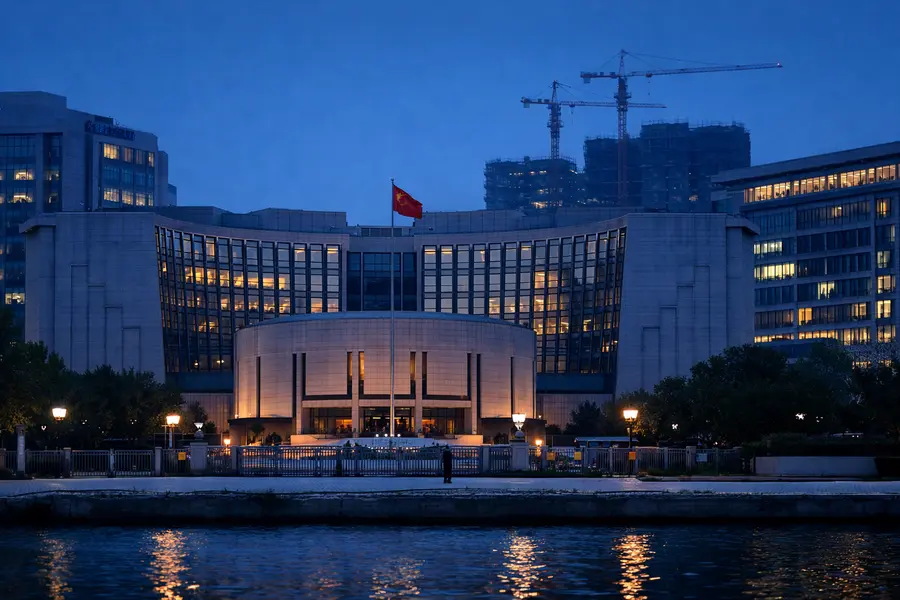
China's central bank and securities regulator met banks and brokers on buyback lending, lifting stocks after a record 12-week slide in the CSI 300 index.
- The CSI 300 gained as much as 1.3% on Monday after a record 12 straight weekly declines.
- The PBOC, NFRA and CSRC met major banks on easing the buyback relending program.
- The CSI 300 fell 8.5% in October, entering a bear market, its weakest month in over a decade.
Lead
China's central bank and securities regulator met major banks and brokerages on Monday, November 2, to discuss ways to stabilize the equity market. Chinese shares rebounded on the news. The CSI 300 Index rose as much as 1.3%, recovering part of the 2.9% drop it recorded last week, which extended its losing streak to a record 12 weeks.
What Happened in China's Stock Market Today?
Chinese equities rose broadly at midday on Monday after reports that regulators were convening financial institutions. The Shanghai Composite was up 1.16%, the Shenzhen Component gained 2.39% and the ChiNext board advanced 3.28%.
The People's Bank of China (PBOC), the National Financial Regulatory Administration (NFRA) and the China Securities Regulatory Commission (CSRC) held talks with leading banks. Some securities firms and funds were also notified of a Monday morning meeting with the PBOC and CSRC. The agenda centered on making fuller use of existing market-support tools.
Why Is Buyback Lending at the Center of the Talks?
Buyback lending lets listed companies and major shareholders borrow from banks, with central bank funding behind the loans, to repurchase shares or raise stakes. The discussions focus on how to improve and ease that relending program.
The facility was introduced in 2024 as part of a package to stabilize the market and carries a size of 300 billion yuan, or about US$45 billion. Investors are positioned for an expansion of the quota or looser lending terms. Repurchases provide steady demand for shares when institutional buyers step back, which is why the mechanism drew attention before the meetings began.
How Deep Was the Slide Before the Rebound?
The CSI 300 fell 8.5% in October and entered a bear market, defined as a decline of 20% or more from a recent peak. It was the index's worst month in more than a decade and capped a record 12 consecutive weekly declines.
Economic data added pressure. China's official manufacturing purchasing managers' index fell to 49.3 in October from 50.1 in September, moving back into contraction territory. The non-manufacturing gauge slipped to 49.7 from 50.2. Readings below 50 signal shrinking activity.
Monetary Policy Context
The PBOC also began daily overnight reverse repo operations at a fixed 1.25% rate, below the 1.4% seven-day rate. The step moves the central bank toward making the overnight rate its main policy anchor, a shift in how it guides short-term funding costs.
What Comes Next for Chinese Equities?
The next signal is whether regulators announce concrete changes, such as a larger relending quota, lower borrowing costs for buyback loans or wider eligibility for borrowers. Market participants view the meetings as preparatory work for additional stabilization measures.
Past support packages have delivered sharp but uneven rallies. Durability depends on whether policy backing is matched by improving economic data, and the October PMI readings show momentum still weakening. Buyback programs support prices through earnings-per-share accretion and steady demand, but they rely on companies having the cash flow to participate.
Outlook
Beijing has signaled readiness to deploy its market-support toolkit after the longest weekly losing streak on record for the CSI 300. The first day of the rebound reflects expectations of action rather than action itself. Details on the buyback relending program, and any further PBOC liquidity steps, will determine whether Monday's gains hold.
Mentioned tickers: None