Pomegra
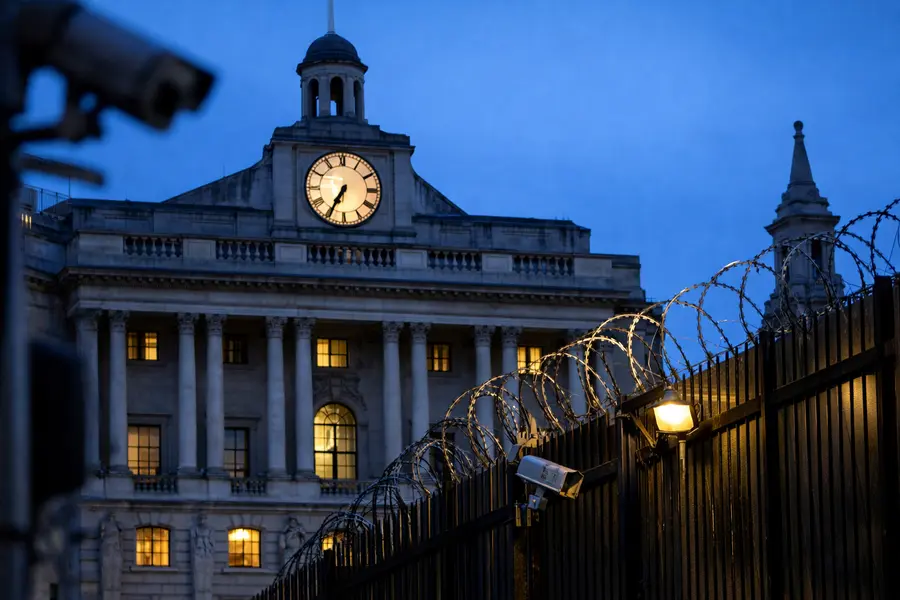
The Bank of England held Bank Rate at 3.75% on 5 November, defying market pricing for a hike to 4% as british inflation ran at 3.5%, well above its 2% target.
- The Bank of England kept Bank Rate at 3.75%, a seventh straight hold, while markets had priced a quarter-point rise to 4%.
- Consumer price inflation is 3.5%, 1.5 percentage points above the 2% target.
- Elevated energy costs tied to Middle East conflict keep upside inflation risks at the center of the policy debate.
Lead
The Bank of England left Bank Rate unchanged at 3.75% on Thursday 5 November, withholding a quarter-point increase to 4% that futures markets had largely priced in. The decision keeps interest rates on hold even though UK consumer price inflation stands at 3.5%, with services inflation turning back up. Bank Rate has been at 3.75% since the December 2025 cut.
What Happened at the Bank of England?
The Monetary Policy Committee voted to maintain Bank Rate at 3.75% at its November meeting, which was published alongside a new Monetary Policy Report. Markets had moved sharply toward a hike after the September meeting, when the committee held rates by a 6-3 vote, with three members backing an increase to 4%. At that meeting the Bank also said inflation risks were tilted further to the upside, which raised expectations for a move in November.
The hold therefore runs against market pricing rather than against the committee's own signals. It also leaves the central bank's tightening bias intact, with the Governor having indicated that rate increases remain possible if energy volatility persists and inflation pressures intensify.
Why Did the Bank Hold Despite 3.5% Inflation?
The Bank held because it judged that the case for tightening had not yet outweighed the drag on growth from high borrowing costs and an uncertain energy outlook. Inflation of 3.5% is well above target, but much of the recent pressure stems from energy prices linked to the Middle East conflict. Central banks typically treat supply-driven price shocks more cautiously than demand-driven ones, since higher rates do little to lower the price of imported energy and can deepen a slowdown.
The committee is also weighing the autumn fiscal event, which can shift household incomes and government borrowing, and the Bank's overhaul of quantitative tightening. In September it paused all gilt sales until April 2027 while it consults the government on selling gilts directly to the Debt Management Office at market prices. That change reduces supply pressure on the gilt market and removes one source of volatility from long-dated yields.
How Do Markets Read the Decision?
Markets read the hold as a delay rather than a reversal. Pricing had embedded a high probability of a 4% Bank Rate, so a decision to stay at 3.75% removes a premium from short-dated gilt yields and the pound. Sterling had traded at its strongest level since the 2016 Brexit vote on rate-rise expectations, which leaves it exposed when those expectations fade.
For UK-listed lenders such as HSBC (HSBC), the path of interest rates shapes net interest margins and deposit costs, so the timing of any increase matters for earnings. Mortgage pricing in the UK follows swap rates, which moved with the repricing of Bank Rate expectations.
What Comes Next for UK Interest Rates?
The next move depends on whether british inflation, now at 3.5%, eases as energy costs stabilize or hardens through services prices and wage growth. Three scenarios frame the next several meetings:
- Energy prices ease: headline inflation drifts lower, the hawkish minority loses ground, and Bank Rate stays at 3.75% into 2027.
- Energy prices stay elevated: services and wage data keep inflation near 3.5%, and the committee moves to 4% in the first half of 2027.
- Growth weakens sharply: the tightening bias fades, and the debate returns to cuts later in the cycle.
Upcoming releases on inflation, labor-market data and wage settlements will carry more weight than usual. The committee's next scheduled meeting is in December.
Outlook
The Bank of England stayed at 3.75% against market expectations for 4%, prioritizing growth and energy-shock uncertainty over an immediate response to 3.5% inflation. The tightening bias remains, and a hike is still the committee's live alternative if inflation proves persistent. Markets now face a recalibration of rate-path pricing ahead of the December meeting.