Pomegra
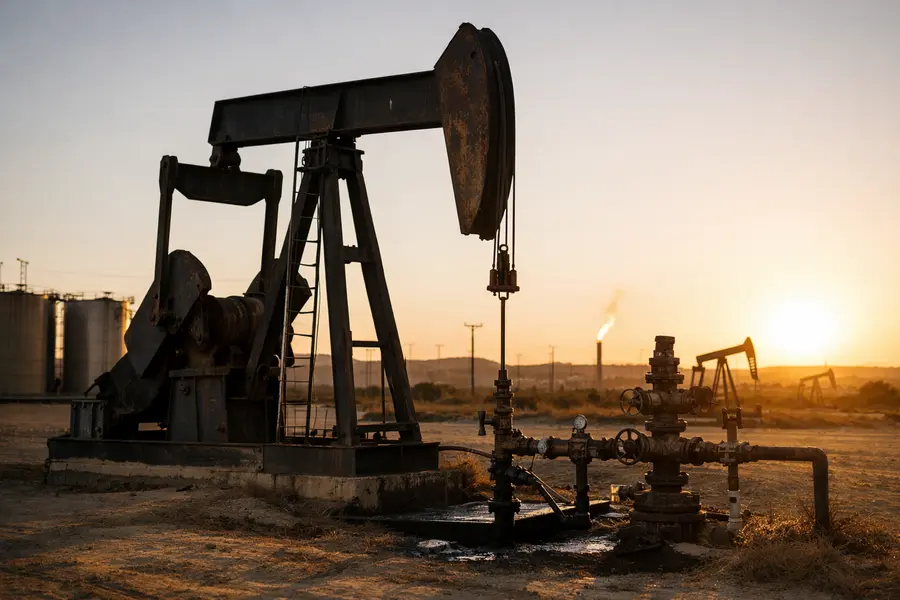
Brent crude fell 9.7% to $93.52 after Vance blamed the Iran war for the GOP midterm loss and Schumer pledged to defund it, lifting Hormuz reopening odds.
- Brent January futures settled at $93.52 on Wednesday, down $10.08, or 9.7%. WTI fell 8.9% to $87.56.
- Vance said "the reason we lost is the war," and Schumer said Congress's "power of the purse" could be used to end it.
- Traders cut the war premium on bets that a US-Iran deal and a reopening of the Strait of Hormuz are now more likely.
Lead
Oil recorded its steepest one-day drop in months on Wednesday, Nov. 4. Vice President JD Vance said the Republican midterm defeat traced to the Iran war, and Senate Democratic leader Chuck Schumer said a new Democratic majority could cut off funding for it. Brent settled at $93.52 a barrel and WTI at $87.56. Brent is now about 17% below its level on Sunday, and it traded near $94 on Thursday morning.
What Did Vance and Schumer Say About the Iran War?
Vance said the war cost Republicans control of Congress, and Schumer said Democrats would use their budget authority to end it. Vance wrote on Nov. 4: "The reason we lost is the war. The president himself said so last night." He added that any honest discussion of the party's direction "must start there."
President Trump had told reporters the claim was "largely true because it drove the gasoline up a little bit short term." He also said he would launch the campaign again, because "long term, it's the only answer" to preventing an Iranian nuclear weapon. The US-Israeli military campaign began in late February and has run for about eight months.
Schumer said the war "must end" and described the power of the purse as one of the ways to deter a president who wages war without the consent of the American people. Appropriations bills must originate in the House, and a Democratic majority would control the funding that sustains operations. The two statements came from opposite parties but pointed the same way. Washington's appetite for open-ended escalation has narrowed, and a negotiated settlement now carries more political weight.
Why Did the Crude Oil Price Fall So Sharply?
The crude oil price fell because traders removed the war premium that had been priced into front-month contracts. Brent dropped below $100 for the first time since early October. The spread between January and December 2027 contracts narrowed by $3.76, which shows the selling was concentrated in near-term supply risk rather than the long-dated outlook.
Technical conditions amplified the move. Brent's 14-day relative strength index fell to about 33, close to oversold. The 200-day moving average near $93.15 and a pivot at $92.67 now mark the closest support. Traders watch $90 as the next downside level and $100 as the level that would signal the war premium returning.
Physical supply was already easing. Middle East exports have recovered to roughly 20.7 million barrels a day, and JPMorgan estimated an October global surplus of about 1.4 million barrels a day. Higher-priced crude had weighed on gasoline costs, which the president himself linked to the election result.
How Did Equities React?
Equities rose as lower energy costs eased pressure on consumer-facing and technology shares. Communication services, consumer discretionary and technology led the three major US indexes higher. Energy was the weakest group, and producers such as Exxon Mobil (XOM) and Chevron (CVX) lagged the broader market.
The rotation fits the pattern since February, when the conflict lifted fuel and fertilizer costs and fed the affordability concerns that shaped the vote. Lower oil also reduces near-term inflation pressure and gives the federal reserve more room on rates.
Will the Strait of Hormuz Reopen?
A reopening is more likely than a week ago, but no agreement has been signed. An Iranian official said Tehran could reopen the Strait of Hormuz within two days if Washington lifts sanctions and releases frozen assets. Vance said the sides had "certainly made some progress." Trump said the US has "no immediate plans to strike," while also keeping open the possibility of a "heavy hit" on Iran.
The physical risks remain. Iran said four oil tankers caught fire after hitting mines while trying to transit the waterway on Wednesday. It also warned that no one would benefit from a return to full-scale war. Tehran has targeted vessels attempting to cross without its authorization since the conflict began, and it claims control over the corridor. The strait normally carries roughly a fifth of global oil consumption, so any clearing of mines and restoration of insurance cover would take weeks even after a political deal.
Geopolitical Dimension
The political calculus in Washington has shifted. A Republican administration that opened the war now faces a Congress with the means to constrain it, and the vice president, positioned ahead of a possible 2028 run, has publicly separated himself from the conflict. Tehran gains negotiating leverage from that split, which is why its demands center on sanctions relief and frozen assets rather than the nuclear terms Trump has set as the war's purpose.
The Democratic majority would not take office until January, so the funding threat is a signal of intent rather than an immediate constraint. Markets nonetheless priced the signal at once, because the alternative of an indefinite blockade has become harder to sustain politically.
Outlook
Over the next three to twelve months, the oil price path depends on whether the current talks produce a signed text and verifiable mine clearance in Hormuz. A deal would likely push Brent toward the $90 support area and below it, as Gulf exports normalize and the surplus identified for October builds. A breakdown, or the "heavy hit" Trump has not ruled out, would put $100 back in play quickly. Congressional action on war funding, expected after the new Congress convenes in January, is the next structural test of Washington's resolve.