Pomegra
Fed rate hike odds for December fell to about 66% after the midterms and a 4.4% S&P 500 rout, with October payrolls forecast at 65,000 in today's jobs report.
- Market-implied odds of a December quarter-point hike fell to about 66%, from 79.9% a week earlier and a post-election high near 82%.
- The S&P 500 lost 4.36% and the Nasdaq Composite 5.52% on Thursday, the Nasdaq's worst session in 19 months.
- October nonfarm payrolls are forecast at 65,000, with unemployment steady at 4.2%.
Lead
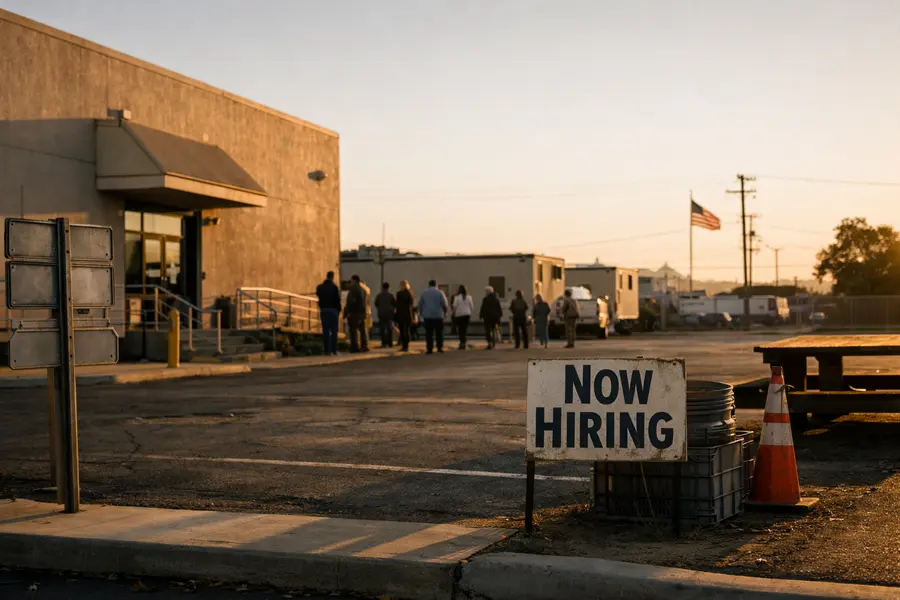
The probability that the Federal Reserve raises its policy rate in December fell to about 66% on Thursday, down from more than 80% in the days after the midterm elections. The drop followed a sharp equity selloff that erased roughly $2 trillion in US market value in one session. Markets now turn to the Bureau of Labor Statistics October employment report, due at 8:30 a.m. Eastern today, with payrolls forecast to rise by about 65,000 after a 29,000 gain in September.
What Happened to the Fed Rate Outlook?
The fed rate outlook softened because a risk-off move in equities and a fall in Treasury yields reduced the pressure for tightening. The CME FedWatch reading for a December hike stood near 82% after the election, then dropped to about 66% by Thursday's close. A week earlier it was 79.9%.
The Federal Open Market Committee held the target range for the federal funds rate at 3.75% to 4% on October 28. The vote was 10-2, with Cleveland Fed President Beth Hammack and Governor Lisa Cook dissenting in favor of a 25-basis-point increase. Chair Kevin Warsh reiterated that the committee's target is price stability, defined as 2% inflation measured by PCE. Those dissents explain why a hike stayed the base case even as odds fell.
Why Did Markets React This Way?
Markets sold off because investors questioned whether the artificial-intelligence investment cycle that has driven the rally can continue. The Dow Jones Industrial Average closed Wednesday at 53,356.12 after a 3% gain on election relief. Thursday reversed that move:
- The S&P 500 fell 4.36% to 7,353.
- The Nasdaq Composite dropped 5.52% to 24,315, entering correction territory and breaking below its 200-day moving average.
- The Dow lost 3.44% to 51,523.
- The Cboe Volatility Index (VIX) jumped about 69% to near 28.
AI-linked shares led the decline. Advanced Micro Devices (AMD) fell about 17% and Nvidia (NVDA) dropped more than 9%. Microsoft (MSFT) slid 3.6% and Meta Platforms (META) lost 4%. Several Democratic gubernatorial winners campaigned on slowing data center buildouts, which raised the prospect of tighter regulation or moratoriums on AI infrastructure.
How Did Bonds and the Dollar Respond?
Treasuries rallied as investors moved toward safety, pushing yields to two-month lows. The 2-year yield, the maturity most sensitive to expected interest rates, fell 12.2 basis points to 4.459%. The 10-year yield declined 5.3 basis points to 4.835%. The US Dollar Index edged up 0.10% to 101.59.
The fall in the 2-year yield shows traders trimming the odds of further tightening, though not abandoning them. A 2-year yield above the top of the 4% policy range still prices in some chance of a hike.
What Does the October Jobs Report Need to Show?
The report needs to show payroll growth near or above 65,000 and wage growth near 0.3% to keep a December hike on track. The consensus forecast also calls for private payrolls near 64,000 and an unemployment rate of 4.2%. Average hourly earnings are expected to rise 0.3% month on month, after 0.1% in September.
The ADP private employment survey showed 86,000 jobs added in October, a mild upside signal. Job openings stood at 1.06 per unemployed worker in September, consistent with a labor market that is cooling without breaking.
Two outcomes would move the hike odds most:
- Stronger payrolls with firm wages would lift odds back toward 75% or higher. Inflation remains above the 2% goal and a tight wage backdrop supports the committee's two hawkish dissenters.
- A weak headline or a higher unemployment rate would push odds lower. It would also deepen the equity selloff by raising growth concerns alongside the AI-spending doubts.
What Comes Next for Markets and the Fed?
The next test after today's data is the stability of AI-related equities, which have supplied much of the market's earnings momentum. A sustained drop in the Nasdaq would tighten financial conditions on its own. That could do some of the Fed's work and reduce the need for a December move.
The committee's next decision arrives in December, with at least one more inflation release and another employment report beforehand. Those releases will carry more weight than a single payroll print, but today's number sets the tone for pricing across rates and equities.
Outlook
December hike odds of about 66% reflect a market that still expects tightening but has become less certain after a violent equity reversal. The October jobs report is the first hard data point since the selloff. A result near forecast leaves the base case intact, while a clear miss or beat would force a repricing across Treasuries, the dollar and technology stocks.
Mentioned tickers: NVDA, AMD, MSFT, META