Pomegra
Japan's Nikkei 225 fell as much as 7.1% into a technical bear market below 60,000 as an AI selloff hit SoftBank and Rohm after a sharp Wall Street rout.
- The Nikkei 225 fell as much as 7.1% to 56,745.81, its first break below 60,000 since May and about 20% under its June peak.
- SoftBank Group dropped about 11% and chip supplier Rohm roughly 20% as AI and data center names led the decline.
- The rout followed a 5.5% Nasdaq plunge and a 12% fall in US chip stocks on Thursday.
Lead
Japan's Nikkei 225 slid into a technical bear market on Friday, November 6, falling as much as 7.1% to 56,745.81 and breaking below 60,000 for the first time since May. The drop left the benchmark about 20% below its June record, the usual threshold for a bear market. In the stock market today across Asia, artificial intelligence and semiconductor shares took the heaviest losses. SoftBank Group (9984.T) fell about 11% and Rohm (6963.T) lost roughly 20% in morning trading.
What Happened to the Nikkei 225 on Friday?
The Nikkei opened sharply lower and was down 6.2% at 57,271.19 in the morning session, before the intraday low of 56,745.81. The broader Topix index fell as much as 6.4%, its largest drop since April 2025.
SoftBank opened at 3,350 yen, about 15.8% below the previous close, on heavy sell orders. It later narrowed the loss to about 11%. Chip-equipment makers fell hard. Advantest (6857.T) lost 12.2% and Tokyo Electron (8035.T) dropped 7.3%. Kioxia Holdings fell nearly 10% and Renesas Electronics 7.5%.
The yen was little changed near 157.65 per dollar, which points to an equity-specific selloff rather than a currency move. The MSCI Asia Pacific Index lost about 2.9%.
Why Did Markets React This Way?
Asian markets followed a rout on Wall Street. On Thursday, the S&P 500 fell 4.36% to 7,353.73, its worst day since the April 2025 tariff shock. The Dow Jones Industrial Average lost 3.44%, or about 1,800 points, to 51,523.06. The Nasdaq Composite sank 5.52% to 24,315.00 and entered correction territory, more than 10% below its October record close.
Semiconductors bore the brunt. The Philadelphia Semiconductor Index plunged more than 12%. Nvidia (NVDA) fell about 9.3% and Advanced Micro Devices (AMD) dropped 17.3%.
The trigger was political as well as financial. Democrats won Congress and key governorships in the midterm elections, which raised expectations of tighter rules on data center construction and a slower buildout of AI computing capacity. Voters also rejected data centers in 40 of 41 local ballot measures. The shift hit a sector already exposed to worries about the cost of borrowing to fund AI infrastructure. Position unwinding and stop-loss selling amplified the move.
How Far Did the Selloff Spread Across Asia?
The selloff reached every major AI supply chain in the region. South Korea's tech-heavy Kospi fell 8.55% in early trade, triggering a circuit breaker. SK Hynix dropped more than 8% and Samsung Electronics 7%.
Taiwan Semiconductor Manufacturing (TSM) fell 9.6% and Foxconn parent Hon Hai Precision fell 9.4%. In mainland China, the STAR Market and the ChiNext AI index each fell more than 4%.Why Is Japan So Exposed to the AI Trade?
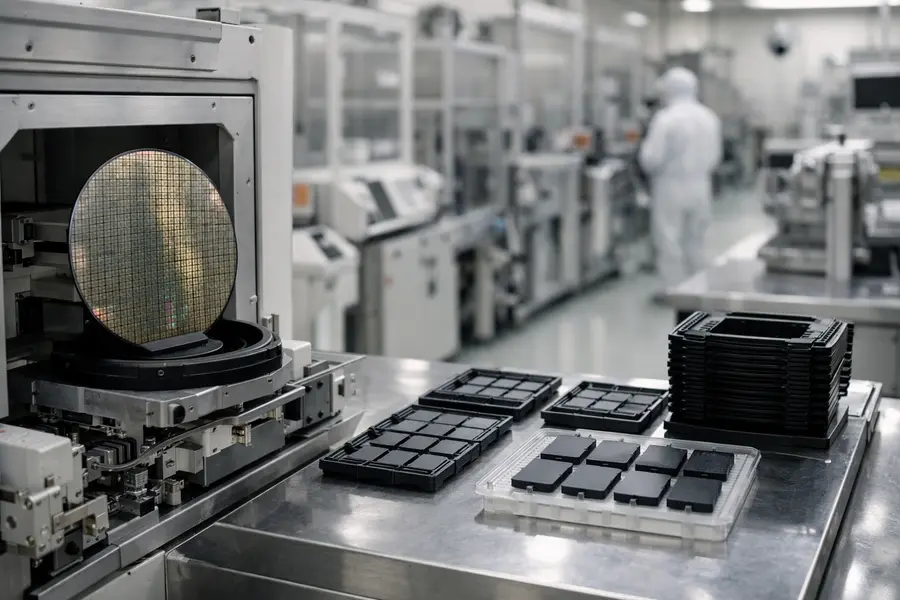
Japan's index is concentrated in AI-linked stocks. The Nikkei is price-weighted, so a handful of high-priced technology names move it disproportionately. SoftBank is the clearest example. It has become a leveraged proxy for AI investment through its commitments to OpenAI and related data center projects. Rohm, Advantest and Tokyo Electron supply power chips and the machinery used to make the processors that fill data centers.
That concentration helped lift the Nikkei above 60,000 earlier this year. It also meant any doubt about US data center demand would hit Tokyo quickly and hard.
What Comes Next for Japanese Stocks?
The near-term path depends on whether US AI stocks stabilize. A bear market is a price-based label and does not by itself signal a recession. Japanese equities have fallen 20% from peaks before and recovered when earnings held up.
Three variables matter over the next three to twelve months. The first is the pace of US data center permitting and any new state or federal restrictions after the midterm results. The second is whether hyperscale customers keep their capital spending plans. The third is financing costs for AI infrastructure. Further steep falls in US chip stocks would keep pressure on SoftBank, Rohm and Tokyo Electron. A rebound in Nvidia and the semiconductor index would give Tokyo an early basis to recover.
Outlook
The Nikkei 225 has entered a technical bear market, down about 20% from its June peak, after a global AI selloff that began on Wall Street. SoftBank, Rohm and chip-equipment makers led the declines. The next moves in US technology shares and the policy direction on data centers will set the tone for Asian markets in the coming weeks.