Pomegra
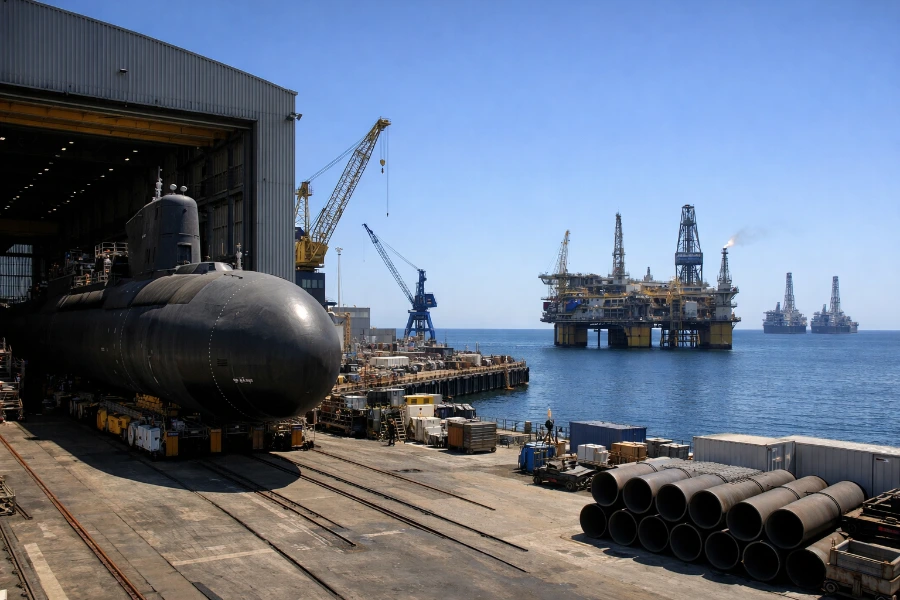
Babcock won a record £8.7B UK submarine support contract, while Equinor cut 2026 output growth to about 3% after outages. BAE Systems shares rose in sympathy.
- Babcock (LON: BAB) signed a five-year, £8.7B Gateway Agreement with the UK Ministry of Defence, effective 27 November 2026.
- Equinor (EQNR) cut 2026 production growth guidance to about 3% from 4% after shut-ins at Bacalhau and Visund.
- BAE Systems (LON: BA.) gained 2.77% on the day. The £8.7B contract belongs to Babcock, not BAE.
Lead
Babcock International signed a record £8.7B agreement with the UK Ministry of Defence on 26 November 2026 to speed up maintenance of the Royal Navy's nuclear submarines. On the same day, Norway's Equinor lowered its 2026 production growth forecast to about 3%, reversing the increase to about 4% it announced with third-quarter results. The two announcements point to the same issue in defence and energy: capital-intensive assets that earn money only when they are working, not in dock or shut in.
Who Won the £8.7B Submarine Contract?
Babcock won the contract, not BAE Systems. The five-year Gateway Agreement combines £8B of contract backlog with a £0.7B framework and can run up to 15 years. It covers submarine support, engineering and naval base services at HMNB Devonport and HMNB Clyde.
BAE Systems builds the Astute-class and Dreadnought-class boats. Babcock handles much of their upkeep. The government said the deal safeguards about 8,500 existing jobs and creates 3,000 new ones, plus about 2,500 apprenticeship and graduate places. Its incentives reward shorter refits, so submarines spend less time idle in dockyards and more time on patrol.
How Did Markets React to the Babcock Deal?
Babcock shares rose as much as 5.4% in early trading, from a prior close of 1020.2p to 1091p. The stock remains down about 13.5% for the year. Its contract backlog had fallen to £8.9B from £9.9B a year earlier because of temporary extension arrangements, so the Gateway Agreement restores long-term visibility.
Peers moved too. BAE Systems rose 2.77% and QinetiQ (LON: QQ.) gained 2.89%, a sign that investors treated the contract as good for UK naval spending in general.
Why Did Equinor Cut Its 2026 Production Guidance?
Equinor cut its guidance because two offshore incidents will remove 15,000 to 20,000 barrels of oil equivalent per day from average 2026 output. The new figure of about 3% growth matches the target Equinor set at the start of the year.
- Bacalhau, Brazil: A dropped-object incident on 18 November damaged equipment on the floating production vessel. Production is shut in for an expected five to eight weeks. No one was injured. Bacalhau is Equinor's largest international field and started production in October 2025.
- Visund, North Sea: A fire in the emergency power switchboard room on 4 November has taken the field offline for about two months. Norway's offshore safety regulator is investigating.
- Johan Castberg, Barents Sea: Production was cut to a minimum because oil offloading is not currently possible. Work is under way to restore safe offloading.
Equinor said none of the incidents affects recoverable reserves. Its 2030 targets of 2.3 million barrels of oil equivalent per day overall, and 950,000 per day from international assets, are unchanged.
Strategic Context
The two stories differ in sector but share an economic logic. In defence, the UK is paying more to raise availability of existing submarines. In energy, Equinor's growth plan depends on new, complex facilities such as Bacalhau and Johan Castberg. When those facilities stop, the lost output cannot be recovered within the year.
The Babcock contract shifts risk toward performance. Payment is tied to faster delivery, which gives the contractor a financial reason to cut dock time. Equinor's cut is a smaller adjustment. It removes about one percentage point of growth and leaves long-term reserves and targets in place.
What Comes Next for Babcock and Equinor?
For Babcock, the next test is delivery. The agreement takes effect on 27 November, and the incentive payments will depend on how quickly refits at Devonport and Clyde are completed. The jobs commitments give the government measurable milestones to track.
For Equinor, the restart dates are the key variable. Bacalhau should return in early 2027 if the five to eight week estimate holds. Visund's return depends on repairs after the investigation. Restoring safe offloading at Johan Castberg would remove the third constraint on output.
Outlook
Babcock secured the largest contract in its history, and the market rewarded it along with the wider UK defence sector. Equinor's guidance cut is modest and tied to temporary outages, but it shows how sensitive production targets are to operating reliability. Both announcements turn on whether big assets deliver on schedule.
Mentioned tickers: BAB, BA., QQ, EQNR