Pomegra
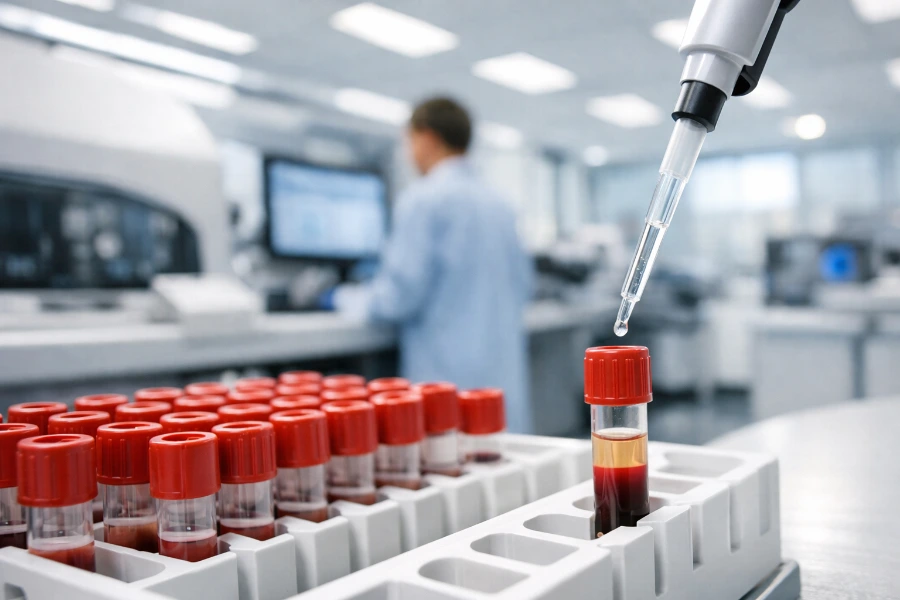
Helios, a Boston startup backed by Y Combinator and Formation VC, has exited stealth with a $2.3 million seed round and a home test targeting 2027.
Key Takeaways
- Helios raised a $2.3M seed from Y Combinator, Formation VC and angels. The lead investor and valuation are undisclosed.
- The at-home test reads more than 1,000 blood proteins from one drop and scores 70+ organs and pathways.
- Clinic sales are planned for early 2027 at $250-$600 per test. Consumer sales are targeted for late 2027.
Lead
Helios came out of stealth on November 18, 2026. It raised $2.3 million in seed funding from Y Combinator (Fall 2026 batch), Formation VC and a group of angel investors that includes AI founders, investors and physicians. The company has not named a lead investor or disclosed a valuation.
The Boston startup opened a waitlist for a blood test that measures more than 1,000 proteins from a single drop. It uses proteomics and AI to estimate organ health and future disease risk. The test is not yet on sale, and the company has not announced any FDA or CLIA clearance.
What Does the Helios Test Actually Measure?
The test reads more than 1,000 proteins, which Helios says it can turn into scores for more than 70 organs and pathways. It also estimates risk for conditions including heart failure, blood cancers and Alzheimer's disease. Customers collect the sample with a needle-free device at home and mail it to Helios' Boston lab.
The scientific premise has support. Published studies have linked blood proteins to more than 600 diseases, in some cases years or decades before diagnosis, according to the company. Helios plans to combine the protein readout with medical records and wearable data. An AI Health Coach will convert the results into recommendations on lifestyle, nutrition, supplements and follow-up care.
Cofounder Yousef Badran, a physician-scientist at Massachusetts General Hospital, framed the product around action: "Measurement only matters if it changes what you do next."
Who Is Behind Helios?
Three founders run the company. Omar Abudayyeh and Jonathan Gootenberg are CRISPR diagnostics researchers who worked at Harvard and MIT. They cofounded Sherlock Biosciences, whose test became the first FDA-authorized CRISPR diagnostic, as well as Proof Diagnostics and Tome Biosciences. Badran is an MD with a background in gastroenterology, internal medicine, drug development and digital health.
The company says its founders have raised more than $700 million across earlier ventures. That track record is the strongest argument for a seed round this small. A $2.3 million check is modest for a company that needs lab operations, a collection device and clinical validation.
Why Did Investors Compare Helios to Theranos?
Investors drew the comparison because any startup promising a full panel of results from a drop of blood invites it. According to The Information, several prospective investors likened the pitch to Theranos before the round closed. The founders responded with humor, registering the domain theranosbutworks.com and producing a comedic video that references a Theranos documentary.
The distinction Helios draws is technical. Theranos claimed to run conventional lab tests on tiny samples, and those claims were never substantiated. Helios measures proteins with an approach grounded in published research. The joke does not substitute for evidence, though. No independent validation of the test's accuracy has been presented, and risk scores for diseases such as Alzheimer's raise questions about clinical meaning and regulatory classification.
How Will Helios Sell the Test?
Helios will start with clinics, not consumers. The first sales are planned for early 2027 through longevity clinics and concierge physicians, at $250 to $600 per test. Direct-to-consumer sales are targeted for later in 2027.
That sequence lets a physician sit between the result and the customer. It also keeps the company in a segment where buyers already pay for extensive diagnostics. Broader sales will depend on whether the company can show that protein scores change outcomes and not merely generate anxiety.
What Comes Next for Helios?
The next milestones are operational and regulatory. Helios must scale its Boston lab, prove that finger-prick-style, needle-free samples yield results as reliable as venous draws, and clarify how its risk scores will be regulated. It will also need a larger round. A seed of $2.3 million is unlikely to cover a commercial launch, validation studies and a clinical sales team.
Competition exists in adjacent areas. Longevity-focused testing is a crowded category, and protein-based tests aimed at the same audience already circulate among clinics. Helios' bet is that its founders' diagnostics record and its AI layer can separate it from them.
Outlook
Helios has a credible founding team, a $2.3 million seed from Y Combinator and Formation VC, and a 2027 launch plan. It has not yet shown independent data, named a lead investor or disclosed a valuation. The Theranos jokes put its credibility at the center of its pitch, so published validation will matter more than the waitlist.