Pomegra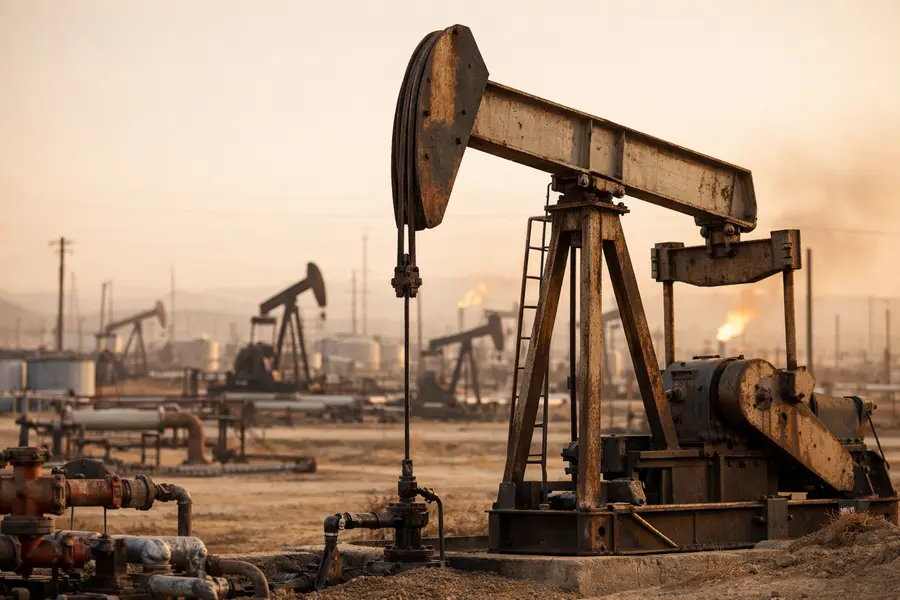
Australia's ASX 200 lost about 2% on Thursday to its lowest close since mid-June as higher oil prices and surging global bond yields hit equities.
- The ASX 200 fell 174.9 points, or 1.99%, to 8,614 on Thursday, its steepest one-day drop since early March.
- All 11 sectors fell, and about A$50 billion was erased from the market's value.
- US Treasury yields eased on Thursday and ASX futures point to a 0.5% rebound.
Lead
The ASX 200, Australia's benchmark market index, closed at 8,614 on Thursday, 1 October, down 174.9 points or 1.99%. The close was its lowest since mid-June and a new 50-day low. Higher crude prices pushed up inflation fears and bond yields worldwide, and the sell-off hit every sector of the Australian market. Energy, consumer non-cyclicals and real estate weighed most heavily.
The session was the worst for Australian equities since March. It extended a run of weakness driven by the Middle East conflict and the rate outlook.
Why Did the ASX 200 Fall 2%?
The ASX 200 fell because rising oil prices lifted inflation expectations, which in turn pushed government bond yields sharply higher and made equities less attractive.
Brent crude traded near US$100 a barrel, and US West Texas Intermediate gained 2.7% to settle at US$92.87 on Thursday as uncertainty over the Iran war persisted. Higher energy costs feed through to headline inflation and raise the odds that central banks keep policy tighter for longer.
Wall Street set the tone ahead of the Australian open. In the previous US session the Dow Jones Industrial Average fell 0.86% and the S&P 500 lost 0.25%. The Nasdaq Composite rose 0.23%. The tech-heavy gain did little to offset the pressure on rate-sensitive and commodity-linked stocks in Sydney.
Which Stocks and Sectors Took the Biggest Hit?
Mining, healthcare and insurance names took some of the sharpest losses, while a handful of technology stocks bucked the trend.
- Liontown Resources (LTR) fell 15.05% to A$0.79, the worst performer on the index, as lithium miners sold off.
- Lynas Rare Earths (LYC) dropped 8.60% to A$12.64 after announcing an A$968 million acquisition.
- Cochlear (COH) lost 5.4%, Yancoal (YAL) fell 4.7% and Suncorp (SUN) declined 4.3%.
- Data#3 (DTL) rose 13.68% to A$12.63 after a profit guidance beat, the index's best performer.
Iron ore slipped 0.69% to US$92.55 a tonne. Gold gained 0.8% to US$4,189 an ounce as investors sought safety. The Australian dollar edged up 0.14% to 69.53 US cents.
What Do Higher Bond Yields Mean for Australian Shares?
Higher bond yields raise the return investors can earn without taking equity risk, and they increase borrowing costs for companies and households, which compresses valuations.
Australia's policy-sensitive three-year government bond yield rose 3 basis points to 4.98%. Longer-dated yields moved further. The US 10-year Treasury yield reached about 5.3% during the Asian session, near its highest level since 2002. The 30-year yield climbed to roughly 5.63%, around levels last seen in 2002.
Yield-sensitive sectors such as property and utilities fall hardest when long-term rates move this quickly. Financials with large mortgage books also come under pressure when higher rates threaten credit quality.
How Did Wall Street and Treasuries React on Thursday?
US markets steadied on Thursday as Treasury yields reversed from their peaks and expectations for another federal reserve rate increase faded.
The 10-year Treasury yield initially climbed to 5.344%, its highest since 2002, before easing to around 5.24%. The 30-year yield retreated after reaching a 24-year high. Softer manufacturing data and dovish comments from Fed Vice Chair Philip Jefferson cut the market-implied probability of an October rate rise to roughly 28%, from nearly 70% a week earlier.
The S&P 500 rose 0.19% to 7,666.45. The Dow gained 0.04% to 50,926.56, and the Nasdaq Composite added 0.04% to 26,871.60. Micron Technology (MU) advanced about 3% after reporting quarterly revenue that quadrupled from a year earlier.
Geopolitical and Energy Dimension
The oil move traces directly to the Middle East. Supply risk tied to the Iran conflict has kept crude near US$100 a barrel and kept inflation expectations elevated across importing economies.
Australia is a net energy exporter, but the market still trades as a rate-sensitive, global-beta asset. Higher oil lifts domestic fuel costs and inflation, and it makes it harder for the Reserve Bank of Australia to avoid further tightening. Energy producers benefit from higher prices, but index-wide pressure from yields outweighed that support on Thursday.
What Comes Next for the ASX 200?
The ASX 200 is positioned for a partial rebound at the open on Friday, but its direction over the next three to twelve months depends on oil and yields.
S&P/ASX 200 futures rose 45 points, or 0.5%, to 8,678 after the reversal in global bond yields. That would recover only about a third of Thursday's loss and leave the index near the 50-day low it set at the close.
Three variables will shape the path. The first is whether Brent holds around US$100 or retreats as supply fears ease. The second is whether US 10-year yields stay below the 5.34% peak reached on Thursday. The third is the Fed's October decision, where market pricing has shifted toward a hold. A sustained fall in yields would relieve valuation pressure on property, healthcare and growth stocks. Another leg higher in crude would put the mid-June lows back in play.
Outlook
The ASX 200 ended Thursday at 8,614, its weakest close since mid-June, after oil and bond yields triggered a broad global sell-off. Wall Street's calmer finish and a retreat in Treasury yields offer short-term support, though energy prices and rate expectations remain the key drivers for Australian equities.