Pomegra
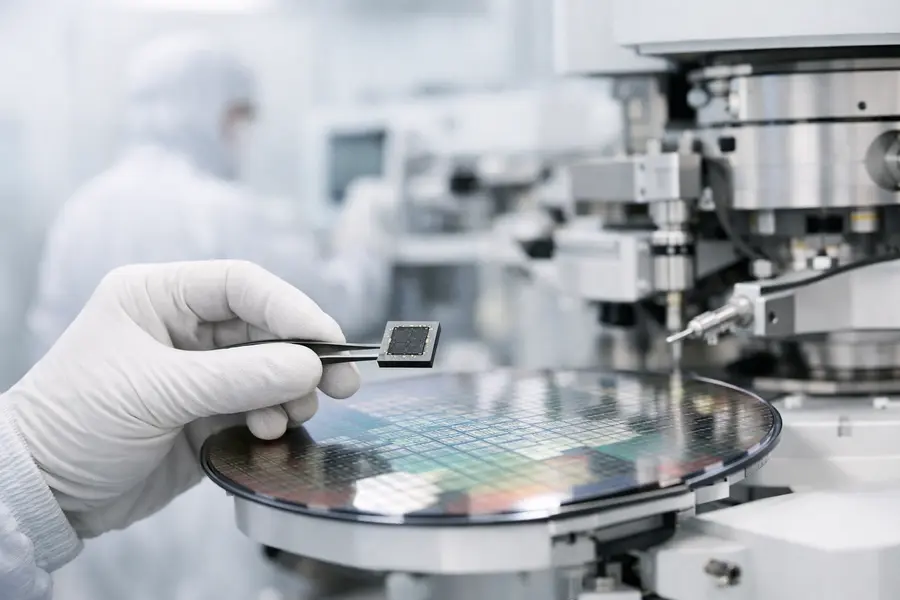
Hangzhou AI inference chip developer Nano-core Chip closed a Series C2 of more than RMB 1 billion in October 2026, weeks after a RMB 1 billion C1, as it prepares for volume production.
Key Takeaways
- Nano-core Chip raised over RMB 1 billion in Series C2, announced October 28, 2026; valuation undisclosed.
- JianTou Investment led, with Hangzhou Capital and Kaitai Capital participating.
- The round follows a RMB 1 billion Series C1 in September; first chips sample in early 2027.
Lead
Nano-core Chip, a Hangzhou-based developer of AI inference chips, announced on October 28, 2026 that it had raised more than RMB 1 billion in a Series C2 round. JianTou Investment led the financing. Hangzhou Capital, Kaitai Capital and other investors, whose names were not disclosed, also took part.
The company has not disclosed a valuation. Together with the RMB 1 billion Series C1 announced in September, the two tranches bring the company's recent fundraising to more than RMB 2 billion in roughly two months.
What Does Nano-core Chip Build?
Nano-core Chip designs chips for AI inference, the stage at which trained models answer queries, as opposed to the training stage. Its products combine three-dimensional near-memory computing, in-memory computing and RISC-V processing. The product line targets both end devices and cloud infrastructure.
The company was founded in 2021 and incubated at a Peking University research institute in Zhejiang. Its approach places computation close to, or inside, memory. That design aims to cut the energy and time lost moving data between memory and processor, a recurring bottleneck in inference workloads.
Why Did Nano-core Chip Raise Two Rounds in Quick Succession?
The company split its Series C into C1 and C2 tranches, which suggests investors committed capital in stages rather than in a single close. Nano-core Chip said it will spend the proceeds on product development and preparation for volume production. Two consecutive billion-yuan rounds fit a company moving from design toward manufacturing, where mask sets, packaging and validation absorb large sums before any revenue arrives.
A C2 label also implies the C1 terms were not the final word. With no valuation disclosed for either tranche, outsiders cannot tell whether the second round priced above the first. That gap leaves open whether investors paid up for progress or simply extended the same bet.
Where Does the Chip Roadmap Stand?
The company said its first three chips have completed tape-out, the point at which a finished design is sent to a foundry. Customer sampling and initial volume shipments are planned for early 2027. That timetable gives the company a short window to convert financing into shipped silicon.
Tape-out is a milestone, not proof of product-market fit. Performance in customer workloads, software tooling and yield at volume will decide whether the architecture holds up outside the lab. In-memory and near-memory designs have drawn strong interest in China but remain less proven at scale than conventional GPU-based inference.
How Does This Fit the Wider Chinese Chip Funding Wave?
Nano-core Chip is one of several Chinese AI compute chip startups that raised billion-yuan sums in October 2026, with peers pursuing processing-in-memory and embodied-intelligence designs. Investor appetite for domestic alternatives to imported accelerators remains strong, and local government-linked capital features prominently. The presence of Hangzhou Capital in the C2 round points to that pattern, with municipal backing for a local chip company.
The concentration of capital in memory-centric architectures reflects a bet that inference, not training, will drive most future chip demand. It also reflects a view that alternatives to the GPU model may find room where cost and power efficiency matter more than raw peak performance.
What Comes Next for Nano-core Chip?
The next test arrives in early 2027, when customers receive samples and the first volume units ship. If sampling goes well, the company would likely need further capital for production ramp-up, though it has not said so. If silicon performance or software support falls short, two rounds worth more than RMB 2 billion would raise the bar for explaining the gap.
Investors will also watch whether the company names anchor customers in devices or cloud. A disclosed valuation, an IPO plan or a further round would each signal how the market prices the company after tape-out.
Outlook
Nano-core Chip enters 2027 with more than RMB 2 billion in recent funding, three taped-out chips and a sampling schedule that begins in the first quarter. The financing confirms strong domestic backing for memory-centric inference silicon, but valuation and customer details remain undisclosed. Early-2027 sampling results will show whether the architecture performs outside the design lab.