Pomegra
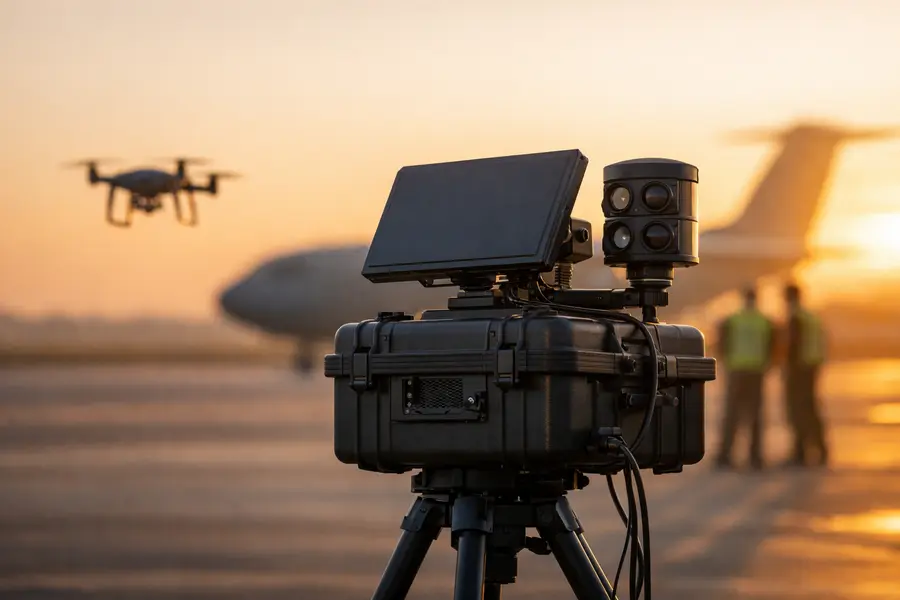
Paris-based Gallium Defense has left stealth with a €7.1M seed round to sell a drone-detection radar at roughly a quarter of the price of rival systems.
Key Takeaways
- Gallium Defense closed a €7.1M seed round led by Keen Venture Partners and 360 Capital; valuation is undisclosed.
- Its GDS-10 radar targets a €500,000 unit price against €2M-€5M for comparable systems, with a 10 km range.
- The company is pre-revenue, targets about €6M in orders by 2027 and plans to open commercial orders in Q1 2027.
Lead
Gallium Defense, a Paris startup founded in April 2026, announced on November 2, 2026 that it has raised a €7.1M seed round. Keen Venture Partners and 360 Capital led the round, with Omnes Capital and Polytechnique Ventures also investing. The company did not disclose a valuation. The announcement coincides with European Defence Week in Paris, which runs from November 2 to 6.
The money funds production, hiring, training of AI detection models and customer demonstrations for the GDS-10, an X-band radar built to spot small drones at long range for far less than existing products cost.
What Does the GDS-10 Actually Do?
The GDS-10 is an X-band AESA radar (active electronically scanned array) that detects Class 1 and FPV drones out to 10 km. It covers 360 degrees in azimuth and 90 degrees in elevation, tracks several targets at once, including swarms, and is designed to work day and night, in all weather and under jamming.
The company sells two variants, one for critical infrastructure and one for military use. It displaces higher-priced radar from specialists such as Robin Radar Systems and Echodyne, which Gallium names alongside newer entrants including Chaos Industries, Alta Ares, Cambridge Aerospace and Stendr as competition.
How Can a Startup Cut Radar Costs by Such a Margin?
Gallium Defense cuts cost by building the antenna from gallium nitride amplifiers originally made for 5G telecom networks, paired with off-the-shelf Nvidia computing hardware. The company says this reduces antenna costs by more than 90%.
CEO and co-founder Eric Fournier, who has 17 years in the defence sector, frames the target as meeting 80% of the need at 20% of the price. He has described the engineering as hard, since 5G parts were never designed for radar duty. The company is aiming for a €500,000 unit price, with final pricing due in April 2027. Fournier puts comparable radars at €2M to €5M.
The co-founders are Fournier, Florian Lemoine and Robin Mandel, who have defence and industrial backgrounds. Development work began in 2024, before the company was formally incorporated.
What Does the Round Say About Investor Appetite?
The round shows investors will back a hardware defence company before it has revenue or a delivered product. Gallium Defense has no customers under contract. It reports six potential customers in discussions, and says roughly 48 prospects are in its pipeline, nearly all military, with only two from energy or data center operators.
That mix matters. A €7.1M seed is modest by defence-tech standards in 2026, and the company's thesis rests on a price point that has yet to be tested in a procurement cycle. Sales to military buyers tend to run slowly, and a radar that wins a demonstration does not always win a contract. The backing from French funds, including a spinout-focused vehicle tied to Polytechnique, also fits a pattern of European capital seeking domestic suppliers for air defence.
What Comes Next for Gallium Defense?
Gallium Defense will run monthly outdoor trials, each lasting two to five days, to refine detection performance. The company conducted its first open-air field trials about four months after closing the round. It plans to open commercial orders in Q1 2027, with first units potentially shipping in June 2027, and it targets about €6M in orders by 2027.
Headcount stands at 15, with a target of 17 by the end of 2026 and 30 to 50 in 2027. At €500,000 a unit, €6M in orders equates to about twelve radars, a small number that illustrates how early the company sits.
Outlook
Gallium Defense enters a field where demand for drone detection is rising and per-unit prices have limited buyers. Its 5G-derived hardware is a credible route to lower costs, but the claims remain unproven until field results and customer contracts arrive. The Q1 2027 order window and the April 2027 pricing decision will show whether the €500,000 target holds.