Pomegra
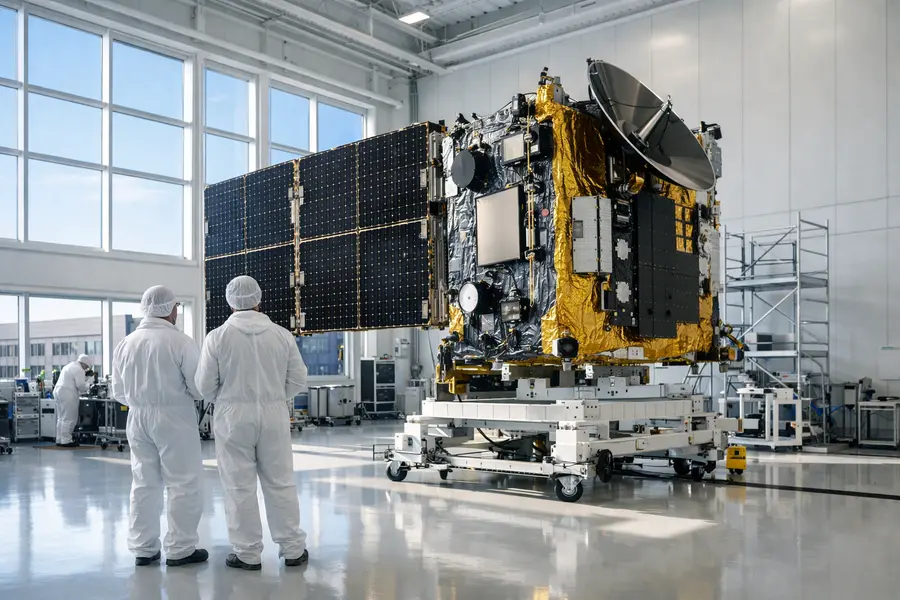
Sydney's MP Space raised A$23 million in seed funding led by Blackbird, with Seraphim Space joining, to scale Australian spacecraft power manufacturing.
Key Takeaways
- MP Space closed a A$23 million seed round led by Blackbird in late October 2026; valuation was not disclosed.
- Seraphim Space, Systemiq Capital, Speedinvest and MFV Partners also invested.
- The startup's power systems are designed into missions totaling more than 500 spacecraft.
Lead
MP Space, a Sydney startup building power systems for spacecraft, announced a A$23 million seed round on 27 October 2026. Australian venture firm Blackbird led the round. Seraphim Space, Systemiq Capital, Speedinvest and MFV Partners participated. The company did not disclose a valuation.
Founded in January 2024, MP Space is less than three years old. The raise is among the larger seed rounds the Australian space sector has seen.
What Does MP Space Actually Build?
MP Space makes hardware and software that generate, store and manage electrical power on spacecraft. Its core product is a software-defined battery system, which the company says delivers among the highest gravimetric energy densities of any space battery. Gravimetric energy density measures energy stored per kilogram, a figure that matters because every gram launched carries a cost.
The pitch is aimed at satellite operators building larger, more power-hungry spacecraft. CEO and co-founder Jay Manley said the next generation of spacecraft will need much more power, and that the industry needs better ways to produce, store and manage it. The company's products sit in the same supply chain as established battery and solar-array vendors, which it must displace on performance and price.
Who Founded It and What Is the Traction?
Manley and co-founder Sam Paterson both worked at Tesla. Manley spent eight years in powertrain and energy; Paterson worked on battery packs, including products such as the Powerwall and the Model S, X and 3, and later held roles at Apple, Zoox and Vow.
On traction, MP Space says its power systems are designed into space services and missions totaling more than 500 spacecraft, and that two constellations are already customers. Flight heritage, the track record of hardware that has operated in orbit, was expected in October 2026. That milestone matters more than the design wins, since satellite buyers tend to favor components that have already flown.
Why Does This Round Matter for Australian Space?
The round matters because it pairs a local lead with a foreign specialist. Seraphim Space, which describes itself as the world's most prolific space investor, made its first investment in an Australian company with this deal. Speedinvest and Systemiq add European capital to a cap table that Blackbird anchors.
A seed round of this size, with no disclosed prior funding, implies investors are paying for manufacturing capacity and not only for a prototype. That is a heavier bet than the typical seed check. It also carries heavier risk: scaling hardware production runs on capital and qualification schedules, and a delay in either pushes revenue out.
How Will the Money Be Used?
MP Space plans to spend the money on three things: expanding local manufacturing capacity, broadening its range of power-system platforms, and growing its Australian engineering team. The company is based at the NSW Defence and Aerospace Hub at Cicada Innovations in Sydney.
Keeping production onshore fits a broader push in Australia to build sovereign space capability. The company has not published production volumes, pricing or revenue, so the economics of that strategy remain unclear.
What Comes Next?
The near-term test is orbital performance. Flight data from its first missions will either support the energy density claims or force revisions, and the 500-spacecraft design pipeline converts to revenue only if those flights go well.
A follow-on Series A would likely hinge on that data and on evidence that local manufacturing can meet delivery schedules for constellation customers. Competitors in satellite batteries and power electronics are established, so the startup's advantage will need to show up in measured mass and cost savings.
Outlook
MP Space has A$23 million, a Blackbird-led syndicate and a design pipeline covering more than 500 spacecraft. It has not yet shown multi-mission flight results or disclosed revenue. The next 12 months of orbital data and factory output will determine whether the seed valuation, whatever it was, holds up at the next round.