Pomegra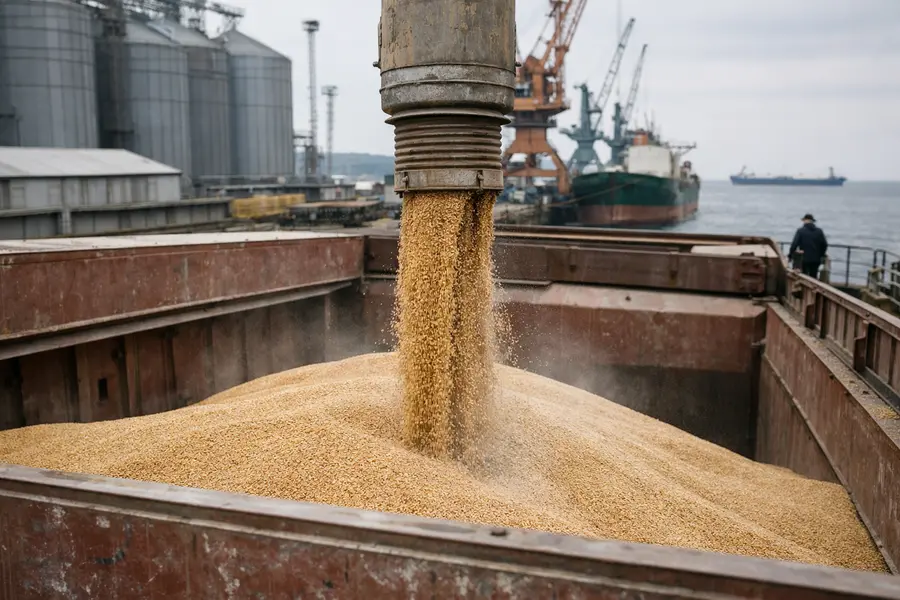
Wheat settled at 784 cents per bushel and corn at 536.5 cents as Russian strikes on Black Sea commercial shipping cut Ukrainian grain exports 76% year-over-year in August, sparking a global agricultural commodity crisis.
- Wheat futures settled at 784 cents per bushel, the highest closing price since February 2023.
- Corn reached 536.5 cents per bushel, a level last seen in July 2023, as the Black Sea shipping corridor effectively closes.
- Ukrainian grain export volumes collapsed 76% year-over-year in August, removing one of the world's largest agricultural suppliers from global markets.
Lead
Agricultural commodity markets registered their sharpest gains in years as wheat futures settled at 784 cents per bushel -- their highest close since February 2023 -- and corn contracts climbed to 536.5 cents per bushel, a level last seen in July 2023. The catalyst is a sustained Russian campaign against Black Sea commercial shipping that has severed Ukraine's primary grain export corridor and eliminated a supplier accounting for roughly 10% of world wheat trade. Ukrainian grain shipments fell 76% year-over-year in August alone, transforming a managed supply disruption into a full-scale agricultural commodity crisis with cascading consequences across global food systems.
Why Are Wheat and Corn Futures Surging Now?
Ukrainian grain -- wheat, corn, and sunflower products -- had continued flowing to world markets through informal arrangements after Russia's formal withdrawal from the UN-brokered Black Sea Grain Initiative in July 2023. That residual corridor has now collapsed. Russian naval and aerial strikes targeting commercial vessels operating in and around Black Sea shipping lanes escalated sharply through August, deterring commercial operators and triggering insurance market exits that rendered routing cargo through Ukrainian ports commercially unviable.
The Lloyd's of London war-risk market revised its Black Sea classifications at successive intervals, with premiums on vessels bound for Odessa, Chornomorsk, and Pivdennyi terminals reaching levels that in some cases exceed the commercial value of individual cargo consignments. By late August, vessel arrivals at those terminals had fallen from multi-vessel daily traffic to sporadic entries supported only by operators absorbing prohibitive war-risk costs.
Wheat futures (WEAT) and corn futures (CORN) have sustained upward pressure across multiple consecutive sessions. The Invesco DB Agriculture Fund (DBA), a broad agricultural commodity vehicle, tracked the move higher as grain-dependent import markets across North Africa, the Middle East, and Southeast Asia moved to secure alternative supplies at any available price point.
What Does This Mean for Global Food Security?
Roughly 50 nations relied on Ukrainian grain as a primary import source before the August disruption. Egypt, the world's largest wheat importer, sources a material share of its supply from Ukraine and Russia combined. Tunisia, Yemen, and Lebanon -- all carrying elevated fiscal stress and limited foreign-exchange buffers -- face renewed inflationary pressure on their most politically sensitive commodity at a moment when government subsidy systems are already strained.
Global food price indices, which had retreated substantially from their 2022 peaks as supply chains normalized, are reversing that trajectory. The FAO Food Price Index is projected to register a meaningful upward shift in its next monthly release if Ukrainian export capacity remains suppressed through the fall harvest season. Prior spikes in the index in 2022 correlated directly with domestic food inflation in import-dependent economies, contributing to civil unrest in several North African and Middle Eastern countries.
Grain trading houses with Black Sea exposure -- including Bunge (BG) and Archer-Daniels-Midland (ADM) -- have disclosed force majeure conditions across portions of their Eastern European supply chains. Shares of both companies moved in response to the supply shock as markets assessed rerouting costs and margin pressures now embedded in their operating environments. Cargill, privately held, disclosed comparable logistical disruptions across its Ukrainian origination network.
How the Black Sea Corridor Collapsed
The deterioration followed three sequential phases. Russia's July 2023 suspension of the Grain Initiative removed legal protections for commercial vessels transiting the western Black Sea. Ukrainian drone strikes on Russian naval assets in Sevastopol then prompted Moscow to declare that all vessels transiting to Ukrainian ports would be treated as potential military targets. The third phase -- the Lloyd's war-risk reclassification -- translated those declared threats into commercial impossibility.
By August, Ukrainian port throughput at its three primary grain terminals had dropped to levels consistent with near-complete export paralysis. Romania's Constanta port, the largest alternative Black Sea terminal under EU jurisdiction, is operating near physical capacity and lacks the throughput infrastructure to absorb Ukrainian volumes at the required scale. Land-based EU solidarity lanes through Poland and the Baltic states offer partial relief but cannot replicate maritime throughput on any near-term timeline.
The MOEX Russia Index has reflected the geopolitical escalation through elevated volatility in Russian commodity export sectors, as Western sanctions enforcement and the operational intensity of the Black Sea campaign intersect with Russia's own grain export revenues -- a tension Moscow has navigated by maintaining its own export flows while disrupting Ukraine's.
Outlook
The price trajectory for wheat and corn depends on three variables: the pace and geographic scope of Black Sea hostilities, the throughput ceiling of alternative land and Romanian port corridors, and the Northern Hemisphere harvest assessments due through September and October. Southern Hemisphere planting, which could provide incremental supply relief, remains months from production.
With maritime alternatives structurally constrained and land routes operating at capacity, the fundamental gap in global grain supply is unlikely to close before early 2027 under current conditions. Wheat at 784 cents and corn at 536.5 cents reflect not a temporary spike but a structural repricing of the global grain supply curve -- one driven by geopolitical disruption to a corridor that had served as a critical stabilizer for world food markets since the 2022 invasion began.
Mentioned tickers: WEAT, CORN, DBA, BG, ADM, GLD