Pomegra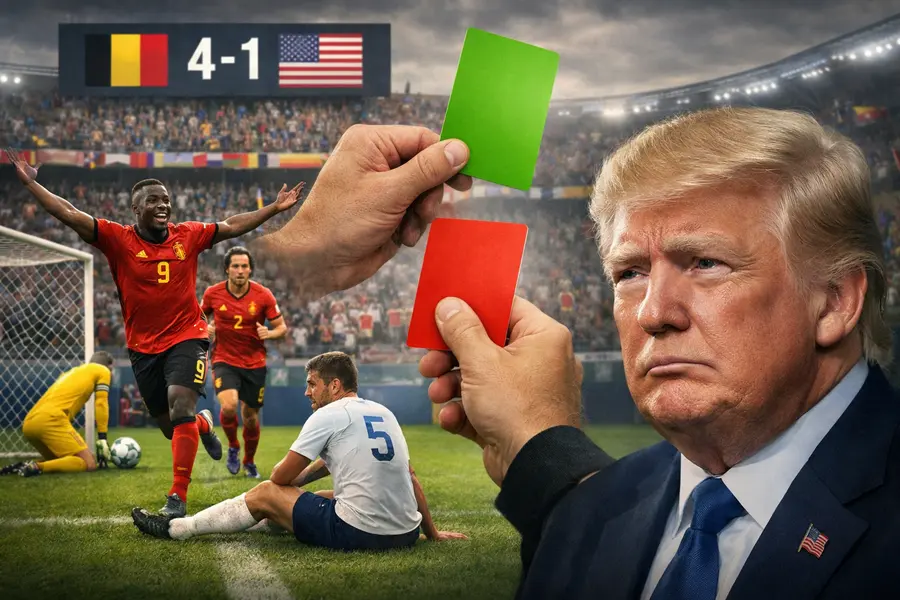
The United States' 2026 FIFA World Cup campaign collapsed on July 6 in a 4-1 Round of 16 loss to Belgium, overshadowed by an unprecedented presidential intervention and a red card controversy that drew global condemnation.
- FIFA overturned striker Folarin Balogun's automatic red card suspension for the first time since 1962, following a call from President Trump to FIFA chief Gianni Infantino.
- Belgium dismantled the co-host nation 4-1, with Balogun — restored to the lineup — managing just 11 touches in the opening period.
- UEFA labeled FIFA's ruling "unprecedented, incomprehensible and unjustifiable," raising alarms over political interference in sport's governing institutions.
Lead
The United States' dream of winning the 2026 FIFA World Cup on home soil ended at the Round of 16 on July 6, as Belgium delivered a clinical 4-1 defeat that rendered the surrounding political theater moot. The US World Cup exit followed days of turbulence stemming from a red card issued to forward Folarin Balogun during a group-stage win over Bosnia-Herzegovina — and a phone call from the White House that shook football's governance structures to their core.
What Happened
Balogun was shown a red card in the 64th minute of the United States' 2-0 Round of 32 victory over Bosnia-Herzegovina on July 1, after a VAR review determined he had inadvertently stepped on the leg of midfielder Tarik Muharemović. Under standard FIFA World Cup rules, the dismissal carried an automatic one-game ban — a suspension that would have ruled him out of the Belgium fixture.
FIFA's disciplinary committee, however, suspended the ban on July 5, making Balogun available in a decision the organization described as a review of the foul's intent. It was the first such reversal in more than 60 years of World Cup competition. Belgium immediately challenged the ruling; FIFA dismissed the appeal as inadmissible. The match went ahead with Balogun in the starting lineup.
Trump World Cup Comments and Political Fallout
President Donald Trump confirmed on July 6 — hours before kickoff — that he had personally telephoned FIFA President Gianni Infantino to press for a review of the suspension. "All I did was ask for a review — I didn't say, 'You have to do this,'" Trump said, while simultaneously calling the original referee "a bit suspect." The White House had spent several days consulting legal counsel before Trump placed the call.
The Trump World Cup intervention immediately triggered institutional pushback. UEFA, European football's governing body, issued a formal statement declaring that FIFA had crossed a "red line" and that the integrity of the rules depends on their consistent application. The European body characterized the reversal as a capitulation to political pressure, warning that selective enforcement undermines the credibility of international competition.
On the Pitch: A Collapse Without Excuses
Balogun's reinstatement offered scant dividend. Belgium's superior tactical organization neutralized the U.S. attacking structure within the first twenty minutes. Balogun managed just 11 touches in the opening half and was largely absent from the game's decisive passages. The final scoreline — 4-1 — was a faithful reflection of the contest.
Recollections of the US vs. Netherlands red card match from the 2022 World Cup, when the Americans were eliminated 3-1 in Qatar, resurfaced among supporters in the days before the Belgium fixture as a historical benchmark for U.S. knockout-stage exits. Monday's defeat was considerably heavier, and the political backdrop made it impossible to frame as a clean sporting loss.
After the final whistle, Belgium's official account on X posted two words: "Overturn this" — a direct reference to Trump's intervention that spread rapidly across social media.
FIFA World Cup Politics: A Structural Test
The episode exposed fault lines in FIFA World Cup politics that extend beyond a single suspended ban. Critics noted that the co-host nation benefited from an exemption applied for the first time in modern tournament history, following direct contact between a sitting head of state and FIFA's president. FIFA defended the original referee's conduct but offered no procedural explanation for why the Balogun case warranted a departure from established precedent.
The episode arrives at a sensitive moment for FIFA. The 2026 edition — jointly hosted by the United States, Canada, and Mexico — is the organization's most commercially ambitious tournament to date, with revenues and broadcast rights tied to deep U.S. market penetration. Whether the governing body's disciplinary independence can survive that financial and political weight is a question that will follow the tournament long after Belgium's 4-1 victory fades from the record books.
Outlook
The United States' US World Cup exit ends a tournament that generated record-breaking domestic interest but left co-host ambitions unmet on the pitch and fractured off it. FIFA faces mounting pressure from UEFA and national associations to clarify the procedural basis for the Balogun ruling and to establish guardrails against future presidential or governmental contact with tournament officials. Belgium advances; the institutional damage from the intervention lingers, with governance reform discussions likely to dominate FIFA's post-tournament agenda.
Mentioned tickers: none