Pomegra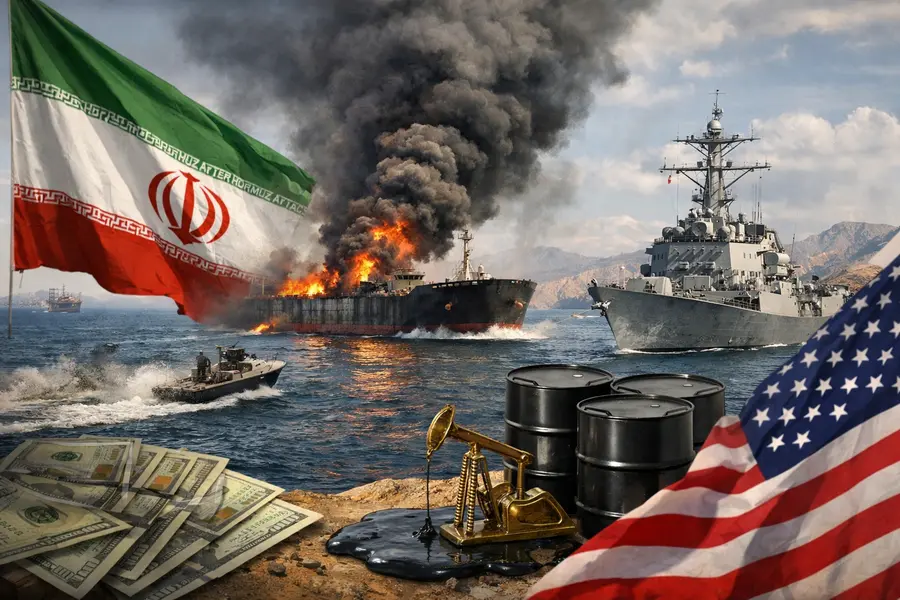
The U.S. Treasury canceled Iran's General License X on July 7, ending authorized Iranian oil sales after Tehran struck commercial tankers in the Strait of Hormuz, in breach of a June ceasefire accord.
- OFAC revoked General License X on July 7, issuing GL X1 to authorize wind-down transactions only through July 17, 2026.
- Iran attacked at least three vessels — including a Qatari LNG tanker and a Saudi crude carrier — violating the June 17 Memorandum of Understanding.
- Brent crude settled 3% higher at $74.16/barrel on July 7, touching $75-plus intraday before paring gains.
Lead
The U.S. Treasury Department's Office of Foreign Assets Control revoked Iran General License X on July 7, 2026, stripping Tehran of an authorization that had permitted global trade in Iranian-origin crude oil, petrochemical products, and refined petroleum products. The move, effective immediately, came within hours of Iran striking three commercial vessels — including a Qatari liquefied natural gas tanker and a Saudi crude oil carrier — in Oman's territorial waters near the Strait of Hormuz. A U.S. official described the attacks as a "gross violation" of the performance-based Memorandum of Understanding signed just three weeks earlier.
What Happened
OFAC had issued General License X on June 22, 2026, following the signing of an interim Memorandum of Understanding between Washington and Tehran on June 17. That agreement, reached in the aftermath of Operation Epic Fury — the coordinated U.S.-Israeli military campaign launched February 28 that resulted in the death of Supreme Leader Ali Khamenei — established a 60-day negotiating window. A central MOU condition required Iran to guarantee safe, unimpeded passage for commercial shipping through the Strait of Hormuz.GL X had authorized the full suite of Iranian oil commerce — production, delivery, sale, and import into the United States — through August 21, 2026. On July 7, OFAC revoked GL X ahead of its scheduled expiration, replacing it with the narrower Iran General License X1 (GL X1), which permits only those transactions strictly necessary to wind down positions established under GL X. That wind-down window closes at 12:01 a.m. EDT on July 17, 2026. New transactions are explicitly prohibited.
The Tanker Attacks
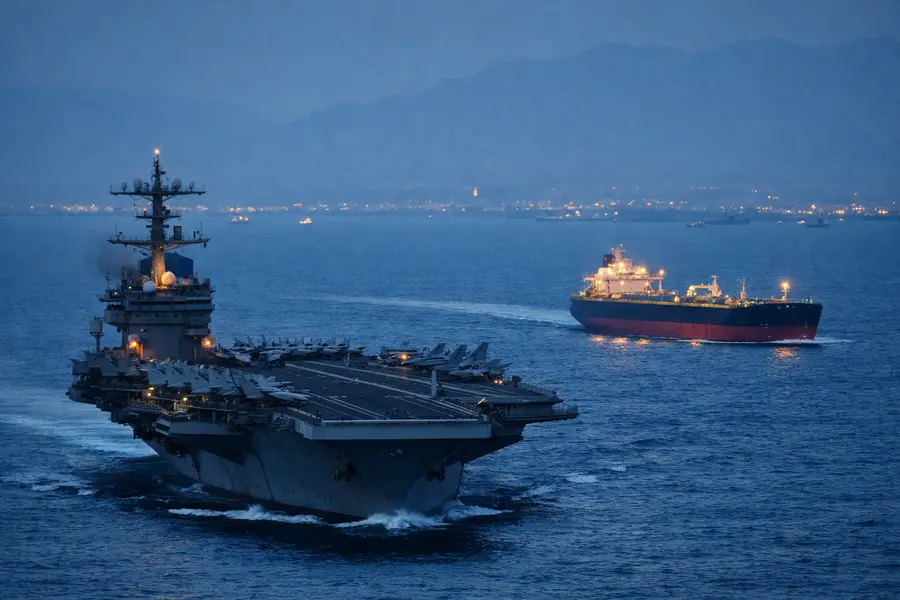
Iran fired on three vessels transiting near the Strait of Hormuz on July 7. The Qatari-flagged LNG carrier al-Rakiyat was struck while transiting the waterway, prompting Doha's Foreign Ministry to formally protest. Tehran also targeted the Saudi crude oil tanker Wedyan, which Riyadh's Foreign Ministry confirmed was attacked while passing through the strait. A third vessel was struck in Omani territorial waters.
The attacks occurred on vessels using a U.S. Navy-protected corridor along Oman's coast. Tehran had separately demanded that commercial shipping use a northern route under its control. Washington characterized the strikes as a direct material breach of MOU obligations, triggering the revocation clause embedded in the performance-based structure of GL X.
The U.S. responded with retaliatory strikes on dozens of Iranian military targets.
Market Reaction
Brent crude futures surged on the news, rising as much as 5.3% intraday to breach $75 per barrel before settling 3% higher at $74.16. WTI tracked the move broadly in line. Despite the spike, both benchmarks remained near their lowest levels since late February, as rising global supply expectations — including higher OPEC+ output and expanding non-OPEC production — continued to weigh on the market's structural outlook. Tanker equities posted sharp gains. Operators with exposure to Middle East shipping routes saw elevated volume as market participants priced in renewed risk premiums for Hormuz transits. Shipping insurance underwriters also reassessed war-risk surcharges across the corridor.Strategic Context
The Strait of Hormuz remains the world's most critical oil chokepoint: roughly 20% of globally traded crude and refined products, along with the majority of liquefied natural gas exports from Qatar — the world's third-largest LNG supplier — transits the 21-mile-wide passage. Any sustained disruption to those flows carries outsized consequences for European and Asian energy markets already adjusting to post-conflict supply reconfigurations.
Iran was exporting roughly 2 million barrels per day of crude, condensates, and refined petroleum prior to the February military campaign. A U.S. naval blockade implemented in mid-April cut that figure to approximately 200,000 barrels per day — a reduction equivalent to roughly 1.8% of global supply. GL X had begun restoring some flows to lawful commerce and pulling hundreds of Iranian-linked tankers from OFAC's Specially Designated Nationals list.
The revocation re-imposes the full weight of Iran sanctions, removing that partial supply restoration from the global market at a moment when the Hormuz corridor itself faces renewed physical risk.
Geopolitical Dimension
The MOU signed June 17 represented the first formal framework between Washington and Tehran since the February strikes eliminated the Islamic Republic's post-revolutionary leadership structure. The performance-based architecture of GL X — conditioning sanctions relief entirely on Iranian compliance — was designed to give Treasury a rapid enforcement mechanism without requiring congressional action. The July 7 revocation demonstrates that mechanism in operation.
With Khamenei's successor not yet formally consolidated, Tehran's chain of command over its military and naval forces remains contested. Analysts tracking the region note the attacks may reflect internal factional pressures rather than a unified strategic decision — a dynamic that complicates U.S.-led diplomatic efforts to secure a durable ceasefire and opens the possibility of further uncoordinated escalations near the strait.
Outlook
The revocation of General License X ends a brief, partial reintegration of Iranian oil into legitimate global commerce. With GL X1 expiring July 17, parties have a narrow window to unwind positions before the full sanctions regime re-engages. Oil markets face dual pressure: the loss of any near-term Iranian supply normalization and renewed physical risk to Hormuz corridor shipping. The trajectory of U.S.-Iran negotiations — and the stability of Tehran's internal command structure — will determine whether a revised MOU can be struck before the sixty-day window initially contemplated closes entirely.
Mentioned tickers: USO, BNO, XLE, XOM, CVX, FRO, STNG, DHT---
Sources:
- [U.S. revokes Iran oil sales authorization after tanker attacks — CNBC](https://www.cnbc.com/2026/07/07/us-revokes-iran-oil-sanctions-waiver-tanker-attacks.html)
- [OFAC Reverses US Sanctions Relaxation — Baker McKenzie Global Sanctions Blog](https://sanctionsnews.bakermckenzie.com/ofac-reverses-us-sanctions-relaxation-related-to-us-iran-memorandum-of-understanding/)
- [Issuance of Amended Iran-related General License — OFAC](https://ofac.treasury.gov/recent-actions/20260707)
- [Oil prices jump 5% after U.S. revokes Iran oil sanctions waiver — NBC News](https://www.nbcnews.com/business/markets/oil-prices-strait-hormuz-chip-stocks-rcna353328)
- [Iran strikes three vessels near Strait of Hormuz — CNN](https://www.cnn.com/2026/07/07/middleeast/hormuz-tanker-iran-attack-intl-hnk)
- [U.S. and Iran launch fresh strikes after attacks on commercial ships — Washington Post](https://www.washingtonpost.com/world/2026/07/07/tanker-fire-after-being-struck-strait-hormuz-british-military-says/)
- [US–Iran Sanctions Update: OFAC Issues General License X — Greenberg Traurig](https://www.gtlaw.com/en/insights/2026/7/us-iran-sanctions-update-ofac-issues-general-license-x-following-signing-of-memorandum-of-understanding)
- [Iranian Oil Exports Nosedive After U.S. Blockade — FDD](https://www.fdd.org/analysis/2026/05/21/iranian-oil-exports-nosedive-after-u-s-blockade-begins/) }}