Pomegra
U.S. stock futures dropped sharply Wednesday after President Trump declared the Islamabad ceasefire with Iran "over," sending Brent crude surging 6% and gold to $5,400 as investors braced for renewed Hormuz disruptions.
- Dow E-mini futures fell 620 points (–1.17%), S&P 500 futures shed 0.84%, and Nasdaq 100 futures dropped 1.12% to a four-week low after Trump scrapped the Iran deal at the NATO summit in Ankara.
- Brent crude surged 6% to $78.54 a barrel and WTI rose 6% to $74.75 following missile attacks on three commercial vessels in the Strait of Hormuz.
- Gold climbed to $5,400 an ounce — extending its 2026 gain to roughly 22% — as institutional investors accelerated their rotation into safe-haven assets.
Lead
U.S. equity futures plunged in early Wednesday trading after President Donald Trump, speaking at the NATO summit in Ankara, Turkey, declared the Islamabad Memorandum — the June 17 U.S.-Iran ceasefire framework — "over" and "just a waste of time." The remarks followed overnight missile strikes on three commercial vessels transiting the Strait of Hormuz, a fresh wave of U.S. airstrikes on Iranian coastal positions, and Iranian retaliatory strikes reportedly targeting more than 80 American military facilities across Bahrain and Kuwait. Dow E-mini futures shed 620 points, or 1.17%; S&P 500 E-minis dropped 63.75 points, or 0.84%; and Nasdaq 100 E-minis fell 330 points, or 1.12%, touching a four-week low.
What Happened
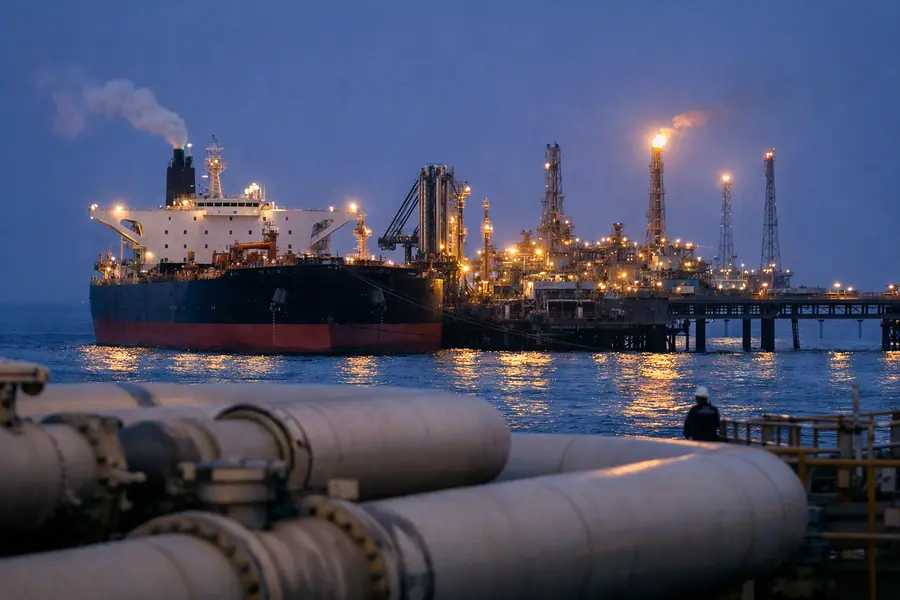
Three commercial vessels were struck by projectiles in the Strait of Hormuz on the night of July 7. The Qatari-owned LNG tanker Al Rekayat suffered an engine-room fire that put it at risk of explosion; the Saudi-flagged supertanker Wedyan sustained structural damage; and a third vessel was struck by a drone off the coast of Oman. Qatar formally accused Iran of orchestrating the attack on its tanker.
U.S. Central Command (CENTCOM) responded with a wave of strikes against Iranian military installations near the Strait, while the Treasury Department simultaneously reimposed sanctions on Iranian oil exports — revoking waivers granted under the Islamabad agreement. Iran's Islamic Revolutionary Guard Corps (IRGC) said it then struck more than 80 U.S. military facilities in Bahrain and Kuwait in retaliation.Trump, addressing reporters on the NATO summit sidelines, said he no longer had any interest in engaging with Tehran. His comments extinguished what had been, until 24 hours earlier, a near-finalized pathway toward a broader diplomatic settlement.
Market Reaction
The premarket selloff was broad and immediate. Energy shares were the sole sector in positive territory across U.S. and European markets. The pan-European Stoxx 600 fell 1.8%, with all major regional bourses in the red.
Brent crude surged 6% to $78.54 a barrel, and West Texas Intermediate (WTI) climbed 6% to $74.75 — reflecting acute concern that renewed hostilities could disrupt the roughly 35% of global seaborne crude that transits the Strait of Hormuz. An initial closure of the waterway earlier in 2026 had produced a reduction in global oil supply of approximately 10 million barrels per day, the largest on record. Gold futures rose to $5,400 an ounce, the metal's highest level in weeks, as investors accelerated their rotation into safe-haven assets. U.S. Treasury yields declined modestly as bond demand rose alongside the geopolitical premium.Geopolitical Dimension
The Islamabad Memorandum, signed June 17 by the presidents of the United States and Iran, was a 14-point framework establishing a 60-day negotiating window. Its terms included a mutual cessation of military strikes, toll-free commercial access through the Strait of Hormuz, the lifting of the U.S. naval blockade on Iranian ports, and a 60-day ceasefire extension.
The agreement had shown signs of strain before Tuesday's attacks. Iran formally accused Washington of multiple violations: imposing a parallel shipping corridor through the Strait, revoking oil export waivers, and resuming limited airstrikes against five Iranian coastal sites in late June. Tehran fired ballistic missiles and drones at U.S. facilities in Kuwait and Bahrain on June 28, citing those strikes as justification.
The July 7 tanker attacks — and Trump's subsequent remarks in Ankara — have now collapsed the diplomatic track.
Strategic Context
The Strait of Hormuz remains the world's most critical oil chokepoint, with roughly one-fifth of global petroleum supply — including crude from Saudi Arabia, Iraq, Kuwait, the UAE, and Iran — flowing through the narrow waterway. Even partial disruptions carry material consequences for energy prices, global supply chains, and inflation.
Shipping insurance costs for Hormuz-transiting vessels had already risen sharply during the spring conflict, effectively pushing commercial operators toward alternative routes. A renewed closure would test the limited compensatory capacity of Saudi Aramco's East-West Pipeline and the Abu Dhabi Crude Oil Pipeline, neither of which can fully substitute for Strait volumes.
The escalation also complicates the Federal Reserve's policy stance. Oil-driven inflation had shown signs of ebbing following partial normalization of Gulf supply in late June; a fresh shock reverses that progress and clouds the timeline for any rate adjustments.
What Comes Next
Diplomatic channels are not entirely exhausted. U.S. Vice President J.D. Vance held talks in Doha as recently as July 1 and described discussions as "going well." Whether back-channel communications survive Trump's public disavowal of the memorandum remains unclear.
Market attention will focus on CENTCOM's posture in the coming 48–72 hours, the status of commercial shipping through the Strait, and any response from Gulf Cooperation Council members — particularly Saudi Arabia and Qatar, both of whom carry direct economic exposure to stable transit. An emergency OPEC+ statement addressing supply disruptions cannot be ruled out.
Outlook
The collapse of the Islamabad Memorandum marks a significant setback for regional stability and introduces a durable risk premium across global equity and commodity markets. Oil prices remain acutely sensitive to any further deterioration at the Strait of Hormuz, while gold's climb to $5,400 signals that institutional investors are treating this as more than a transient shock. The path back to a diplomatic framework will require a cessation of hostilities that, as of Wednesday morning, neither side appears positioned to initiate.
Mentioned tickers: SPY, QQQ, DIA, GLD, USO, XLE, BNO