Pomegra
---
- Toyota's FY2026 tariff bill hit ¥1.38 trillion ($8.6 billion), wiping out all North America operating profit and cutting group operating income 21.5% to ¥3.8 trillion.
- Seven major Japanese automakers project combined operating profit of ¥4.495 trillion for fiscal 2026, roughly 40% lower year-on-year, with Nissan forecasting an outright operating loss.
- The 15% Japan rate sits below the 25% applied to USMCA-sourced vehicles, disadvantaging Detroit's Big Three and distorting North American supply chains.
A US 15% tariff on Japanese autos, effective September 2025, erased Toyota's North America profits and hit the automotive industry for $35.4 billion.
Lead
The United States' imposition of a 15% tariff on Japanese cars and auto parts — effective September 16, 2025 — has delivered one of the most consequential blows to the global automotive industry in decades. What began as a US trade policy maneuver to compress a chronic bilateral trade deficit has cascaded into a structural shift in Japanese vehicle economics, global trade flows, and consumer pricing across North America. The measure stands as a central pillar of the broader global trade war reshaping commerce since 2025.
What Happened
The US Japan auto tariff emerged from a bilateral framework agreement announced in July 2025. Washington set a 15% levy on passenger vehicles, light trucks, and auto parts imported from Japan — reducing an initially proposed 27.5% rate but landing well above the low single-digit tariffs that had governed the relationship for decades. Tokyo secured the concession by committing to a $550 billion US investment fund channeled into energy infrastructure, liquefied natural gas, critical minerals, and commercial and defense shipbuilding.
Automotive Industry Impact
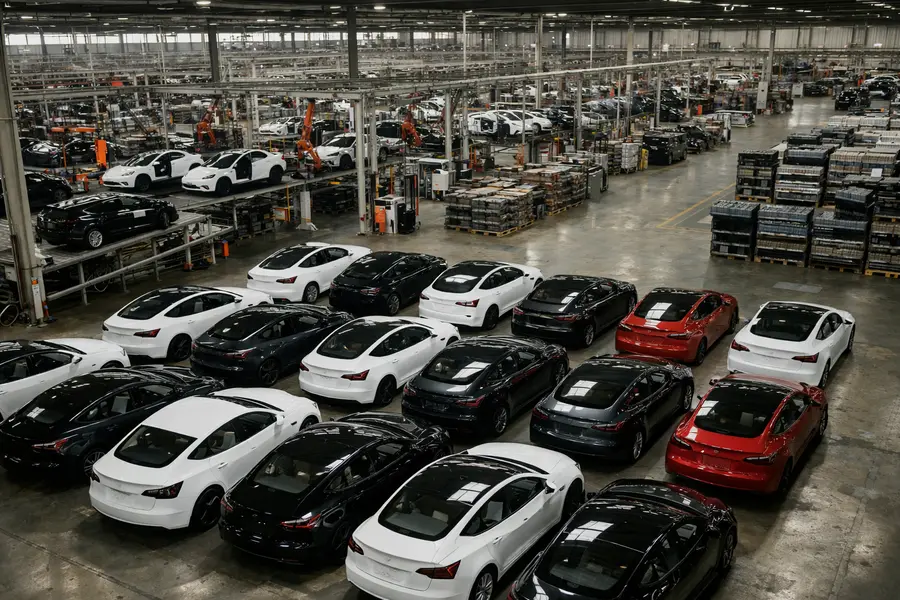
The financial toll on Japanese carmakers has been severe. Toyota (TM), the world's largest automaker, reported a 21.5% decline in group operating income to ¥3.8 trillion for fiscal 2026, with US Japan auto tariffs alone stripping ¥1.38 trillion ($8.6 billion) from the bottom line. North America — historically the company's most profitable region — recorded an operating loss of $1.9 billion for the year ending March 31, 2026, the first such loss since the 2008 global financial crisis. Toyota stock trades near $189, down approximately 11.7% year-to-date.
Honda (HMC) and Nissan (NSANY) face proportionally larger exposures given their smaller US domestic manufacturing footprint. The 15% tariff rate — compared with the originally proposed 25% scenario — narrows Nissan's projected operating loss by 33% and lifts Honda's operating profit by an estimated 28%. Combined, seven Japanese automakers project automotive industry impact of roughly 40% lower operating profit year-on-year, with Nissan expecting an outright operating loss. The industry-wide cost across all automakers globally has surpassed $35.4 billion since the tariffs took effect.Strategic Context
Japan's vehicle exports accounted for roughly $45 billion of the estimated $135 billion in goods shipped to the United States in 2025 — approximately one-third of total bilateral trade. The tariff is designed to incentivize Japanese automakers to shift final assembly onto US soil, a pressure campaign that has already accelerated announced investment in existing plants in Kentucky, Indiana, and Alabama.
Yet the rate structure has introduced a competitive asymmetry. Japanese-made vehicles enter the US at 15%, while vehicles assembled in Canada or Mexico under USMCA face 25% tariffs on non-qualifying content. General Motors (GM), Ford (F), and Stellantis (STLA), which depend heavily on cross-border North American supply chains, have flagged the disparity, arguing Japanese imports effectively command more favorable US market access than Detroit's own Mexico-assembled product. The Big Three collectively incurred $6.5 billion in tariff-related costs in 2025, compounding the damage from the Section 232 steel and aluminum levies that raise their domestic production inputs.
Geopolitical Dimension
The tariff is embedded in a broader restructuring of the US-Japan alliance. The $550 billion Japanese investment commitment functions simultaneously as an economic concession and a strategic deepening — directing capital into US defense shipbuilding and critical minerals at a moment when Washington seeks to reduce dependence on Chinese supply chains. President Trump and Prime Minister Takaichi reaffirmed their governments' intentions to advance the agreement in March 2026.
The wider global trade war context complicates long-range planning. A February 2026 Supreme Court ruling held that the International Emergency Economic Powers Act does not authorize tariff imposition. The administration subsequently shifted to a 10% temporary import surcharge on global imports under Section 122 of the Trade Act of 1974 while exploring alternative legal authorities. That legal uncertainty has prompted Japanese suppliers to suspend or defer investment decisions pending regulatory clarity.
What Comes Next
Japanese automakers are accelerating local sourcing and US production capacity to reduce tariff exposure. The 2026 USMCA review — scheduled to conclude by year-end — will determine whether North American content rules tighten further, a development with significant implications for the competitive balance between Japanese transplants and legacy US manufacturers. Pressure on auto parts supply chains remains acute: Mexican component exports reached record volumes in Q1 2026, but payment cycles for specialized suppliers have stretched to 180 days, raising solvency risks among smaller firms.
Outlook
The US Japan auto tariff at 15% has proven durable enough to erase North America profits at the world's largest automaker, compress earnings across the automotive industry by tens of billions of dollars, and push new vehicle prices to multi-year highs. With IEEPA tariff authority legally contested and the USMCA review pending, automotive industry impact will remain a defining variable for sector earnings through at least mid-2027. Japanese manufacturers face a binary path: absorb the levy and sustain margin compression, or accelerate the costly transition to large-scale US-based production.