Pomegra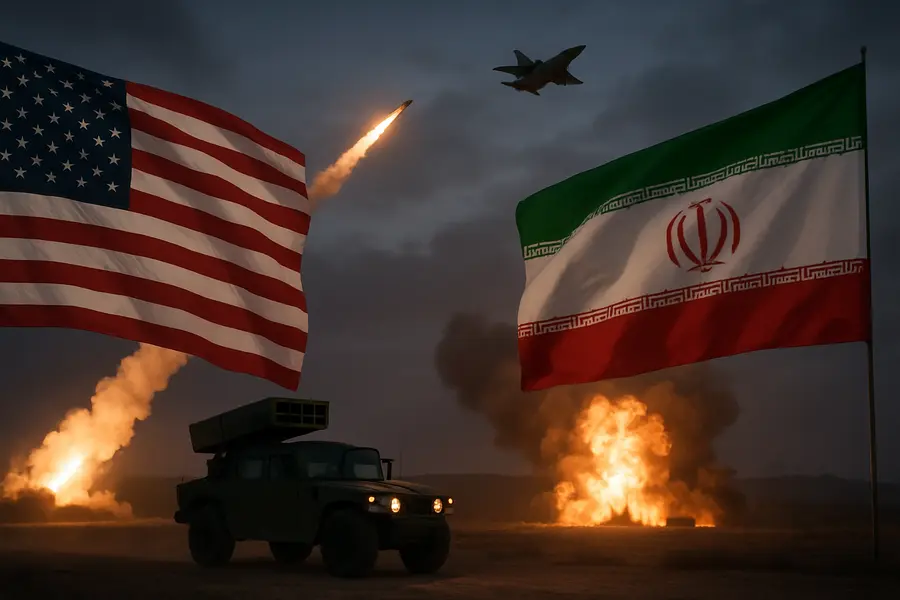
US strikes on Qeshm Island and an Iranian drone hit on Kuwait's airport deepen cracks in the fragile ceasefire as US-Iran peace talks stall over Lebanon.
- US CENTCOM struck Iran's Qeshm Island military control station; Iran hit Kuwait International Airport, killing one and injuring 63.
- Brent crude rose toward $98 a barrel on June 3, a third consecutive session of gains on widening geopolitical risk premium.
- Iran suspended contact with peace mediators; a 60-day ceasefire extension backed by a Pakistan-brokered MOU awaits Trump's signature.
Lead
A new round of US-Iran strikes erupted on Tuesday night and into Wednesday, deepening fractures in a ceasefire that has held only in fragments since Pakistan brokered it on April 8. U.S. Central Command (CENTCOM) said American forces struck an Iranian military ground control station on Qeshm Island in the Strait of Hormuz, describing the action as self-defense against attempted Iranian attacks across the Middle East. Hours later, an Iranian drone hit the passenger terminal at Kuwait International Airport, killing one person — a foreign national — and injuring 63 others. The latest tit-for-tat exchange pushed the fragile truce toward collapse and sent Brent crude futures back toward $98 a barrel.
What Happened
Iran's Islamic Revolutionary Guard Corps (IRGC) claimed it targeted U.S. military installations across the region — including the headquarters of the U.S. Fifth Fleet in Bahrain — and a vessel near the Strait of Hormuz. CENTCOM denied those claims. Bahraini air defense forces intercepted three Iranian ballistic missiles fired at the country; two more launched toward Kuwait fell short before reaching their target. Severe damage to Kuwait's airport passenger building prompted a temporary shutdown of operations.
The incident follows a compressed cycle of escalations. On May 7, U.S. forces struck Iranian ships and facilities in the Strait; on May 25, jets targeted missile launch sites near Bandar Abbas. Both governments labeled their actions defensive. The pattern — competing strikes, counterclaims, and mutual denial — has defined the operational tempo of the Iran war since its ceasefire phase began.
Market Reaction
Brent crude climbed approximately $98 a barrel on June 3, extending a three-session rally as energy markets widened the geopolitical risk premium embedded in oil prices. Industry data released this week showed crude inventories fell 6.8 million barrels in the prior week, adding supply-side support.
The current price sits well below the $120-per-barrel peak reached in early March when Iran closed the Strait of Hormuz and stranded an estimated 1,500 vessels carrying more than 20,000 seafarers. When the Iran war began on February 28, 2026, Brent traded near $72 a barrel — a gap of roughly 36% to current levels. The Strait, through which approximately 20 million barrels transit daily — close to 20% of all seaborne crude — remains functionally closed. In April, only 191 vessels crossed the waterway, approximately 5% of the pre-war monthly average. Defense equities and non-Persian Gulf energy producers have broadly outperformed broader indices since hostilities began.
Diplomatic Stalemate
Pakistan has served as the principal mediator throughout the Mideast geopolitics crisis. The April 8 ceasefire has been violated repeatedly by all parties. Pakistani Deputy Prime Minister Ishaq Dar met U.S. Secretary of State Marco Rubio on May 30 in Islamabad, pressing toward a memorandum of understanding that would extend the truce for 60 days, formally reopen the Strait of Hormuz, and open structured talks on Iran's nuclear program.
Under the proposed MOU, Iran would remove sea mines from the Strait within 30 days, commit to forgoing nuclear weapons development, and enter negotiations on the disposal of its 440-kilogram stockpile of uranium enriched to 60% — well above the 3–5% threshold for civilian power generation but below the 90% weapons-grade level. The United States would proportionally lift its naval blockade on Iranian ports as commercial shipping resumes and waive sanctions to permit Iranian oil sales.
That framework has stalled. Iranian semiofficial news agencies stated this week that Tehran had suspended contact with mediators, conditioning any return to talks on a simultaneous ceasefire in Lebanon. President Trump, who on June 1 described negotiations as "getting very boring," continued to publicly insist talks remained active — a contradiction that reflects the fragmentation of the diplomatic process.
Geopolitical Dimension
Lebanon has become the fulcrum of the impasse. When Pakistan announced the April 8 ceasefire, its prime minister stated the agreement covered "Lebanon and elsewhere." Trump and Israeli Prime Minister Benjamin Netanyahu publicly contradicted that framing within hours, and Israel launched 100 airstrikes on Lebanon the same evening under Operation Eternal Darkness. Tehran treats a Lebanon settlement as structurally inseparable from any regional framework; Washington has declined to override Netanyahu's refusal to negotiate on that front.
The US-Iran conflict that began February 28 with coordinated American and Israeli strikes on Iranian military infrastructure and the killing of Supreme Leader Ali Khamenei has now claimed an estimated 3,500 to 6,000 Iranian lives and 15 American servicemembers. The European Union has signaled support for a lasting agreement, with foreign policy chief Kaja Kallas crediting Pakistan with having prevented a wider regional war.
The interlocking dual blockade — Iran controlling Strait transit, the U.S. restricting Iranian port access — has created a structure of mutual leverage that neither government has yet been willing to dissolve unilaterally.
Outlook
Without a rapid return to mediated talks, the current cadence of strikes risks hardening into a second active phase of the Iran war, eroding months of incremental diplomatic progress. Oil markets remain acutely exposed to any Strait of Hormuz development: a credible reopening framework would relieve the risk premium and likely push Brent back toward the high $70s, while a fresh blockade enforcement could retest the $120 ceiling. The 60-day MOU brokered through Islamabad represents the most viable diplomatic off-ramp currently on the table. Whether it moves forward hinges on resolving — or formally separating — the Lebanon file before Iran returns to the negotiating table.
Mentioned tickers: XOM, CVX, LMT, RTX, NOC, FRO, STNG