Pomegra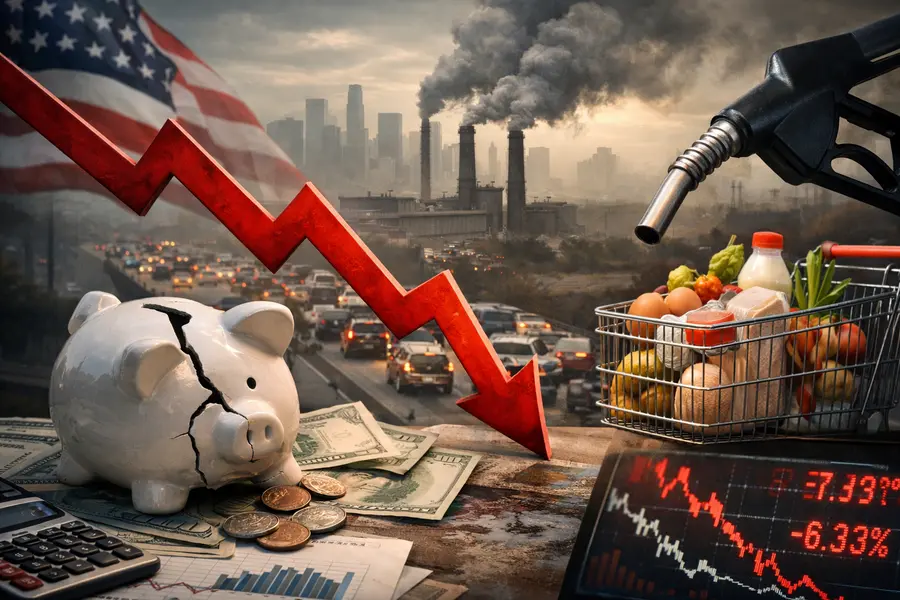
A Gallup survey finds 73% of Americans believe the economy is getting worse, while the CNBC economic survey signals deepening US consumer confidence losses heading into midterm season.
- 73% of Americans say the economy is getting worse, the worst reading since October 2023, per Gallup polling from April 2026.
- 61% of the public is pessimistic about current conditions and the US economy outlook, a 2.5-year peak, per the CNBC All-America Economic Survey released July 17.
- 47% of respondents are cutting essential purchases including groceries and healthcare, up six points from April's CNBC survey.
Lead
American consumer sentiment has deteriorated sharply across multiple major surveys in 2026, with a Gallup poll conducted April 1–15 among 1,001 adults finding that 73% of respondents believe the economy is getting worse — up from 66% the prior month and the worst reading since October 2023. The CNBC economic survey, released July 17 and based on 1,000 registered voters polled July 8–12 with a margin of error of ±3.1 percentage points, reinforces that picture: 61% of the public is pessimistic about the economy's current state and its future direction, the highest share since December 2023.
What the Surveys Show
The Gallup findings present a stark US economy outlook: by a margin of 73% to 23%, Americans say conditions are worsening rather than improving. That seven-point deterioration in a single month reflects a trajectory not seen since the final stages of the post-pandemic inflation surge. A record 55% of Americans also said their personal finances are getting worse — the fifth consecutive year the share trending negative has exceeded those trending positive.
The CNBC economic survey adds granular texture to that pessimism. Only 25% of respondents described themselves as optimistic about both current conditions and the outlook. More voters expect things to deteriorate by a 41%-to-29% margin, leaving the electorate in what the poll characterizes as a "distinctly sour mood" heading into the 2026 midterm election cycle.
Consumer Behavior Under Pressure
The surveys are not merely registering sentiment — they are tracking a behavioral shift. The CNBC poll found that 47% of respondents are cutting back on essential items such as groceries and healthcare, a six-percentage-point increase from April's reading. Two-thirds report reducing discretionary spending on restaurants and entertainment, also higher than April.
Separately, data on consumer credit underscores the pressure. Credit card delinquencies have reached a 16-year high, suggesting that a growing share of headline spending is being financed by unsustainable borrowing rather than income gains. Grocery spending growth has slowed, weighing on major food companies even as aggregate transaction data shows surface-level resilience.
Energy Prices as a Structural Drag
A significant driver of the decline in US consumer confidence is the energy shock stemming from US-Iran military tensions. Gasoline prices remain roughly 23% above year-ago levels, with national averages returning to approximately $4 per gallon. That sustained cost burden is compressing household budgets, particularly among lower- and middle-income consumers who spend a disproportionate share of income on fuel and food.
The Iran-linked supply disruption has kept energy costs elevated even as some easing has occurred at the margins. The University of Michigan consumer sentiment index recovered modestly to 49.5 in June from a record-low 44.8 in May, with a preliminary July reading of 54.4 — but both readings remain deeply depressed relative to pre-2022 norms. Year-ahead inflation expectations edged down to 4.6% in June from 4.8% in May, remaining well above the Federal Reserve's 2% target.
Political Dimension
The CNBC economic survey assigns measurable political weight to the downturn. President Trump's economic approval rating sits at 38% approve versus 60% disapprove, a net rating of -22 and the weakest figure recorded for him under CNBC's polling methodology. On inflation and the cost of living specifically, the public disapproves of his handling by a 68%-to-31% margin.
The Conference Board's Consumer Confidence Index inched up 0.6 points to 91.2 in June, edging above May's downwardly revised 90.6, but landing below the consensus forecast of 94.4. The index's Present Situation component fell 3.0 points to 116.4, while the share of consumers describing jobs as "hard to get" rose to 22.5%, the highest since January 2021.
Outlook
The convergence of the Gallup, CNBC, University of Michigan, and Conference Board readings establishes a consistent picture: US consumer confidence is materially weaker than at any point in more than two years, driven by persistent inflation, elevated energy costs, and eroding confidence in the broader US economy outlook. Whether the modest July uptick in the Michigan index marks the beginning of a sustained recovery or a temporary relief rally tied to short-term fuel price softening remains the central question. With midterm campaigns accelerating and the Federal Reserve maintaining a cautious posture on rate cuts, household sentiment will be a closely watched variable for both markets and policymakers through the second half of 2026.