Pomegra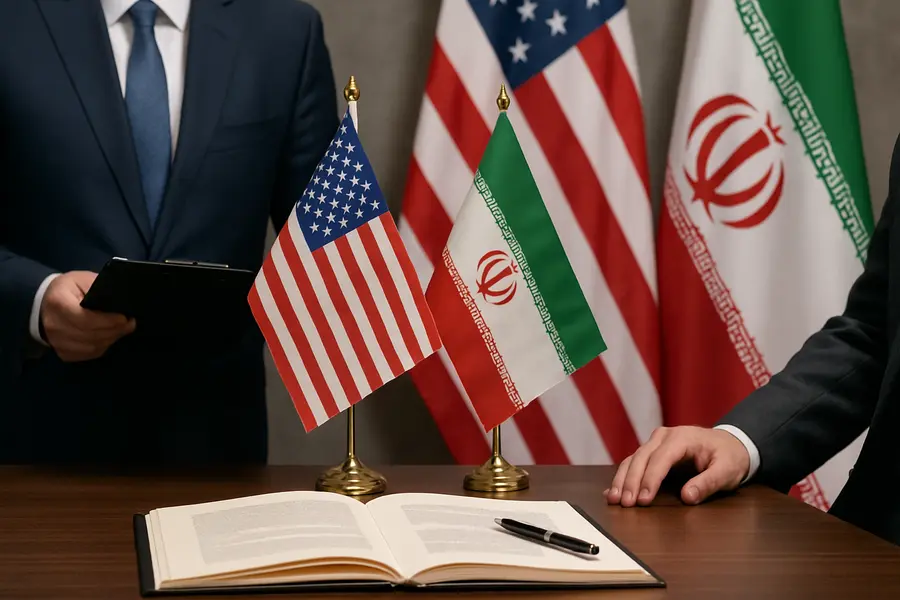
Washington and Tehran move toward a formal peace accord that would lift oil sanctions, unlock frozen assets, and reopen the Strait of Hormuz after months of economic disruption.
- The U.S. and Iran agreed on a framework June 15 that includes a 60-day ceasefire and Strait of Hormuz reopening.
- Washington will waive Iranian oil sanctions and release up to $25 billion in frozen assets under the accord.
- A formal signing ceremony is set for June 19 in Geneva, with nuclear negotiations to follow over 60 days.
Lead
The United States and Iran are converging on a formal peace agreement after President Donald Trump and Vice President JD Vance virtually signed an initial memorandum of understanding on June 15, 2026. The accord, brokered with mediation from Pakistan and Qatar, targets a June 19 signing ceremony in Geneva and marks the most significant diplomatic breakthrough between Washington and Tehran in decades. The deal includes an immediate Iran sanctions lift on crude oil exports, phased access to an estimated $25 billion in frozen assets, and a commitment from Iran to reopen the Strait of Hormuz — the narrow waterway through which roughly one-fifth of the world's traded oil and natural gas once moved before the conflict began.
What Happened
The framework agreement, formalized over a 60-day ceasefire window, ends direct military operations on all fronts and requires both parties to lift their respective maritime blockades. Under the terms as understood from multiple accounts, the U.S. will waive sanctions on Iranian crude oil and petrochemical exports for a defined period, allowing Tehran to re-enter global energy markets. A phased release of frozen Iranian assets — reported at approximately $25 billion, though specific tranches remain under negotiation — is embedded in the deal text.
The nuclear dimension forms the core of the 60-day follow-on talks. Iran has pledged to refrain from acquiring nuclear weapons and agreed to technical negotiations on the future of its enrichment program, including the disposition of its stockpile of highly enriched uranium. The U.S. naval blockade on Iranian ports is expected to be lifted within approximately 30 days of signing.
Conflicting accounts from Tehran and Washington over specific financial terms — including whether $12 billion would be released upfront — have complicated pre-signing communications, with U.S. officials pushing back publicly on Iranian characterizations of the deal. Both sides, however, have confirmed the ceasefire and the Hormuz reopening commitment.
Market Reaction
Global oil markets responded immediately to the June 15 announcement. Brent crude, which had climbed above $107 per barrel in the weeks prior as the Strait closure tightened global supply, retreated sharply on the news, while WTI crude eased from above $100 per barrel. The move reflected markets pricing in eventual Iranian supply returning to international markets.Analysts and oil executives from Gulf states and major trading houses have cautioned that normalization will not be instantaneous. Even once the Strait officially reopens, physical shipping logistics, insurance rate adjustments, and port clearances are expected to delay the resumption of full flows by several weeks to several months. The global oil market has absorbed a prolonged supply disruption since the Hormuz closure, with OPEC+ having added only a symbolic 188,000 barrels per day to June quotas during the crisis — far short of the volume the strait had carried before hostilities.
Strategic Context
The US-Iran deal signing caps a period of acute commodity stress. Brent crude broke above $100 per barrel in March 2026 as the Strait remained closed, and the disruption rippled through freight, petrochemical, and liquefied natural gas markets. The U.S. Treasury issued a narrowly tailored short-term authorization earlier in the year to permit limited sales of Iranian crude already loaded on vessels at sea — a measure that provided marginal relief without resolving the underlying blockade.
The June 15 framework follows months of stalled diplomacy. Trump rejected an earlier Iranian counteroffer in May, publicly dismissing it and warning the ceasefire was on "life support." The breakthrough came after sustained back-channel engagement through Pakistani and Qatari interlocutors, a diplomatic track that has become increasingly central to U.S. engagement in the region.
Geopolitical Dimension
The accord carries implications beyond the bilateral relationship. Middle East peace has long been contingent on resolving the Iranian nuclear file, and the 60-day negotiating window on enrichment will define whether this agreement evolves into a durable settlement or a temporary truce. European governments, which had signaled readiness to lift their own Iran sanctions in exchange for nuclear commitments, welcomed the June 15 announcement and called for prompt Hormuz reopening. Japan, heavily dependent on Gulf oil routes, also expressed support.
For the broader Middle East, the deal reduces the risk of further regional escalation that had raised concerns among Gulf Cooperation Council states. The removal of the naval blockade restores export channels for multiple Gulf producers, not only Iran, easing a constraint on regional energy revenues that had persisted through the first half of 2026.
The question of Iran's longer-term nuclear posture — specifically its ability to enrich uranium — remains unresolved and will be the central tension in the follow-on talks. A failure to reach agreement on that question within the 60-day window would put both the sanctions relief and the Hormuz reopening at risk.
What Comes Next
Delegations from both countries are expected to convene in Geneva on June 19 for the formal US-Iran deal signing. Technical nuclear talks are scheduled to begin within days of the ceremony, running through mid-August under the ceasefire framework. Oil markets will watch the pace of Hormuz demining and vessel inspections closely; shipping sources suggest full cargo flows could take six to ten weeks to stabilize even after the formal reopening begins. A $300 billion reconstruction financing commitment discussed in broader deal documents remains subject to final agreement in the second phase of negotiations.
Outlook
The June 19 signing represents the culmination of one of the most consequential diplomatic processes of the Trump second term, with direct implications for global oil market pricing, Iran sanctions lift sequencing, and the trajectory of Middle East peace negotiations. The 60-day nuclear negotiating clock begins immediately after, and the outcome of those talks will determine whether the framework becomes a permanent accord or a staged de-escalation with unresolved core disputes. Energy markets are repricing for a return of Iranian crude, but supply normalization through the Strait of Hormuz is unlikely to be immediate regardless of the signing outcome.