Pomegra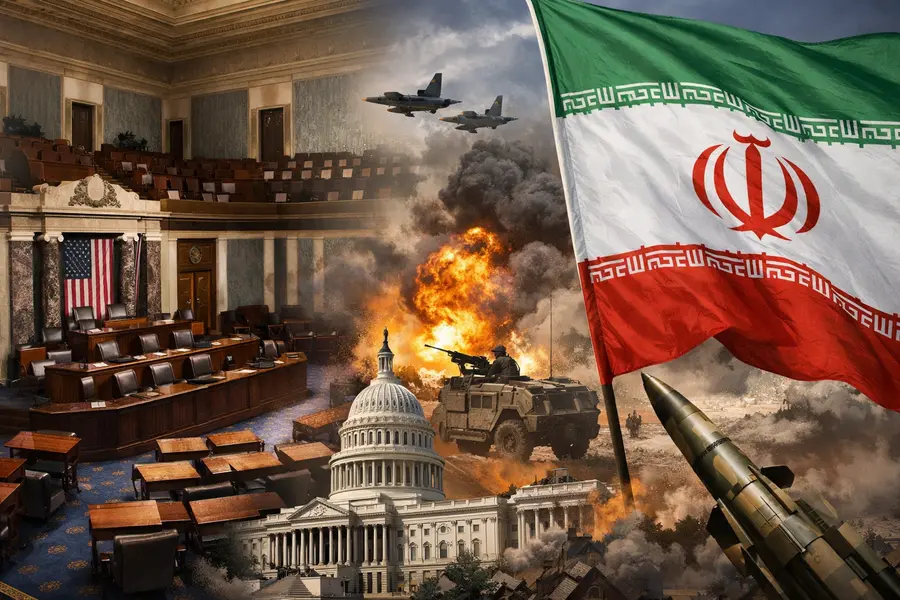
The U.S. Senate narrowly voted down a war powers resolution that would have constrained President Trump's military authority over Iran, as the six-month-old conflict shows no signs of diplomatic resolution.
- The Senate rejected the Iran war powers resolution 51–48, the second failed attempt in three months to curb executive military authority.
- The conflict, now in its sixth month, has pushed Brent crude above $112 per barrel and disrupted roughly 22% of global liquefied natural gas transit.
- Diplomatic back-channels remain active but no ceasefire framework has been formally tabled as of August 1, 2026.
Lead
Under the Capitol dome on Thursday, the U.S. Senate fell two votes short of the 60 needed to advance a bipartisan war powers resolution that would have required congressional authorization for continued offensive military operations against Iran. The final tally of the us senate vote — 51 in favor of advancing, 48 opposed — marked the second consecutive failure to reassert legislative oversight since U.S. strikes on Iranian nuclear and Revolutionary Guard infrastructure began in late January. The vote crystallized the political fault lines shaping American engagement in its most consequential Middle East conflict in two decades.
What Happened
The resolution, co-sponsored by a cross-party group of senators, invoked the War Powers Resolution of 1973, which requires the president to notify Congress within 48 hours of deploying forces into hostilities and limits unauthorized engagements to 60 days without legislative approval. Supporters argued the administration had exceeded that statutory window by months. Opponents, including most Republicans and a cluster of moderate Democrats from swing states, contended that withdrawing war authority mid-conflict would undermine operational security and signal weakness to Tehran.
The White House issued a statement within hours of the us senate vote, reiterating the administration's position that existing authorizations for the use of military force — combined with Article II commander-in-chief powers — provide sufficient legal grounding for current operations. The Defense Department declined to comment on specific mission parameters.
The procedural vote required 60 senators to overcome a filibuster threshold. At 51, the resolution died in place, though its sponsors have not ruled out a third attempt tied to the next National Defense Authorization Act markup, expected in September.
Strategic and Military Context
The U.S.-Iran conflict entered its sixth month with American forces maintaining a sustained air campaign targeting Islamic Revolutionary Guard Corps logistics nodes, missile production facilities, and command infrastructure across western and central Iran. A limited naval interdiction operation in the Strait of Hormuz has been in effect since February, though commercial shipping lanes have remained nominally open under a fragile informal corridor arrangement brokered through Omani intermediaries.
Ground engagement has been confined to special operations activity in support of regional partners, and the Pentagon has emphasized that no large-scale ground invasion is planned or authorized. Nevertheless, the operational tempo — measured in sortie rates, munitions expenditure, and carrier strike group rotations — has made this the highest-sustained U.S. military operation since Afghanistan.
Iran has responded with a combination of drone and ballistic missile salvos against U.S. forward positions in Iraq and Syria, proxy escalation via Hezbollah in Lebanon, and cyberattacks attributed by U.S. intelligence agencies to the Ministry of Intelligence and Security. Three American service members have been killed in theater; Iranian military and civilian casualties remain contested.
Economic Channels
The conflict's most immediate global spillover has been energy. Brent crude traded at $112.40 per barrel on Thursday, up 0.7% on the day and roughly 34% above pre-conflict levels. West Texas Intermediate settled at $108.15. Analysts tracking Hormuz throughput data estimate that insurance surcharges and routing detours have added an average of $4.20 per million British thermal units to delivered LNG prices in Asia, squeezing margins for power generators from South Korea to India.
Shipping rates on the VLCC (very large crude carrier) benchmark route from the Persian Gulf to Japan have more than doubled since January. European refiners have accelerated diversification toward North Sea, West African, and U.S. Gulf Coast crudes, though substitution is only partial given refinery configuration constraints.
Defense sector equities have outperformed broad indices by approximately 18 percentage points since hostilities began, reflecting elevated procurement expectations. RTX, LMT, NOC, and GD have all revised fiscal 2026 guidance upward. Conversely, airline stocks have faced persistent pressure from fuel costs, with the XAL index down roughly 21% year-to-date.Congressional Dynamics
The politics surrounding the Capitol dome have grown increasingly complicated as the conflict lengthens. Midterm positioning is visible on both sides: Republicans in competitive races have largely backed the administration, while several Democrats in states with large defense-industry workforces have been reluctant to vote in ways that could be characterized as hampering the military.
The war powers debate has also fractured along generational and ideological lines within both parties, with libertarian-leaning Republicans joining progressive Democrats as the most consistent bloc in favor of congressional reassertion. That unusual coalition, however, has consistently fallen short of the procedural thresholds required under Senate rules.
A separate appropriations dispute — over whether to attach further Iran-related conditionality to the continuing resolution funding the government through October — is expected to dominate September's legislative calendar and could provide a second legislative vehicle for war powers advocates.
Geopolitical Dimension
At the multilateral level, the conflict has deepened fissures within the G7 and strained the U.S.-European relationship. France and Germany have called for a negotiated pause; the United Kingdom has offered qualified backing for U.S. objectives while pressing for civilian protection benchmarks. China and Russia have condemned the campaign at the United Nations Security Council, where both have exercised veto authority to block binding resolutions.
Iran's regional partners, including Houthi forces in Yemen and Iraqi militia groups, remain active but have not escalated to the threshold that would trigger a formal theater-wide expansion. Gulf Arab states, caught between economic ties with Washington and geographic proximity to Iran, have maintained carefully calibrated public neutrality.
Outlook
The Senate's second rejection of a war powers constraint removes near-term legislative pressure on the executive but does not resolve the underlying constitutional dispute, which legal scholars expect to reach the federal appellate level before year-end. Energy markets will continue to price in a risk premium as long as Hormuz interdiction remains a live scenario. The next meaningful inflection point is the September appropriations debate, where war powers language could resurface as a bargaining chip in broader fiscal negotiations. Diplomatic channels through Oman and Switzerland remain open; no timeline for talks has been confirmed.
Mentioned tickers: RTX, LMT, NOC, GD, XAL