Pomegra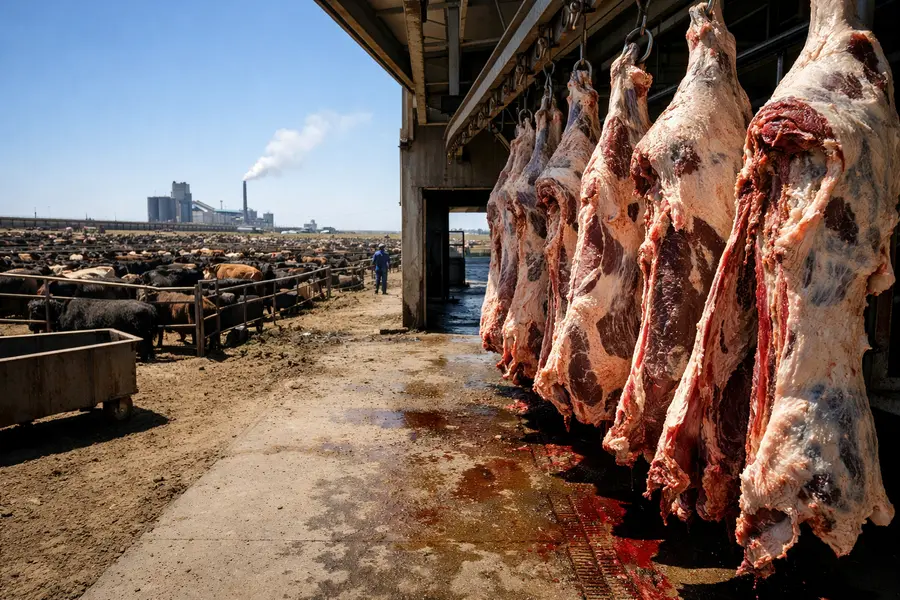
Tyson Foods widened its fiscal 2026 beef segment loss forecast to as much as $775 million, citing a 75-year low in U.S. cattle herds, sending TSN shares down more than 7% at Thursday's open.
- TSN fell more than 7% after Tyson Foods dramatically widened its beef segment loss outlook for fiscal 2026.
- Beef segment operating loss is now projected at $625 million to $775 million, a significant deterioration from prior guidance of roughly $500 million.
- U.S. cattle herds near 75-year lows are squeezing margins; Tyson is closing two beef plants and selling a third.
Lead
Tyson Foods (TSN) slashed its full-year earnings outlook on September 3, 2026, as deepening losses in its beef segment overwhelmed gains elsewhere in the business. The company now expects its beef division to post an operating loss of $625 million to $775 million for fiscal 2026 - a significant deterioration from prior guidance of roughly $500 million in losses. Shares of the Springdale, Arkansas-based meat processor fell more than 7% at Thursday's open, erasing more than a billion dollars in market capitalization in the session.Why Did Tyson Foods Slash Its Full-Year Guidance?
The guidance reduction stems directly from severe supply-side pressure in U.S. beef markets. Domestic cattle herds have dropped to levels not seen in roughly 75 years, a contraction years in the making that has pushed live cattle prices to historic highs and left processors like Tyson Foods with little ability to pass costs downstream. The resulting margin compression accelerated through the fiscal third quarter, when beef volumes slipped and the segment recorded a substantial quarterly loss. Management also cited the expected impact of declining cattle prices on the value of live cattle inventories - a mark-to-market dynamic that compounded losses in the period.
Restructuring the Beef Footprint
Ahead of the guidance update, Tyson had already moved to right-size its beef processing capacity. In early August 2026, the company announced the closure of its Joslin, Illinois, beef processing plant and its Eagle Mountain, Utah, case-ready facility, while separately pursuing the sale of its Pasco, Washington, plant. The moves represent an exit from roughly one-third of Tyson's prior beef processing footprint. Going forward, the company plans to concentrate beef operations around three facilities in Dakota City, Nebraska; Holcomb, Kansas; and Amarillo, Texas - all situated closer to the core cattle-producing regions of the Great Plains.
What Does the Broader Guidance Picture Look Like?
At the company level, Tyson tempered but did not abandon its growth narrative for the fiscal year. Management now projects revenue growth of 1.5% to 2.0% and total company adjusted operating income of $1.85 billion to $2.05 billion. The chicken and prepared foods segments have provided partial offsets, with relative stability in poultry demand helping to cushion the blow from beef. Still, the magnitude of the beef revision underscored the structural difficulty of operating large-scale beef processing during a period of historically tight cattle supply.
Market Reaction
Investors responded sharply to the announcement. TSN opened down more than 7%, reflecting concern not just over the immediate earnings impact but over the duration of the cattle cycle itself. Herd rebuilding is inherently a multi-year process - ranchers must withhold heifers from slaughter to expand breeding stock, which temporarily suppresses the very beef supply processors need for throughput. With the U.S. herd near 75-year lows entering fiscal 2026, meaningful supply relief may not materialize until fiscal 2028 at the earliest, absent a sustained and coordinated rebuilding effort across the industry.
Outlook
Tyson Foods enters its fiscal fourth quarter under intensifying structural pressure in beef, with herd recovery timelines extending the period of margin compression well beyond the current fiscal year. The company's restructuring actions - closing unprofitable plants and concentrating capacity around core facilities - represent a pragmatic adjustment to a supply environment that offers little near-term relief. Investors will focus closely on whether the chicken and prepared foods divisions can continue to buffer losses, and whether the fiscal 2026 adjusted operating income target of $1.85 billion to $2.05 billion proves achievable as cattle market dynamics remain volatile heading into year-end.
Mentioned tickers: TSN