Pomegra
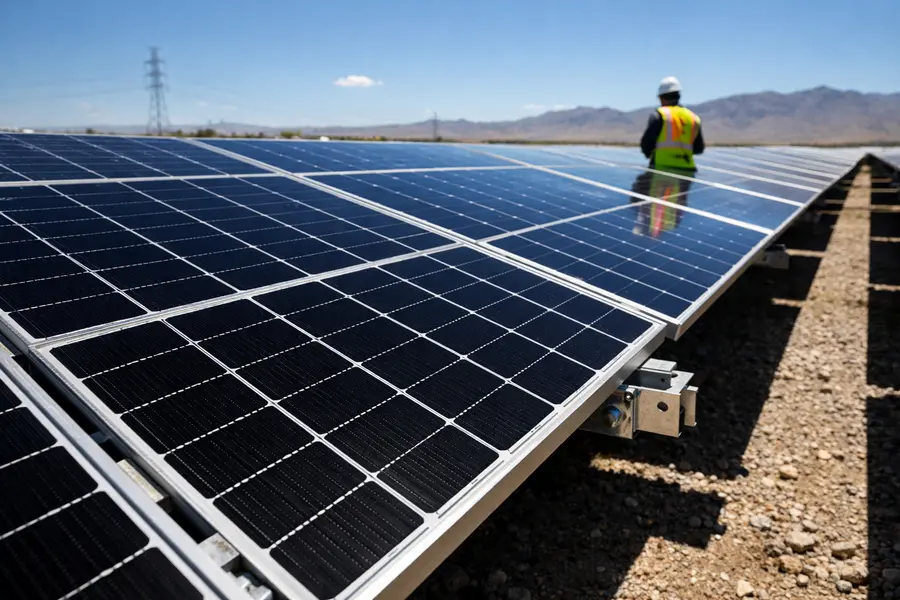
Sunrun, First Solar, Plug Power, Canadian Solar and Nextpower rose 6-8% premarket on Nov. 4 as investors priced in a friendlier Congress for clean energy.
- Solar and clean-energy shares gained roughly 6-8% premarket after Democrats won control of both chambers of Congress.
- AI data center stocks fell as investors rotated toward companies seen as beneficiaries of Democratic policy.
- Existing tax-credit cuts stay in place while a Republican president holds the veto.
Lead
Sunrun (RUN), First Solar (FSLR), Plug Power (PLUG), Canadian Solar (CSIQ) and Nextpower (NXT) opened Wednesday sharply higher in premarket trading. The gains came after Democrats won both the House and the Senate in the Nov. 3 midterm elections. First Solar gained about 8%, Canadian Solar about 7%, and Sunrun, Plug Power and Nextpower about 6% each. At their highs in early trading, Canadian Solar and Nextpower each topped 11%.What Drove the Solar Rally?
The rally reflects a bet that a Democratic Congress will curb further political interference with renewable energy incentives. Investors are positioning for scrutiny of the Trump administration's rejection of clean energy policy and for a lower risk of new rollbacks.
The move widened as the session progressed. First Solar rose as much as 9.2% premarket and traded near $203 in the morning, up more than 9%. Sunrun reached a premarket high of 9.4% and traded near $9.35, up about 7.7%. Enphase Energy (ENPH) gained nearly 10% by late morning.
The rebound follows a difficult year. Even after the gains, First Solar is down about 22% in 2026 and Sunrun is down about 49%. Solar shares had also sold off in the prior week's earnings reports before bouncing in the days ahead of the election.
Can a Democratic Congress Restore Clean Energy Tax Credits?
Not in the near term, because any restoration requires legislation the president would have to sign. The homeowner solar credit expired at the end of 2025. Wind and solar projects that began construction after July 4, 2026 lose their main federal credits unless they are in service by the end of 2027.
A Democratic House can still block further cuts, since new changes to the tax code need its approval. It can also press the Treasury Department on how it interprets credit eligibility. The 2027 debt-limit negotiations give Democrats added leverage, though clean energy credits are an unlikely prize in that bargain. The earliest realistic path to restoring the credits runs through the 2028 presidential election and a new administration in 2029.
Why the Distinction Matters for Individual Stocks
The credits that remain matter most to manufacturers. First Solar relies on Section 45X advanced manufacturing credits, which are worth roughly $2.1 billion to the company in 2026. A House that can veto repeal protects that income stream.
Sunrun's business depends on tax equity financing and the sale of tax credits, so its exposure is to borrowing costs and credit-market access as much as to Washington. Plug Power and the hydrogen sector are also sensitive to federal incentives, while Canadian Solar and Nextpower, a supplier of solar tracking and mounting systems, depend on utility-scale project pipelines that policy uncertainty has stalled.
Why Did Data Center Stocks Fall?
Data center shares fell because the election raised the odds of restrictions on the AI infrastructure build-out. Many newly elected Democrats are critical of the pace of that expansion, and money rotated out of AI-linked names and into clean energy.
CoreWeave (CRWV) fell about 9% and Iren (IREN) about 10%. Vistra slid 14% and Comfort Systems lost 16%. Micron Technology (MU) dropped about 5%. Tesla (TSLA) also declined after Democrats won key races in Texas, where the company is headquartered.Outlook
The first-day move prices in relief more than a change in law. Federal credit policy is unchanged, and the next catalysts are Treasury guidance on credit eligibility, the 2027 debt-limit talks and the remaining third-quarter earnings from solar installers and manufacturers. Whether the rotation from AI infrastructure into clean energy holds will depend on how quickly Democratic lawmakers move on data center oversight and on whether borrowing costs for residential solar financing ease.