Pomegra

AMD shares rose about 6% premarket after Q3 2026 revenue of $13.4 billion beat estimates and data center sales jumped 97%, easing AI spending worries.
- AMD posted record Q3 revenue of $13.4B, up 45% year over year, with non-GAAP EPS of $2.09 against $1.94 expected.
- Data center revenue rose 97% to $8.5B, or 64% of total sales.
- CEO Lisa Su said demand exceeds supply. Q4 revenue is guided to about $17B.
Lead
Advanced Micro Devices (NASDAQ: AMD) gained about 6% in premarket trading on Wednesday after reporting third-quarter results that topped Wall Street forecasts. Record data center sales and a Q4 outlook of roughly $17 billion eased concern that spending on artificial intelligence infrastructure is nearing a ceiling. Chief Executive Lisa Su said customer demand is running ahead of the company's ability to supply it.What Did AMD Report for the Third Quarter?
AMD reported revenue of $13.4 billion, up 45% from about $9.2 billion a year earlier and above the $13.06 billion consensus. Non-GAAP diluted earnings per share were $2.09, up 74% year over year and ahead of the $1.94 estimate.
On a GAAP basis, gross margin was 54%, operating income was $2.8 billion, net income was $2.4 billion and diluted EPS was $1.46. Non-GAAP gross margin was 56%, with operating income of $3.9 billion and net income of $3.5 billion.
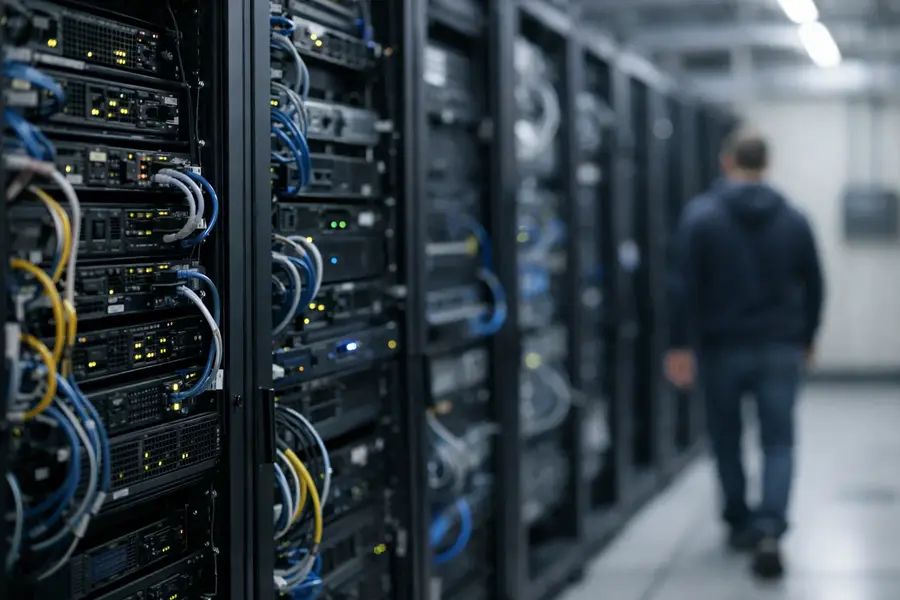
The Data Center segment drove the quarter. Revenue reached a record $8.5 billion, up 97%, on sales of EPYC server processors and the launch of the Instinct MI450 series of accelerators. The segment now makes up 64% of AMD's revenue, up from 47% a year ago, which marks a shift from a PC-led business to one centered on AI and cloud infrastructure.
Why Did AI Stocks React This Way?
AI stocks rose because the results answered the question hanging over the sector: whether hyperscale customers are still expanding their capital budgets. A 97% jump in data center sales, plus guidance for sequential growth of about 27% in Q4, points to continued orders for accelerators and server chips.
AMD is the main challenger to Nvidia (NVDA) in merchant AI accelerators. Strength at the second-largest supplier suggests the spending cycle is broad-based and not confined to one vendor. Sentiment toward ai stocks has swung repeatedly this year on concerns that heavy investment would outrun returns. A supplier reporting demand above supply works against that argument, at least for the next several quarters.
The premarket move also reflects how much weight investors place on margins. Non-GAAP gross margin of 56% held up while the product mix moved toward newer accelerators, which carry higher launch-phase costs.
What Does Demand Exceeding Supply Mean for AMD?
Demand exceeding supply means AMD's near-term growth is limited by production capacity and packaging, not by orders. Su said demand is higher than supply, a statement that puts the focus on manufacturing ramps rather than customer interest.
Management said growth should accelerate in the fourth quarter as production of the Helios rack-scale systems and the Venice server processors scales up. Helios bundles Instinct GPUs, EPYC CPUs and networking into a single system, a format aimed at large AI clusters and designed to compete with Nvidia's integrated rack offerings.
Supply constraints cut both ways. They support pricing and give AMD visibility into revenue, but they also leave sales dependent on foundry and advanced-packaging capacity, where the industry has had bottlenecks for several years.
Guidance and Strategic Context
For the fourth quarter, AMD guided revenue to about $17 billion, plus or minus 3%. The midpoint implies year-over-year growth of about 66% and a 27% sequential increase. Non-GAAP gross margin is expected at about 55%, a slight step down from the third quarter as new products ramp.
The outlook is a considerable step up from the $13.4 billion just reported. It indicates that AMD expects the MI450 and Helios launches to move from initial shipments to volume deployments within one quarter. The 64% data center share also raises the company's exposure to the capital budgets of a small group of cloud and AI customers. A pullback by any of them would register more quickly in AMD's results than in the past.
What Comes Next for AMD and the AI Chip Sector?
The next test is delivery. Investors will track whether Helios and Venice reach volume on schedule, whether gross margin stays near 55% as output rises, and whether the supply gap narrows without a drop in pricing.
Across the sector, AMD's report sets a high bar for other chipmakers and server suppliers still to report. Capital spending commentary from the largest cloud providers will matter as much as chip results, since it determines how long demand stays ahead of supply. In the near term, the figures give the AI trade a fresh data point showing infrastructure spending still rising.
Outlook
AMD closed the third quarter with record revenue, a 97% rise in data center sales and guidance for about $17 billion in Q4. Management says demand exceeds supply, so execution on production is the main variable. A 6% premarket gain shows how much the results eased fears of an AI spending slowdown, and the Q4 report will show whether capacity can keep pace.
Mentioned tickers: AMD, NVDA