Pomegra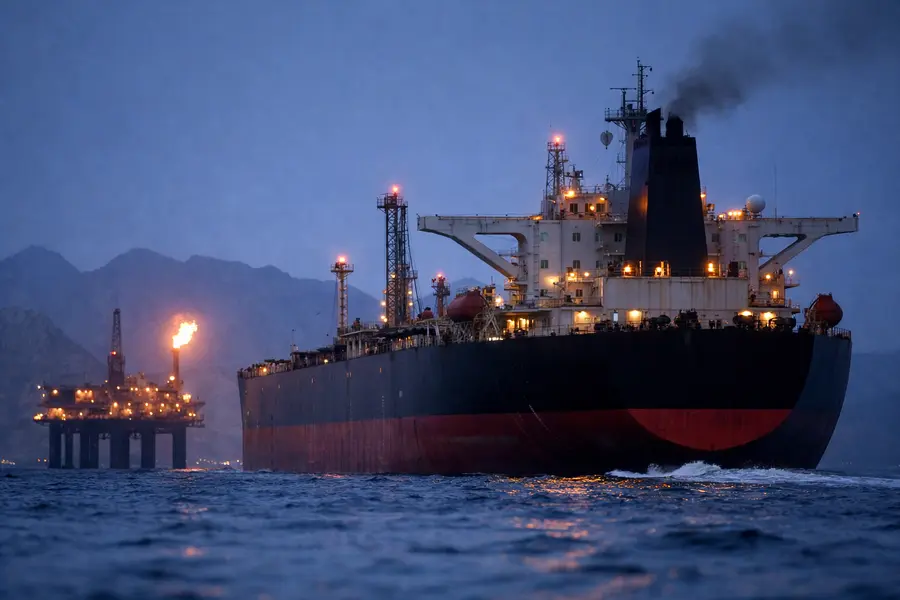
US forces struck three Iranian tankers overnight as Iran fired a ballistic missile at American warships, collapsing 95% of strait traffic and driving Brent crude to $100 in the worst oil supply shock in recorded history.
- US naval forces struck three Iranian oil tankers in overnight operations; Iran retaliated with a ballistic missile attack targeting American warships near the Strait of Hormuz.
- Vessel traffic through the strait collapsed by approximately 95%, choking off roughly 20 million barrels of daily seaborne crude supply to global markets.
- The IEA convened an emergency session and declared the disruption the largest supply shock in oil market history, with Brent crude approaching $100 per barrel.
Lead
US naval forces struck three Iranian-flagged oil tankers in overnight operations near the eastern approaches of the Strait of Hormuz, triggering an Iranian ballistic missile launch against American warships in the region's most severe direct military exchange in four decades. The combined escalation collapsed vessel traffic through the strait by roughly 95%, severing a chokepoint responsible for approximately 20 million barrels of petroleum exports per day and driving Brent crude toward $100 per barrel. The International Energy Agency, convening an emergency session within hours, characterized the disruption as the most consequential supply shock in the history of global oil markets.
What Triggered the Military Exchange?
The strikes came after weeks of escalating naval confrontation in the Persian Gulf, with US forces targeting three Iranian tankers operating in international waters near the strait's approaches. Iran's response - a ballistic missile launched directly at American warships in the region - marked the first such attack on US naval vessels near the strait since the tanker conflicts of the 1980s. Satellite imagery captured in the hours following the strikes showed at least two Iranian vessels listing and on fire; both sides have declined to release detailed casualty or damage assessments.
How Does This Affect Global Oil Markets?
The closure of Hormuz transit routes reverberates across every major oil-importing economy. The strait serves as the passage point for exports from Saudi Arabia, Iraq, the United Arab Emirates, Kuwait, and Iran, collectively accounting for roughly one-fifth of global petroleum trade. With vessel traffic down 95%, crude oil price benchmarks moved violently across all major exchanges. ExxonMobil (XOM) and Chevron (CVX) shares climbed sharply on the prospect of sustained supply tightness, while tanker operators Frontline (FRO) and Scorpio Tankers (STNG) - vessels now effectively locked out of the strait - faced conflicting signals: rate spikes against operational paralysis.
The IEA authorized coordinated strategic petroleum reserve releases across member nations. Historical SPR draws have bridged 30-to-90-day supply gaps; a prolonged Hormuz closure of the scale now under way exceeds that buffer capacity by a substantial margin.
Why Did Defense and Safe-Haven Assets Move?
Defense contractors surged on elevated volume. Lockheed Martin (LMT), RTX (RTX), and Northrop Grumman (NOC) all advanced as markets priced in sustained US military engagement and accelerated procurement timelines. Gold (GLD) reached multi-month highs as institutional capital rotated into hard assets. The SPDR S&P 500 ETF Trust (SPY) fell more than 2% in early trading as investors weighed the inflationary and recessionary implications of a structural energy price shock. Nvidia (NVDA) and other semiconductor names in the Nasdaq QQQ also retreated, reflecting broad risk-off positioning.
What Comes Next for Oil Prices?
The trajectory of crude oil prices beyond the initial shock depends on three variables: the duration of the Hormuz closure, the degree to which Gulf producers can reroute volumes overland, and the pace of diplomatic engagement between Washington and Tehran. Saudi Arabia's East-West Pipeline and the Abu Dhabi Crude Oil Pipeline together offer bypass capacity of roughly 5 million barrels per day - well short of normal Hormuz throughput. Prolonged closure scenarios place Brent above $100 for weeks to months, with compounding pass-throughs into fuel costs, shipping rates, and manufacturing input prices across import-dependent economies.
Geopolitical Dimension
The escalation applies severe pressure to Washington's Gulf relationships. US-aligned states face direct economic damage from closed transit even as they formally support American strategic objectives. Iran retains asymmetric options beyond the ballistic missile exchange: additional drone strikes, mining operations within the strait, and proxy attacks on regional infrastructure. The confrontation marks a sharp deterioration from the diplomatic track that had been progressing toward a framework agreement in recent months, raising the prospect of a prolonged standoff with no immediate off-ramp.
Outlook
The Strait of Hormuz crisis stands as the most consequential oil market event in modern history, combining physical supply disruption with active military engagement at the world's premier energy chokepoint. Near-term pressure on Brent remains intense while transit volumes stay suppressed. The pace of de-escalation - diplomatic or military - will determine whether global energy markets absorb a brief shock or a structural disruption measured in months, with direct implications for inflation trajectories, central bank policy responses, and growth forecasts across every major importing economy.
Mentioned tickers: XOM, CVX, FRO, STNG, LMT, RTX, NOC, GLD, SPY, QQQ, NVDA