Pomegra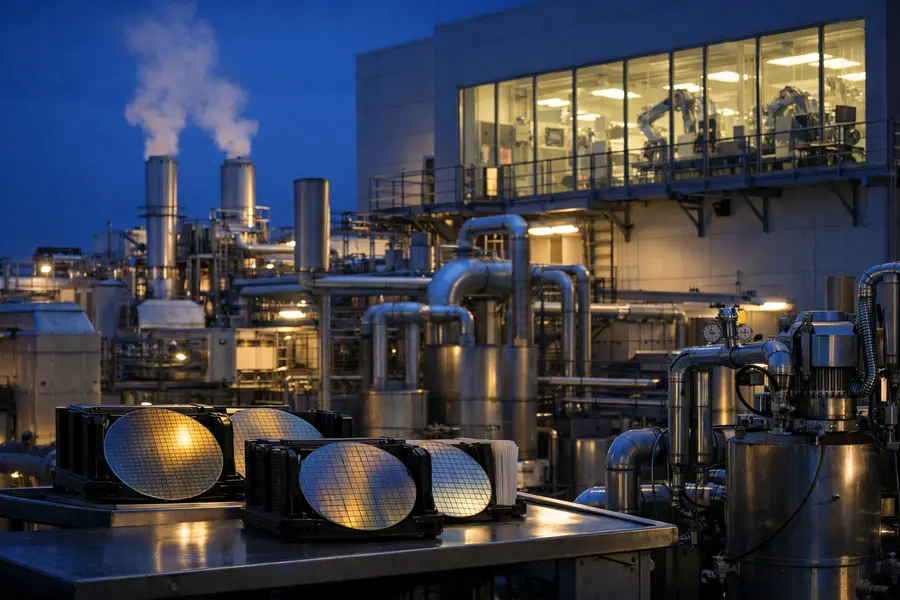
Three Wall Street desks lift Intel targets in quick succession, citing a 25% revenue surge and Terafab manufacturing wins with SpaceX and Tesla.
- Tigress Financial lifts INTC to $45; Northland initiates at Outperform with $20; Melius reaffirms Buy at $65.
- Intel reported 25% year-over-year revenue growth anchored by confirmed execution on its 18A advanced process node.
- Terafab foundry wins with SpaceX and Tesla signal a meaningful inflection in Intel's contract manufacturing business.
Lead
Intel Corporation (INTC) drew a wave of Wall Street conviction in rapid succession as Tigress Financial raised its price target to $45, Northland Capital Markets initiated coverage at Outperform with a $20 target, and Melius Research reaffirmed its Buy rating at $65. All three desks anchored their assessments to a common set of fundamentals: a 25% year-over-year revenue surge, demonstrable progress on the company's 18A advanced semiconductor node, and freshly confirmed Terafab manufacturing contracts with SpaceX and Tesla (TSLA).
Why Are Analysts Raising Intel Targets Now?
The coordinated re-rating reflects a structural shift in confidence around Intel's turnaround trajectory. The 25% revenue growth figure outpaced consensus estimates by a substantial margin and removed a persistent cloud of skepticism that had shadowed the chipmaker through years of process delays and market share erosion. For a company that spent much of the early 2020s ceding ground to Taiwan Semiconductor Manufacturing Company (TSM) and watching fabless rivals accelerate on external nodes, a revenue inflection of this scale carries outsized signal value.
Melius, with the most bullish target at $65, is pricing in not just the present quarter but Intel's longer-term foundry ambitions. Tigress's $45 target represents a more measured near-term view, while Northland's $20 initiation reflects caution around execution risk even as it acknowledges the directional shift. The spread between targets mirrors legitimate uncertainty about ramp pace, but directional alignment across three independent desks is rare and commercially meaningful.
What Is the 18A Node and Why Does It Matter?
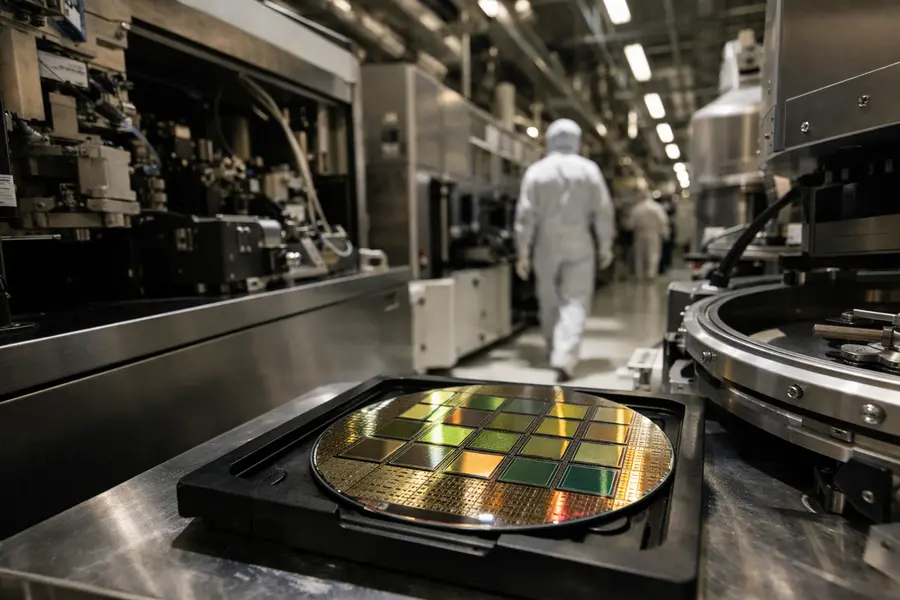
The 18A process node is Intel's most advanced chip manufacturing technology - a sub-2-nanometer class process incorporating RibbonFET gate-all-around transistors and PowerVia backside power delivery. Successful execution at 18A places Intel in direct contention with TSMC's N2 process and Samsung Foundry's SF2, the two manufacturing benchmarks that have defined cutting-edge semiconductor production.
Confirmation of 18A's manufacturing yield and reliability is not merely a technical milestone - it is a commercial unlock. Fabless chipmakers and hyperscalers evaluating supplier diversification now have a credible U.S.-based alternative for their most demanding workloads. That dynamic has become strategically significant given ongoing export controls and mounting pressure to reduce single-source dependencies on Asian semiconductor supply chains. Intel Foundry Services is positioned to capture a disproportionate share of that redirected demand.
Which Companies Are Betting on Intel Foundry?
The Terafab wins with SpaceX and Tesla (TSLA) are among the most commercially consequential endorsements Intel Foundry Services has received. SpaceX, which manufactures custom silicon for its Starlink satellite network and onboard computing systems, represents a high-volume, mission-critical customer profile. Tesla, which designs custom AI training and inference chips for its Dojo supercomputer program, brings comparable strategic weight.
For investors tracking ai stocks and the broader buildout of domestic AI hardware infrastructure, these partnerships signal that Intel's foundry ambitions have cleared a meaningful credibility threshold. Both SpaceX and Tesla are known for rigorous supplier qualification processes, and their selection of Terafab functions as a third-party validation of 18A's production readiness.
Beyond their immediate revenue contribution, these wins serve as a reference anchor for future customer conversations. In semiconductor sales cycles, a credible anchor customer dramatically compresses the evaluation period for subsequent prospects - a compounding dynamic that is difficult to quantify but historically significant.
How Does This Reshape Intel's Competitive Position?
Intel's re-emergence as a process-competitive foundry reshapes the competitive geometry of the global semiconductor industry. NVIDIA (NVDA) and AMD, which currently route the majority of their advanced production through TSMC, now have a credible onshore alternative. For chip designers recalibrating supply chain resilience - a calculation that has grown more urgent amid recurring geopolitical disruptions - Intel's Terafab adds a meaningful option that carries domestic policy tailwinds.
The 25% revenue growth also compares favorably against sector peers. Marvell Technology (MRVL) and Micron Technology (MU) have each posted strong recent results, but Intel's combination of product revenue and foundry services revenue diversifies its growth drivers in ways that purely fabless or memory-focused competitors cannot replicate. That structural differentiation is increasingly valued in a market where single-vector technology exposures carry concentration risk.
Outlook
Intel's positioning entering the back half of 2026 is substantially stronger than it appeared twelve months prior. The convergence of 18A execution, Terafab customer wins with SpaceX and Tesla, and a 25% revenue jump has catalyzed a genuine reassessment across Wall Street. The range of analyst targets - from $20 to $65 - reflects differing views on ramp velocity and competitive response, but the directional alignment of sentiment has shifted decisively. Near-term attention will center on whether Intel can expand its Terafab customer roster, sustain revenue growth into subsequent quarters, and convert 18A yield improvements into margin expansion. A broadening foundry customer base would likely serve as the next major catalyst for further target revisions.
Mentioned tickers: INTC, TSLA, NVDA, AMD, MRVL, MU, TSM