Pomegra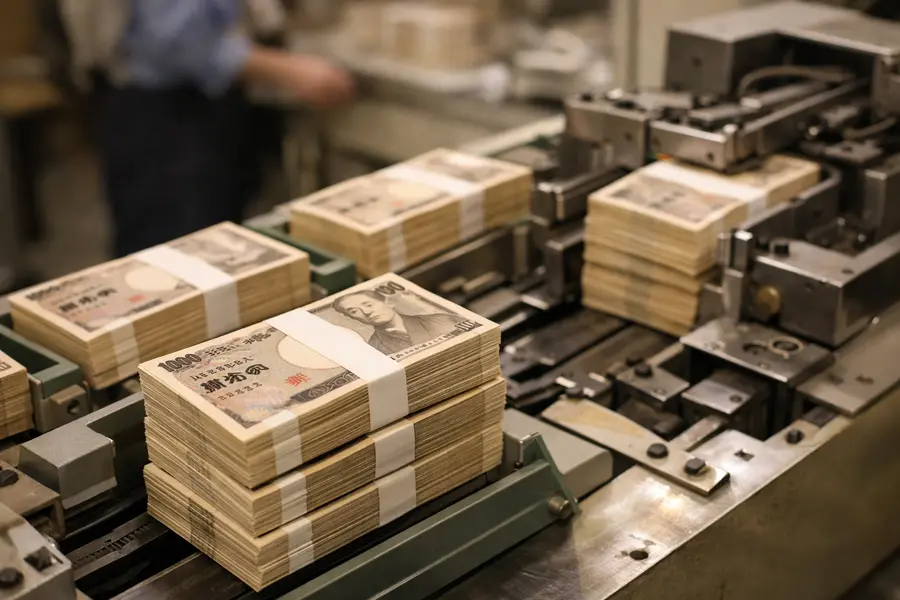
The Bank of Japan hiked its policy rate to 1.25% on September 18, the highest level in 31 years, driving the yen sharply higher as markets await Governor Kazuo Ueda's signals on December.
- The BOJ raised its overnight call rate 25 basis points to 1.25%, a level unseen since 1995, at the close of its September 17-18 meeting.
- Japan's Q2 2026 GDP was revised up to annualized 1.4% growth and real wages rose 2.4% in July, the seventh consecutive monthly gain, giving the BOJ economic cover to act.
- Market pricing now implies roughly an 80% probability of a follow-up 25bp hike at the December 19 meeting, with economists projecting the rate at 1.75% by mid-2027.
Lead
The Bank of Japan delivered its widely expected 25-basis-point increase Thursday, lifting its overnight policy rate to 1.25% - the highest since 1995 - and sending the yen surging against the dollar. The decision, which 97% of economists in a pre-meeting Reuters survey had forecast, ends a brief two-meeting hold and continues the fastest tightening cycle Japan has seen in a generation. With the rate move itself treated as a formality, Governor Kazuo Ueda's press conference at 0630 GMT is now the central event: markets want to know whether persistent inflation and sturdy wage growth justify another move before the year ends.
What Drove the BOJ to Hike Again?
Inflation running at or above the central bank's 2% target, combined with the strongest real wage growth in five years, formed the core of the case for tightening. Tokyo's core consumer price index, stripping out fresh food and fuel - the gauge the BOJ treats as its clearest read on trend inflation - rose 2.0% year-on-year in August, accelerating from 1.8% in July. Nationally, headline inflation climbed to its highest reading of the year, amplified by energy price pressures tied to Middle East supply disruptions. The central bank raised its core inflation forecast to 2.8% in its most recent quarterly outlook, up sharply from a 1.9% projection in April.
Real wages expanded 2.4% in July from a year earlier, the biggest gain since May 2021 and the seventh straight month of positive readings, signaling that Japan's wage-price dynamic - the mechanism the BOJ has long identified as the precondition for durable normalization - is firmly in place. A revised estimate released September 8 showed Q2 2026 GDP expanded at an annualized 1.4%, above the initial 1.1% print and comfortably above stall speed. With growth solid and inflation broad-based, the board had little reason to pause.
How Did the Yen React to the Rate Hike?
The yen strengthened sharply, with USD/JPY sliding toward the 148 level in the lead-up to the decision and extending gains once the hike was confirmed. The pair had been trading near 160 in early September before a run of hawkish BOJ communications, combined with reported U.S.-Japan coordination on currency management, drove a move of more than 5% in roughly two weeks. The yen at seven-month highs against the dollar reflects a meaningful shift: markets no longer treat BOJ policy as a secondary variable. A stronger yen reduces the cost of Japan's energy-heavy import basket and gives the central bank additional disinflationary latitude, potentially allowing it to tighten more deliberately rather than aggressively.
Market Reaction
Japanese government bond yields held above 2% on the session, a level the 10-year JGB crossed earlier in the normalization cycle and one that has reshaped the calculus for global fixed-income portfolios. Nikkei 225 futures retreated modestly as the stronger yen raised concerns about export competitiveness and overseas earnings translation for Japan's large manufacturers. Global institutions with major Asian balance-sheet exposure, including HSBC (HSBC), tracked currency-related moves in pre-market trading across time zones. The interest rates differential between the BOJ and the U.S. Federal Reserve narrowed further, continuing to erode the basis for the yen-funded carry trade that had driven JPY weakness over much of the past two years.
What Does December Hold for Interest Rates?
Markets are pricing approximately an 80% probability of a further 25bp increase at the BOJ's December 19 meeting, which would bring the policy rate to 1.50%. A Reuters poll conducted ahead of the September decision projected the rate reaching 1.75% by the second quarter of 2027 - implying three additional hikes beyond Thursday's move. The cadence will depend heavily on Ueda's language at today's press conference: any reference to the BOJ needing to remain "vigilant" on upside price risks, or an explicit acknowledgment that the pace of hikes may need to quicken, would likely push USD/JPY through the 148 floor and recalibrate rate-path pricing globally. A more neutral tone, emphasizing data dependence without committing to a schedule, could allow the dollar to stabilize and give the bank room to assess incoming data over the autumn.
Outlook
The September hike marks a significant milestone in Japan's exit from three decades of ultra-loose monetary policy. With wage growth self-sustaining, inflation above target, and GDP expanding at a moderate pace, the macroeconomic foundations for continued tightening are in place. The open question is whether the BOJ pursues a steady quarterly cadence or opts for a more measured, meeting-by-meeting approach. Ueda's press conference will be the first definitive read on that question - and the answer will move markets from Tokyo to New York.