Pomegra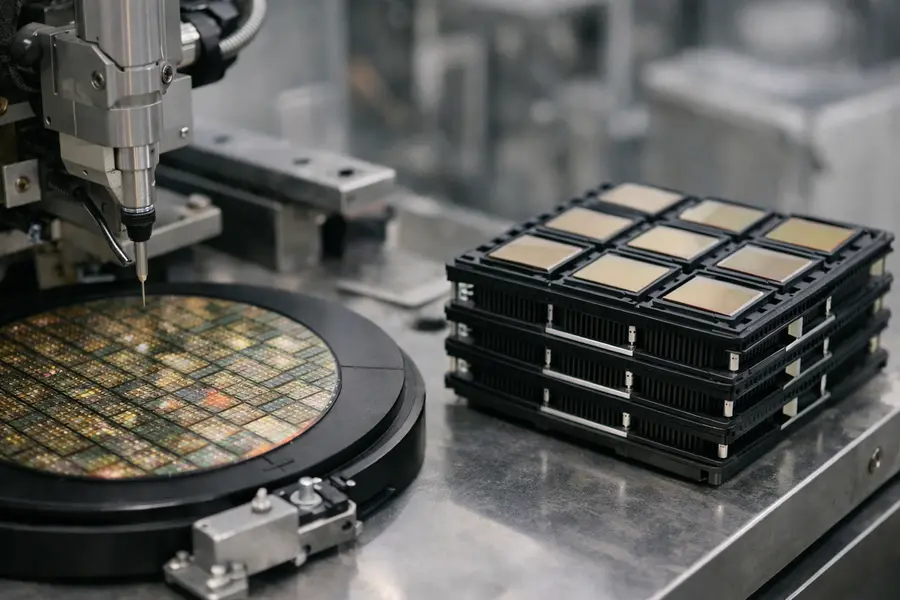
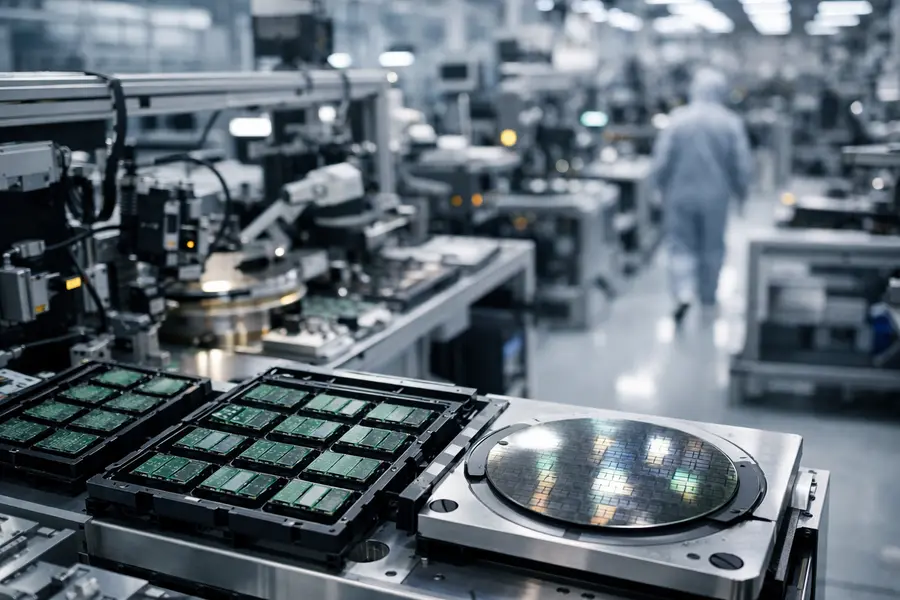
SpaceX and Musk confirm $6.8 billion for Terafab Texas, a chip plant that targets one terawatt of AI compute — fifty times current global production.
- SpaceX and Elon Musk have confirmed $6.8 billion in first-phase funding for Terafab Texas, a semiconductor facility sited in Grimes County outside Houston.
- Terafab targets one terawatt of annual AI compute — roughly fifty times current global output — with full operations expected by 2029.
- SpaceX Starship will carry Terafab-produced chips into orbit aboard AI satellites, linking the Texas plant directly to a space-based compute network.
Lead
SpaceX and Elon Musk confirmed a $6.8 billion first-phase investment in Terafab, a vertically integrated semiconductor facility to be built in Grimes County, Texas, approximately 15 miles from College Station and outside Houston. The commitment establishes SpaceX's anchor funding position in what the company describes as a facility designed to produce one terawatt of artificial intelligence compute annually — a figure that would represent roughly fifty times current global AI chip output. The Terafab Texas site was selected on August 6, 2026, following an announcement of the initiative in March of the same year.What Happened
SpaceX formalized its $6.8 billion commitment as part of a broader consortium anchored by Tesla and Musk's xAI, with Intel Foundry participating as a manufacturing partner. The combined first-phase capitalization for the joint venture reaches $16.8 billion across participating entities, with total multi-phase investment potential cited at up to $119 billion.
The facility is planned at more than 100 million square feet, which would make it the largest enclosed structure on Earth by a substantial margin. Construction timelines target initial operational capacity by 2029. The State of Texas has backed the project with a $30 million grant from the Texas Enterprise Fund and qualified Terafab Texas under the Texas Jobs, Energy, Technology, and Innovation program. The project is expected to generate at least 3,000 direct jobs across Grimes and Brazos counties.
SpaceX intends to build a dedicated on-site natural gas power plant to supply the facility's energy needs, resolving one of the central constraints facing large-scale AI compute infrastructure: reliable, high-density power at scale.
The Starship Connection
The Terafab investment cannot be separated from SpaceX Starship's projected launch cadence. Musk has outlined plans to deploy up to 10 million tons of AI-equipped satellites into orbit annually using Starship, with those satellites powered by solar energy and cooled passively by the vacuum of space. Terafab-produced chips would populate these orbital platforms, which are to be networked back to Earth through Starlink. SpaceX projects 1 gigawatt of orbital AI compute by end of 2026 and 100 gigawatts within roughly three and a half years — a trajectory that only becomes feasible if domestic chip supply is both abundant and vertically controlled.
Musk has stated that SpaceX will consume approximately 75 percent of Terafab's output for its spacecraft and orbital data center program, with the remaining 25 percent allocated to Tesla's Optimus humanoid robot program and Cybercab robotaxi fleet.
Strategic Context
The Terafab Texas project represents the most ambitious attempt yet to consolidate the entire AI chip supply chain — from logic and memory fabrication through packaging and testing — within a single domestic facility. Current industry architecture distributes those functions across Asia, Europe, and the United States, creating the kind of supply chain fragility that governments and large compute buyers have sought to eliminate since 2021.
By co-locating design, fabrication, and deployment planning under Musk's corporate umbrella, Terafab effectively bypasses the contract-manufacturing market for the AI chips its principals will need most. That vertical integration strategy mirrors the logic SpaceX applied to rocket manufacturing — absorbing supplier risk by owning the production process outright.
The scale of ambition also carries competitive weight. Current global AI compute infrastructure operates at roughly 20 gigawatts of annual output. A one-terawatt facility would not merely supplement that capacity; it would dwarf it by an order of magnitude and, if fully realized, structurally shift the economics of AI model training, inference, and deployment for years.
Geopolitical Dimension
The Terafab investment lands at a moment when U.S. semiconductor policy is actively reshaping the competitive landscape for advanced chip production. Federal and state incentives have catalyzed significant domestic capacity announcements, yet none match the combined scale or vertical ambition of the Terafab Texas project. The facility's inclusion of Intel Foundry as a manufacturing partner adds a legacy domestic chipmaker to an otherwise unconventional consortium, providing process expertise and potentially accelerating the path to production-ready yields.
The orbital compute dimension introduces a further geopolitical layer. Space-based AI infrastructure, carried by SpaceX Starship and connected via Starlink, would be difficult to sanction, interdict, or replicate by near-peer competitors on comparable timelines. Control of that stack — chips, launch vehicles, satellite buses, ground connectivity — concentrated within a single corporate ecosystem has no direct precedent in the history of critical technology infrastructure.
Outlook
Terafab Texas, anchored by SpaceX's $6.8 billion first commitment, defines a new ceiling for private-sector investment in AI compute infrastructure. The project's success will depend on execution across multiple parallel challenges: permitting and construction of an unprecedented facility footprint, on-site power generation, manufacturing yield at scale, and the launch cadence required to fill the orbital compute network Musk has described. Phase-one timelines point to 2029 for initial operations; the full terawatt target extends well beyond that horizon. If realized even partially, Terafab Texas would redraw the geography of global AI compute for the next decade.
Mentioned tickers: TSLA, INTC