Pomegra
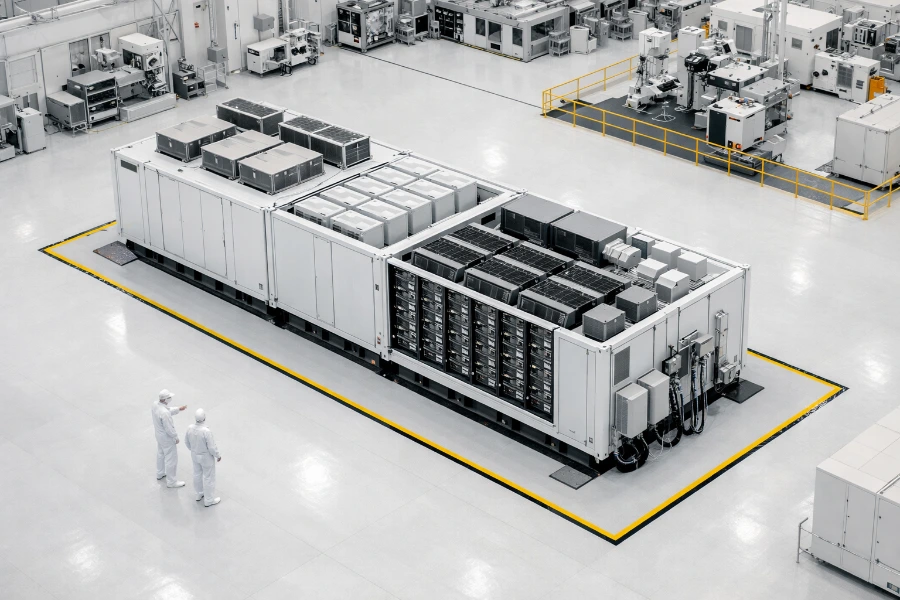
Torus, a Utah energy-storage maker, closed a $500M Series C led by Magnetar to build Foundry, a container-sized unit that pairs batteries with AI compute.
Key Takeaways
- Torus raised $500M in a Series C led by Magnetar on November 11, 2026; valuation was not disclosed.
- Foundry units run 1 MW to 20 MW and install in 12 to 16 weeks.
- The round is 2.5 times Magnetar's $200M investment in Torus in September 2025.
Lead
Torus, a Salt Lake City energy-storage company, raised $500M in a Series C round announced on November 11, 2026. Magnetar led the round, with participation from ICONIQ, Origin Ventures, Ridgeline Partners and Trinity Capital. The company did not disclose a valuation.
The money will go toward manufacturing Foundry, a shipping-container-sized modular unit that combines power, storage, cooling, networking and compute for AI inference. Torus is moving from selling batteries to selling compute capacity housed in them.
What Is Torus Foundry?
Foundry is a prefabricated AI data center module sized between 1 MW and 20 MW, with the smallest version roughly the footprint of a cargo van. It bundles power, storage, cooling, networking and GPUs in one unit that connects behind the meter, using spare transformer capacity at a site that already has electricity. One configuration reportedly holds 576 HGX B300 GPUs in 577 square feet and draws 1.2 MW.
Torus says a customer can go from contract to operation in 12 to 16 weeks. Site preparation takes about a week, and installation and commissioning take one to two days. Buyers can choose a powered shell, a turnkey bare-metal setup with GPUs, or dedicated single-tenant capacity.
The units pair with Torus Reserve, the company's flywheel-and-battery storage system. That product is the company's original business, which sells to factories and commercial facilities that want to manage demand and cut power bills.
Why Is Torus Putting Chips Next to the Power?
Torus argues that grid interconnection is the bottleneck for AI buildouts, not chip supply. CEO and founder Nate Walkingshaw framed the approach this way: "Most providers are bringing power to the chips. Foundry brings the chips to power."
The pitch matters because large data center projects face multi-year waits for utility hookups and growing local resistance. Candidates in Texas and Ohio campaigned on tighter data center restrictions in recent gubernatorial elections. Small units placed at sites with existing headroom avoid some of that queue, though they still depend on a host site having capacity to spare.
How Does the Round Compare With the Last One?
The Series C is 2.5 times the $200M Magnetar put into Torus in September 2025, which was aimed at modular power plants for utilities and data center customers. Magnetar has now led or anchored both rounds. A repeat lead investor writing a larger check is a vote of confidence, but it also concentrates the company's financing in one backer.
The absent valuation is the weak point. Without it, outsiders cannot judge how much of the AI infrastructure premium Torus carries, or what dilution the earlier investors accepted. Investors have been paying up for anything that shortens the time to energized compute, and a company that began in battery storage now draws on that demand.
Manufacturing and Customers
Torus builds at GigaOne, a 545,000-square-foot factory in Salt Lake City, with current capacity of 500 MW of IT load. The company plans to expand that to 1 GW. It employs nearly 400 people, and the Series C funds the factory expansion along with deployments of Reserve and Foundry across the US.
Customers include Hydra Host, an AI infrastructure company that rents GPU capacity, and one unnamed AI cloud provider. Torus has deployed thousands of GPUs so far and targets more than 47,000 by the end of 2027. That is a large step up, and it depends on customers signing contracts for units that are still in early production.
What Comes Next for Torus?
The first test is delivery. A 12 to 16 week installation window is a competitive claim against traditional data center construction, and the company has to repeat it across many sites to support the 2027 GPU target. Utilities and host sites will also set the pace, since each deployment needs usable transformer headroom.
A second question is whether customers treat modular inference sites as a permanent part of their fleets or as a stopgap until larger campuses come online. Competitors in prefabricated data centers and on-site power are chasing the same buyers, and GPU generations turn over faster than container hardware depreciates.
Outlook
Torus has raised $500M to turn a battery manufacturer into an AI compute supplier, backed by a lead investor that has now committed $700M across two rounds by the reported figures. The 2027 target of 47,000 GPUs and a 1 GW factory plan will show whether the model scales. Until the company discloses a valuation and more customers, the evidence rests on the capital raised and a short list of named buyers.