Pomegra
Samsung Electronics shares fell 4.1% after record Q3 2026 operating profit of 107.4 trillion won, as net profit missed forecasts and payouts lacked detail.
- Q3 operating profit hit a record 107.4 trillion won on revenue of 195.3 trillion won.
- Net profit of 75.1 trillion won fell short of the roughly 89 trillion won consensus.
- Shares closed down 4.13% at 232,000 won; the Kospi ended at 5,937.66, below 6,000.
Lead
Samsung Electronics (005930.KS) shares closed 4.13% lower at 232,000 won on Thursday, October 29, after the company posted the largest quarterly operating profit in its history but gave no detail on further shareholder returns. The stock had reached 249,000 won earlier in the session. The selling pulled the Kospi down 1.24% to 5,937.66, extending a pullback from the 6,000 level the benchmark had reclaimed a day earlier. At the session low the index was down 3.24% at 5,817.92.What Did Samsung Electronics Report for Q3 2026?
Samsung reported third-quarter operating profit of 107.4 trillion won, roughly $80 billion, on record revenue of 195.3 trillion won. It is the first technology company to pass 100 trillion won in quarterly operating profit. The figure is about 8.8 times the year-earlier level, and revenue is more than double.
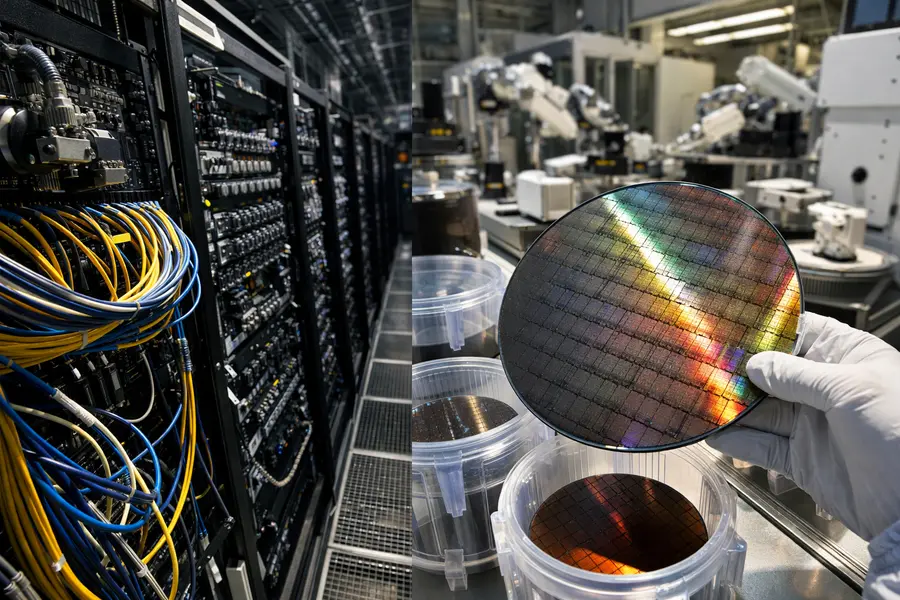
The Device Solutions division produced almost all of it, with operating profit of about 106.5 trillion won on revenue of 147.1 trillion won. Memory revenue rose more than fourfold year on year, driven by sales of HBM4, the latest high-bandwidth memory used in AI accelerators, and by strong demand for enterprise SSDs. HBM4 sales rose more than 300% from the prior quarter and made up about 60% of total HBM sales.
The mobile and networks businesses posted a combined operating loss of 0.6 trillion won, as higher memory component costs and soft entry-level smartphone demand offset gains from the Fold8 line. Visual display profit declined after major sporting events ended, and digital appliances earnings fell on higher material and logistics costs.
Why Did Samsung Shares Fall Despite Record Profit?
Samsung shares fell because net profit missed expectations and the company did not deliver the shareholder return plan the market had priced in. Net profit came in at 75.1 trillion won, against a consensus near 89 trillion won, with financial losses and the mobile deficit weighing on the bottom line.
Investors also wanted specifics. Samsung said total 2026 shareholder returns could reach up to 110 trillion won and declared a quarterly dividend of 4,601 won per share, about 30 trillion won in total. It did not provide a schedule for share buybacks or treasury stock cancellation for the remainder, which it will address in a new policy due in January 2027.
Capital spending added to the caution. Third-quarter capex reached 29 trillion won, up 12.2 trillion won from the prior quarter, and full-year 2026 guidance stands at 84.4 trillion won, with 76.8 trillion won for semiconductors. Selling pressure was concentrated among institutions, which were net sellers of 447.2 billion won, while foreign investors were small net buyers of 69 billion won, with buying fading in the afternoon.
How Did the Wider Korean Market React?
The Kospi fell 1.24% to 5,937.66, and the tech-heavy Kosdaq dropped 2.34% to 753.23. The won traded at 1,336.8 per dollar, little changed from the prior session.
Samsung was not the only drag. LG Chem's sale of its stake in LG Energy Solution and the collapse of a Czech nuclear power plant construction contract involving Doosan Enerbility and Daewoo E&C added to the negative tone. SK Hynix (000660.KS), Samsung's main memory rival, rose more than 2% for a second straight session, which indicates the selling was specific to Samsung's disclosures rather than a rejection of the AI memory theme. Japan's Nikkei 225 rose for a fourth day.
What Comes Next for Samsung and the Kospi?
Management guided for continued company-wide earnings growth in the fourth quarter, with DRAM bit demand projected to grow in the mid-to-high teens in percentage terms and NAND in the mid-teens. Samsung said 2027 HBM supply is already sold out at agreed prices, with 10 major customers on multi-year contracts and 10 more in final negotiations. It expects 2027 results to exceed 2026, and says 2nm foundry orders should more than double this year, with the Taylor, Texas fab moving into equipment installation.
The near-term question is whether the January board meeting delivers a concrete buyback and cancellation schedule. Samsung's weight in the Kospi means the stock's direction will continue to shape whether the index can hold the 6,000 level.
Outlook
Samsung's earnings confirm that AI-driven memory demand is lifting results to unprecedented levels, but the market reaction shows investors now weigh capital returns and net profit quality as heavily as headline operating profit. The January shareholder return decision is the next catalyst for the stock and for the Kospi.
Mentioned tickers: 005930.KS, 000660.KS