Pomegra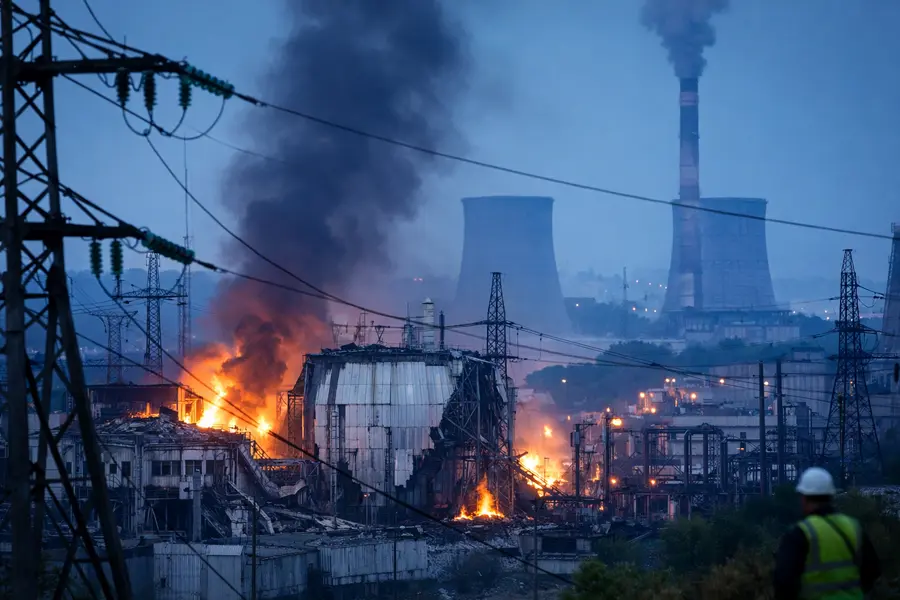
Russia fired 39 missiles and 128 drones overnight at Kyiv and Kharkiv, leaving about 600,000 without power days after Trump announced an energy ceasefire.
- Russia launched 39 missiles and 128 drones at Kyiv and Kharkiv, cutting power to about 600,000 people.
- The attack followed Trump's announcement of an energy ceasefire, which neither Moscow nor Kyiv had publicly confirmed.
- Roughly 30 energy facilities were damaged, reopening the question of winter grid resilience.
Lead
Russia struck Kyiv and Kharkiv with 39 missiles and 128 drones in a single overnight assault, leaving about 600,000 people without electricity. The strikes came days after U.S. President Donald Trump said Moscow and Kyiv had agreed to an "energy ceasefire," a pause in attacks on power infrastructure. Neither government had publicly confirmed such an arrangement. Ukrainian President Volodymyr Zelensky described the attack as "ostentatious disrespect" toward Trump's peace efforts.
What Happened in the Overnight Attack?
The assault combined ballistic missiles with attack drones and focused on energy and critical infrastructure in Ukraine's capital and its second-largest city. About 600,000 customers lost power across the two cities, and roughly 30 energy facilities sustained damage. Casualties were reported in both Kyiv and Kharkiv.
Ukrainian air defenses intercepted part of the salvo. Ballistic missiles remain the hardest category to stop, because they travel at high speed on steep trajectories and Kyiv has a limited supply of interceptors for them. Drones are cheaper and slower. They are launched in large numbers to saturate defenses and draw down interceptor stocks.
Kharkiv sits about 30 kilometers from the Russian border, which gives its defenders very little warning time. Kyiv has built layered air defenses over several years, yet it still absorbs repeated damage to substations and generation sites.
Did the Energy Ceasefire Ever Take Effect?
No confirmed energy ceasefire was in force when the strikes began. Trump had said both sides agreed to halt attacks on energy infrastructure. Neither Moscow nor Kyiv had publicly verified the terms, the monitoring mechanism, or a start date. The gap between the U.S. announcement and the absence of an agreed text left room for the attack to proceed without a formal breach being declared.
Energy truces have a mixed record in this war. Earlier partial moratoria on strikes against power facilities were announced and then contested, with each side accusing the other of violations. Both countries have also hit energy assets as a way to pressure the other's economy. Russia targets generation and distribution. Ukraine has struck refineries and export terminals.
Why Does Grid Damage Matter for the Economy?
Grid damage matters because electricity underpins industrial output, rail logistics, and household heating, and repeated strikes force the state to divert funds and manpower to repair work. About 600,000 people without power in two cities means disrupted water pumping, transport, and commercial activity. Winter raises the stakes. Heating demand rises as temperatures fall, and spare capacity shrinks when generation is damaged.
The pressure also shows up in the budget. Ukraine depends on external financing from Western governments and institutions to cover its deficit. Repairs, imported equipment, and decentralized generation all add to costs. Distributed generation includes gas turbines and solar installations that reduce reliance on single large sites that are easy to target. Neighboring grids also help. Ukraine has relied on emergency electricity imports through its link to the European network during peak shortages.
Geopolitical Dimension
The timing complicates Washington's diplomatic effort. A unilateral announcement of a ceasefire that the parties had not confirmed exposes the limits of U.S. leverage over Moscow's targeting decisions. Russia gains little operational cost from continuing strikes while talks remain open. Ukraine, for its part, uses episodes like this to argue for more air defense systems and tighter pressure on Russian energy revenue.
For the Kremlin, energy strikes serve two aims: eroding civilian resilience and stretching Ukrainian air defenses ahead of winter. For Kyiv, the priorities are interceptors for ballistic missiles and repair capacity. For European governments, the risk lies in a new wave of displacement if heating and power failures spread, which would add pressure on host countries' budgets and services.
Energy markets are also part of the picture. Russian crude and refined product exports remain a primary source of state revenue, and Ukrainian long-range attacks on Russian refining and ports are a reciprocal lever. Any credible energy truce would need to cover both sets of targets, which is one reason a deal has proved hard to define and verify.
What Comes Next for Ukraine's Energy System?
Near-term repairs will determine how quickly the 600,000 affected customers are reconnected. Ukrainian utilities have generally restored supply within days after large strikes, but each repeated hit leaves equipment more worn, and spare transformers and breakers are in short supply. Rolling outages are the standard fallback when demand outstrips available generation.
Over the next three to twelve months, three variables matter. The first is whether Washington can turn its announcement into a verifiable agreement with defined targets and monitoring. The second is the pace of Western air defense deliveries, especially interceptors for ballistic missiles. The third is Russian missile production, which determines how many large salvos Moscow can mount through the winter. Without a confirmed ceasefire, large-scale strikes on energy assets remain a recurring feature of the conflict.
Outlook
The attack on Kyiv and Kharkiv, 39 missiles and 128 drones in one night, left about 600,000 people without power and damaged roughly 30 energy facilities. It landed days after an energy ceasefire that Trump announced but neither side confirmed. The episode shows the gap between diplomatic announcements and conditions on the ground. Ukraine now faces a winter in which grid repair, air defense supply, and external financing carry as much weight as the negotiating track.
Mentioned tickers: None