Pomegra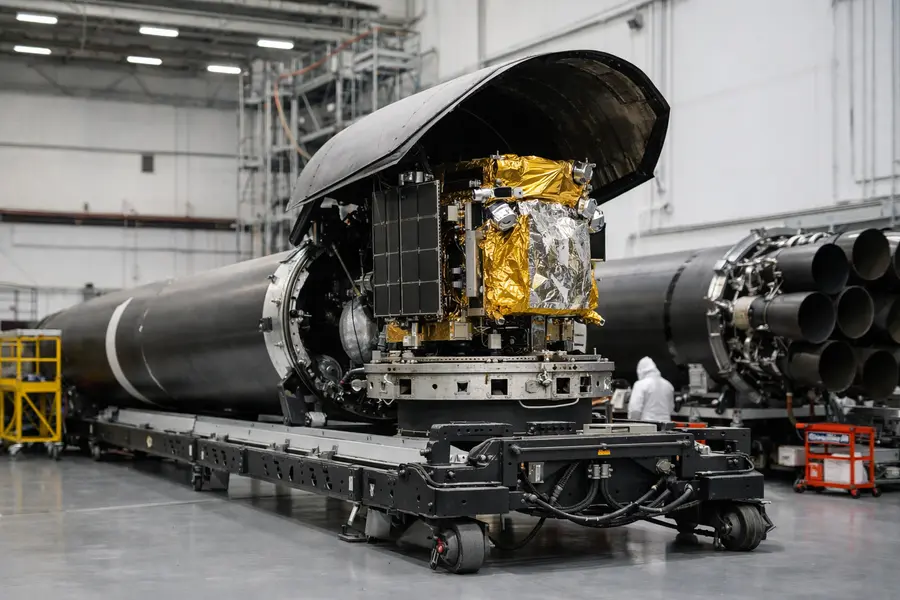
Rocket Lab (RKLB) shares gained about 4.5% after it signed a 20-launch Electron agreement with Synspective, its largest commercial launch contract to date.
- Rocket Lab signed 20 new Electron launches with Synspective, running from 2028 through 2031.
- Synspective's total Electron bookings reach 47 missions, the most of any customer.
- The deal lifts Rocket Lab's launch backlog above 100 missions.
Lead
Rocket Lab (NASDAQ: RKLB) shares rose about 4.5% on October 1, 2026, after the company announced on September 30 a multi-year contract to launch 20 additional Electron missions for Tokyo-based Earth observation operator Synspective. The agreement is the biggest single commercial launch contract in Electron's history. Financial terms were not disclosed. Shares were up roughly 4.7% in premarket trading before settling near the 4.5% gain.What Did Rocket Lab and Synspective Agree To?
Rocket Lab agreed to launch 20 StriX synthetic aperture radar satellites to sun-synchronous orbit for Synspective from Launch Complex 1 on New Zealand's Mahia Peninsula. The missions are scheduled to fly annually from 2028 through 2031.
The new order raises Synspective's total Electron bookings to 47 missions. That makes the Japanese company Rocket Lab's largest launch customer by mission count. Synspective shares rose about 0.5% on the news.
Radar satellites image the ground through cloud cover and in darkness, which suits applications such as disaster response, infrastructure monitoring and defense-adjacent surveillance. Synspective is building the StriX constellation to image almost any location on Earth within hours.
Why Did Rocket Lab Shares React This Way?
Shares rose because the contract adds multi-year revenue visibility to Rocket Lab's launch business. It lifts the company's launch backlog beyond 100 missions. A backlog of that size gives Rocket Lab a schedule of contracted launches that stretches well into the next decade.
The deal also carries strategic weight beyond the headline number. Rocket Lab's founder and chief executive, Sir Peter Beck, framed the agreement as a vote of confidence from constellation builders that want control over their deployment schedules. Dr. Motoyuki Arai, Synspective's founder and chief executive, said Electron's precision and reliability have been central to scaling the StriX constellation.
Investors have recently rewarded Rocket Lab for contract wins and backlog growth. The stock has been on a rally as defense awards and launch bookings accumulated, and the Synspective order extended that run.
How Does the Deal Fit Rocket Lab's Strategy?
The contract reinforces Rocket Lab's position as the leading dedicated small-launch provider for commercial constellation operators. Electron is built for small satellites that need to reach specific orbits on a defined timetable, a niche that rideshare missions on larger rockets cannot always serve.
A single customer committing to 47 flights also reduces concentration risk in an unusual way. While Synspective is a large share of mission count, the order spreads across four years and sits alongside government and defense work. The company has been shifting toward a mix of launch, spacecraft manufacturing and space systems, with its larger Neutron rocket in development for heavier payloads.
Locking in Electron demand through 2031 also supports launch cadence. A predictable annual flight rate lets Rocket Lab plan production of Electron vehicles and use of Launch Complex 1 more efficiently, which supports unit economics as volumes rise.
What Comes Next for Rocket Lab?
Near-term attention turns to execution. The contracted missions begin in 2028, so the revenue contribution lies beyond the current fiscal year, and the stock reaction reflects expectations about backlog conversion rather than immediate earnings. Rocket Lab's next quarterly report will show how much of the backlog is converting to revenue, and whether pricing on newer Electron contracts matches earlier bookings.
Competitive dynamics also matter. Demand for radar and optical Earth observation data continues to grow, and operators with large constellations want launch providers that can deliver dependable schedules. Rocket Lab's flight record on Electron gives it an advantage over newer small-launch entrants still building track records.
Outlook
Rocket Lab has secured its largest commercial Electron contract, adding 20 launches from 2028 through 2031 and pushing its backlog beyond 100 missions. Shares rose about 4.5% on the news. The deal strengthens revenue visibility and deepens its relationship with its biggest customer by mission count, while terms remain undisclosed and revenue recognition is several years away.
Mentioned tickers: RKLB