Pomegra
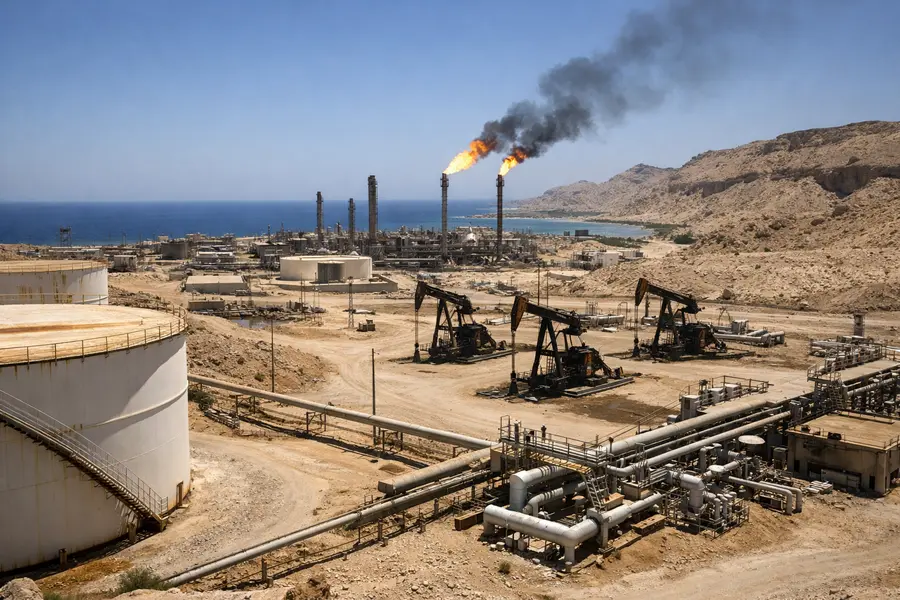
US forces struck Iran's Qeshm Island, pushing Brent crude back above $105 after Monday's 7.6% slide and clouding the path to a peace deal.
- US forces hit a missile launcher on Qeshm Island after Iranian fire brought down a US MQ-9 Reaper drone, per US officials' account.
- Brent rose to about $105 a barrel, recovering part of Monday's $8.66 drop; WTI traded near $97.
- Iran wants the US naval blockade lifted before reopening Hormuz, while Washington presses nuclear concessions.
Lead
US forces struck Iran's Qeshm Island on Monday night, hours before the US midterm elections, after Iranian fire targeted an American aircraft near the Strait of Hormuz. Oil reversed part of its steep fall within hours. Brent crude futures rose about 0.5% to $105.25 a barrel in early Asian trade on Tuesday, and West Texas Intermediate gained a similar margin to $96.93. A day earlier, Brent had settled at $104.77 after losing $8.66, or 7.63%, on hopes that Washington and Tehran were moving toward negotiations.
What Happened at Qeshm Island?
A US fighter jet destroyed a surface-to-air missile launcher on Qeshm Island on Monday night, after the Islamic Revolutionary Guard Corps fired at a US aircraft and downed an MQ-9 Reaper drone. Iranian state media reported several explosions on the island, which sits in the waters east of the Strait of Hormuz, and published images it said showed the drone being intercepted.
US officials described the action as limited and defensive, intended to deny Iran the freedom to attack commercial shipping. It is the latest in a series of small strikes Washington has carried out in recent weeks, kept deliberately low-profile so as not to signal a return to a full military campaign. US Central Command did not immediately comment.
The conflict began on February 28 and is now in its ninth month. It has sharply reduced traffic through the Strait of Hormuz, a passage that before the war carried roughly one-fifth of global crude oil and natural gas supplies.
Why Did Oil Rebound After Monday's Plunge?
Oil rebounded because the strike reintroduced a security risk premium just as traders had begun pricing a diplomatic outcome. Monday's sell-off followed a draft proposal to end the war, which circulated after Iranian negotiators left Qatar. Iran's president said the Supreme Leader had authorized the government to pursue talks, and President Donald Trump said a deal could happen and that no new strikes were planned after the midterms.
The Qeshm report cut against that narrative. The move was modest next to Monday's slide, which means most of the peace-talk discount remains in the price. That leaves the market sensitive to headlines in both directions. Brent fell more than $6 to near $100.80 at one point on conflicting reports about the talks, then recovered toward $103 as officials denied a breakthrough, before the strike news lifted it above $105.
Price action since the war began has shown the same pattern: sharp drops on diplomatic signals and quick recoveries when military incidents or stalled negotiations follow.
What Is Blocking a Peace Deal?
The gap between the two sides' preconditions is the main obstacle. Tehran wants the US naval blockade of its ports lifted, sanctions eased and frozen assets released before fully reopening Hormuz to commercial shipping. Washington is demanding concessions on Iran's nuclear programme.
Contacts continue through Qatari mediators. The latest round ended without a breakthrough, though the proposals on the table were revised. Each side has an incentive to keep talking. Iran faces the economic cost of the blockade, and the White House faces voter anger over high gasoline prices, which has made energy costs a political liability on election day.
Limited strikes such as the one on Qeshm complicate that process. They show the ceasefire-like calm around Hormuz is fragile, and they give hardliners in Tehran a reason to question whether Washington is negotiating in good faith.
Geopolitical Dimension
Qeshm is the largest island in the Persian Gulf and sits close to the shipping lanes that funnel Gulf exports to Asia. Air defence batteries there can threaten both military aircraft and commercial traffic, which explains why the US treats them as a priority target. The incident shows how a single missile exchange can disrupt energy flows even when neither side wants a wider war.
For Asian importers, particularly China, India, Japan and South Korea, the risk is continued uncertainty over delivery schedules and insurance costs. For Gulf producers, a prolonged restriction on Hormuz strengthens the case for bypass pipelines and alternative export routes, a structural shift that would outlast the current conflict.
What Comes Next for the Crude Oil Price?
The crude oil price is likely to stay range-bound between roughly $100 and $115 while negotiations and military incidents trade headlines. A verified agreement that reopens Hormuz and lifts the blockade would put downside pressure on Brent, as Monday's 7.6% fall showed. A further exchange of fire, or a collapse of the Qatar channel, would restore the upward bias.
In the near term, the key markers are whether additional US strikes follow, whether Iran retaliates against shipping, and whether mediators schedule a new round of talks after the midterm vote. Beyond three months, the outcome of the blockade question will determine how quickly Hormuz traffic and Gulf export volumes normalize.
Outlook
The Qeshm strike did not end the diplomatic track, but it reminded markets how little separates a negotiated de-escalation from a renewed confrontation. Brent holds above $105, roughly where it settled Monday, with WTI near $97. Until Tehran and Washington agree on sequencing for the blockade, sanctions and nuclear terms, oil will keep moving with each report from the Gulf.