Pomegra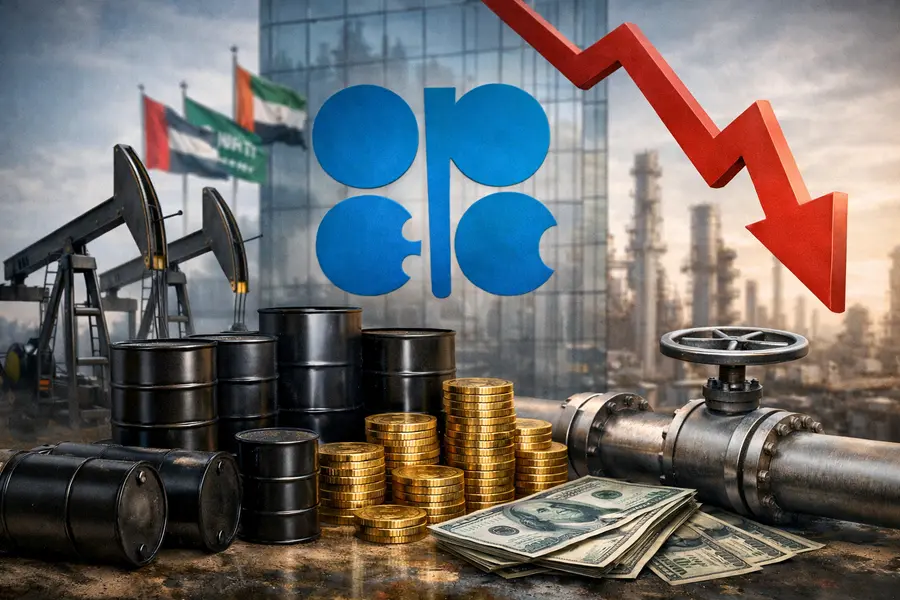
Seven OPEC+ core producers approved a sixth consecutive 188,000 bpd production increase for September 2026 before signaling a freeze through year-end, completing the largest sustained quota rollback since the pandemic era.
- The seven-member core — Saudi Arabia, Russia, Iraq, Kuwait, Kazakhstan, Algeria, and Oman — have added roughly 1.1 million bpd to collective quotas since April 2026
- Brent crude settled near $90 per barrel following the announcement, reflecting the market's expectation that the pause protects a floor under prices
- An estimated 2 million bpd of deeper OPEC+ cuts dating to 2022 will remain intact through at least Q4 2026
Lead
RIYADH/VIENNA — OPEC's seven core producers convened August 2 and approved an additional 188,000 barrels per day output increase effective September 2026, matching the cadence of five prior monthly hikes stretching back to April. Within hours of the decision, delegates signaled that no further quota increases are expected through the end of the year, drawing a clear line under a six-month unwinding campaign that has added more than a million barrels per day to collective ceilings. Brent crude, the international benchmark, was trading near $90.12 a barrel in the immediate aftermath.What Happened
The September allocation follows the same proportional formula applied through the summer. Saudi Arabia leads with an additional 62,000 bpd, lifting its ceiling to 10.4 million barrels per day — a level consistent with sustained operation across the kingdom's flagship onshore and offshore fields, including the Ghawar and Khurais complexes that anchor the country's massive saudi oil field network. Russia matches that increment at 62,000 bpd, bringing its ceiling to 9.9 million bpd. Iraq adds 26,000 bpd to reach 4.4 million bpd; Kuwait contributes 16,000 bpd; Kazakhstan 10,000 bpd; Algeria 6,000 bpd; and Oman 5,000 bpd to 836,000 bpd.
The sixth consecutive increase — a sequence visible in every recent public statement bearing the opec logo — brings total quota additions since April to approximately 1.128 million bpd. That figure represents roughly half the voluntary cuts the group had accumulated since 2022, leaving a remaining buffer of about 2 million bpd that the alliance is not yet prepared to address.
Market Reaction
Oil prices absorbed the announcement with relative composure. Brent settled at $90.12, up more than 1% on the session, while West Texas Intermediate gained a similar margin to close at $84.67 per barrel. The muted response reflected a market that had largely priced in the September hike after Bloomberg and other Tier 1 outlets reported the outlines of an agreement-in-principle days earlier. The more consequential signal — the production pause — provided modest price support by confirming that the ceiling is not open-ended.
Supply disruption risk in the Persian Gulf corridor continues to underpin prices. Exports through the Strait of Hormuz have been recovering following a period of heightened geopolitical tension, and the partial normalization of that passage is itself a precondition that gave the alliance the confidence to proceed with five straight increases before this point.
Strategic Context
The pause reflects a calculated decision by the core seven to avoid overshooting a market that remains sensitive to both demand signals and geopolitical noise. Global demand growth in 2026 has been solid but uneven: emerging market consumption — particularly in South and Southeast Asia — has driven year-on-year gains, while European industrial demand has lagged. A unilateral acceleration of supply into that environment would risk compressing margins below the fiscal breakeven levels that several member states rely on for budget stability.
Saudi Arabia, whose near-term production trajectory tracks closely with Saudi Aramco's capacity expansion programs including the Marjan Crude Increment Programme and the Jafurah unconventional gas development, has an incentive to preserve price discipline even as it operates nearer to its stated 10.4 million bpd ceiling. Aramco reported total hydrocarbon production of 12.9 million barrels of oil equivalent per day for full-year 2025, with output climbing to 13.2 mmboed in Q4 as voluntary cuts began to ease.Geopolitical Dimension
The timing of the pause also reflects unresolved tension inside the alliance over quota compliance and burden-sharing. Kazakhstan and Iraq have been chronic overproducers relative to their agreed ceilings, and a pause creates space for negotiations over the structure of post-2022 cuts without simultaneously managing the politics of new allocation increases. Attempts to distribute the remaining 2 million bpd of deeper cuts among twelve-plus members are expected to be contentious, particularly if demand conditions soften heading into 2027.
The Iran dimension remains a live variable. Tehran's output — operating under a separate framework from the core-seven quota system — has been subject to sanctions pressure and geopolitical disruption throughout 2025–26. Any material shift in Iran's supply posture, whether from diplomatic normalization or renewed enforcement of export restrictions, would complicate the alliance's ceiling arithmetic.
Outlook
The production pause through Q4 2026 keeps OPEC+ in a holding pattern that balances market stability against the complex internal diplomacy of unwinding legacy cuts. With roughly 2 million bpd of additional capacity still capped and no timeline set for further rollback, the alliance retains meaningful supply leverage heading into the next strategy cycle. Brent's near-term trajectory will hinge on the pace of Hormuz export normalization, the durability of emerging-market demand, and whether the two chronic overproducers — Iraq and Kazakhstan — bring actual output into closer alignment with ceilings. A meaningful demand miss or a sudden supply shock from outside the alliance could force a recalibration, but the baseline remains a managed plateau through year-end.
Mentioned tickers: ARAMCO.SR, USO, BNO, XLE, XOM, CVX, COP, SLB