Pomegra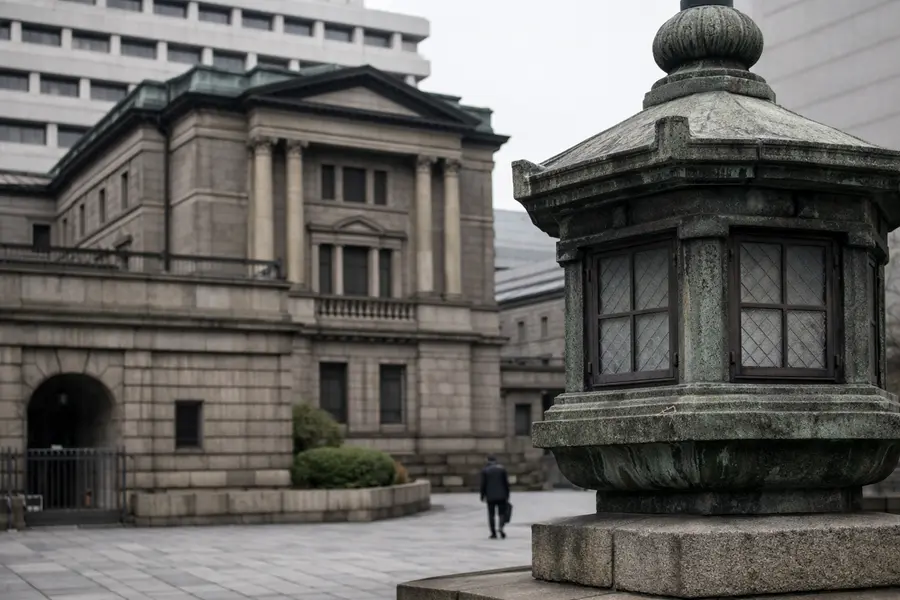
The Bank of Japan begins its September 17-18 policy meeting as markets price a 97% probability of a 25-basis-point rate increase to 1.25% -- the first time in this normalization cycle both the BOJ and Federal Reserve have tightened in the same week, creating a synchronized squeeze on global rate differentials.
- Overnight index swaps price a 97% chance the BOJ raises rates 25bp to 1.25% on Sept. 18, Japan's highest policy rate since April 1995.
- The Federal Reserve raised its benchmark to a 3.75%-4% target range on Sept. 16, delivering the first same-week BOJ-Fed tightening event in the current cycle.
- Japan's core CPI accelerated to 1.8% year-on-year in July 2026; 93% of BOJ watchers forecast a further hike by January 2027.
Lead
The Bank of Japan opened a two-day policy meeting on September 17 that markets expect to conclude with Japan's fifth rate increase since the start of its normalization cycle in March 2024. A 25-basis-point move to 1.25% would push Japan's benchmark to its highest level since April 1995, arriving just 48 hours after the Federal Reserve lifted US rates to a 3.75%-4% target range on September 16. The overlap -- the first in this tightening cycle -- establishes what financial markets are calling a super central bank week, a rare instance in which the two most systemically significant rate-setters on the planet tighten in tandem, compressing the yen-dollar rate differential and triggering early signs of carry-trade unwinding. The dollar-yen exchange rate stood at 155.37 on September 16, down from 2024 highs, with the yen gaining for a second consecutive month.
A Historic First in This Tightening Cycle
Every previous BOJ rate increase since March 2024 landed as a standalone event. The July 2024 hike to 0.25%, the December 2025 move to 0.75%, and the June 2026 increase to 1.00% each shifted Japanese borrowing costs higher while the Federal Reserve was either cutting or pausing -- meaning the yen-dollar spread narrowed only from Japan's side, and carry traders could absorb each move without disorderly repositioning.
September 2026 changes that dynamic. The Fed's decision to raise rates to 3.75%-4% reflects a policy committee still grappling with persistent inflation, with updated projections showing eight voting members pointing to at least one additional hike in 2027. When both central banks tighten simultaneously, the cost of yen-funded leverage rises on both legs: borrowing in yen becomes more expensive while the assets those yen typically fund -- US equities, Treasuries, and technology shares tracked by indices like QQQ and leveraged vehicles including SOXL -- face their own repricing from an elevated US rate environment.
What Is Driving the BOJ's September Decision?
Governor Kazuo Ueda's case for raising rates rests on two reinforcing trends: wage growth and price acceleration. Japan's core CPI, excluding fresh food, climbed 1.8% year-on-year in July 2026, up from 1.6% in June -- the fastest pace since December 2025. Headline inflation reached 1.9% over the same period. Though both readings remain just below the 2% target, the BOJ's July 2026 outlook stated that core prices are set to exceed 2% clearly in the second half of fiscal 2026, driven by wage pass-through into selling prices, elevated energy costs, and a weaker yen amplifying import-price pressure.
Spring wage negotiations delivered increases in the low-3% range in 2026 -- below 2025's spike but well above pre-normalization norms -- sustaining confidence at the BOJ that a durable wage-price cycle is underway. Ueda stated in early September that it is "appropriate to raise rates if trend inflation heightens in line with our forecast." That language, combined with a Bloomberg survey showing all 52 BOJ watchers forecasting a September hike, drove overnight index swap odds from roughly even in late August to 97% by mid-September.
Will the Yen Rally After September 18?
The yen has already strengthened ahead of the meeting. The currency climbed to a one-month high against the dollar as carry-trade participants began reducing yen-funded positions in response to the anticipated synchronized tightening. Dollar-yen at 155.37 reflects partial but not complete pricing of further yen appreciation -- a calibration against whether Ueda's post-meeting press conference leans hawkish or attempts to cap rate expectations after the hike itself.
Ninety-three percent of BOJ watchers surveyed by Bloomberg forecast at least one additional rate increase by January 2027, with roughly one-third anticipating a December move. If those expectations receive encouragement from post-meeting guidance, the carry unwind could extend, pressuring yen-short positions and weighing on the US growth equities -- including tech-exposed funds tracking SPY -- that carry traders have disproportionately funded. Bank of America in August projected the yen could gain as much as 6% by year-end, a forecast that looks conservative against September's synchronized tightening backdrop.
The Global Rate Differential Reset
The structural consequence of September's simultaneous moves extends beyond the yen. Since Japan's lost decade began in the 1990s, the BOJ's near-zero rates served as a global borrowing floor -- the cheapest funding source available to leveraged international investors. A survey of prime rate history across major economies shows Japan's ultra-loose stance persisting long after rates normalized elsewhere, making the yen carry trade uniquely durable across multiple global cycles. At 1.25%, Japan's policy rate is still low in absolute terms, but four hikes in roughly 30 months signal that the floor is rising at a pace markets are only beginning to fully price.
Japanese institutional investors hold an estimated $4 trillion in foreign assets. As domestic yields continue climbing, the incentive to repatriate capital grows, with downstream effects on demand for US Treasuries, European sovereign debt, and the dollar itself.
Outlook
A clean 25-basis-point hike to 1.25% on September 18 is all but certain. The consequential variable is forward guidance. Neutral language would allow markets to absorb the move without disruption; hawkish signals pointing to December would amplify carry-trade pressure already visible in yen positioning and in the early repricing of leveraged US technology exposures. With interest rates in both the United States and Japan moving higher in the same week for the first time in this cycle, the global cost of capital is entering territory with no close modern precedent.