Pomegra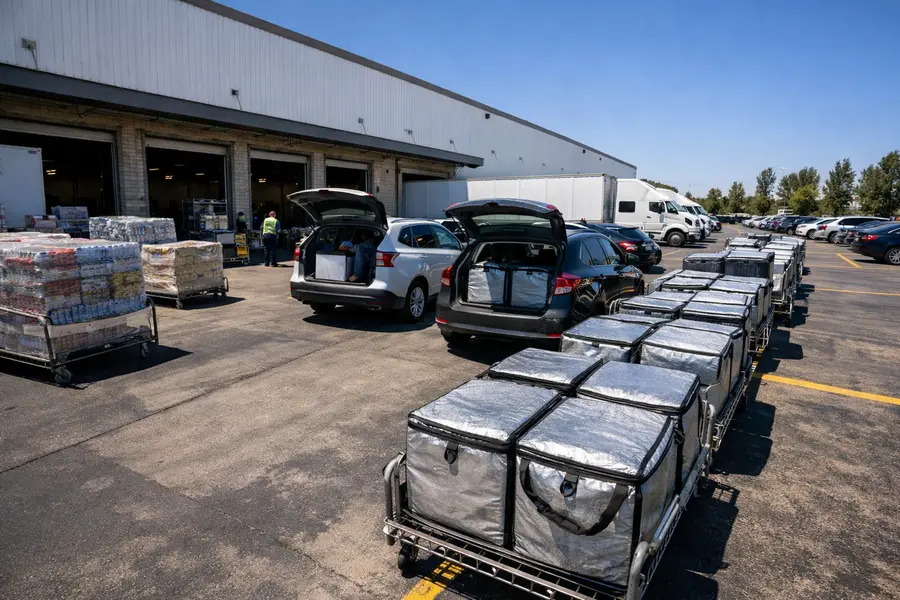
Costco and Uber Eats are taking their same-day delivery partnership national, reaching 47 states and 600 warehouse locations while embedding Costco membership sign-up directly inside the Uber Eats app.
- The partnership scales from 17 to 47 states, covering approximately 600 Costco warehouse locations across the continental United States.
- Same-day delivery is now available to both existing members and prospective customers through the Uber Eats platform.
- New Costco memberships can be initiated and completed without leaving the Uber Eats app, creating a direct acquisition channel for Costco inside a competing platform.
What Is the Costco-Uber Eats National Rollout?
Costco Wholesale (COST) and Uber Technologies (UBER) announced a sweeping expansion of their U.S. delivery partnership, scaling from 17 states to 47 states and bringing same-day delivery access to approximately 600 warehouse locations. The rollout encompasses the vast majority of Costco's domestic store footprint and represents one of the most extensive third-party delivery integrations the warehouse retailer has undertaken. A new feature allowing consumers to sign up for a Costco membership directly inside the Uber Eats app marks the deepest commercial integration between the two companies to date.
Why Is Costco Embracing Third-Party Delivery Now?
Costco has historically resisted third-party delivery, preserving the in-warehouse experience that underpins its membership model. The national Uber Eats expansion represents a strategic recalibration: rather than treat delivery as a threat to foot traffic, Costco is using the Uber Eats platform as a membership acquisition channel. The in-app sign-up feature converts Uber Eats users - a younger, urban demographic that may never have visited a warehouse - directly into paying members at the standard annual fee of $65 for Gold Star or $130 for Executive tier.
For UBER, the deal bolsters its grocery and big-box delivery segment, a key battleground against DoorDash and Instacart. Adding Costco's scale - the company operates roughly 614 U.S. warehouses and serves over 75 million cardholders globally - materially upgrades Uber Eats' value proposition in the non-restaurant delivery category.
How Does the In-App Membership Sign-Up Work?
The embedded membership feature allows Uber Eats users browsing Costco's storefront on the platform to initiate and complete a Costco membership without leaving the app. Once enrolled, shoppers gain immediate access to Costco's full product catalog on Uber Eats, including bulk groceries, household goods, and electronics. The integration removes the longstanding barrier requiring a warehouse visit to activate a membership - a friction point that has historically limited Costco's ability to capture younger, delivery-native consumers.
What Does the Expansion Mean for Costco's Membership Economics?
Costco's membership fee revenue - which generated approximately $4.8 billion in fiscal year 2024 - is the structural engine of the business. Every incremental membership adds near-pure-margin recurring revenue, and the domestic and Canadian renewal rate sits above 90%, meaning acquired members tend to remain enrolled for years. Embedding sign-up inside Uber Eats creates a new top-of-funnel acquisition path at minimal incremental customer acquisition cost, tied directly to a moment when consumers are actively transacting with Costco's product selection.
How Does This Shift Uber's Competitive Standing in Grocery Delivery?
The Costco integration gives Uber Eats a differentiated anchor in the bulk and big-box retail segment. While competitors carry Costco in limited markets, a 47-state, 600-location footprint with membership origination built into the platform is a structurally deeper arrangement. For UBER, expanding non-restaurant delivery addresses both margin and frequency: grocery and household staples generate higher order regularity than restaurant meals, improving the unit economics of Uber's delivery network over time and supporting the profitability trajectory management has outlined in recent quarters.
Outlook
The Costco-Uber Eats national expansion positions both companies to capture greater share of the U.S. on-demand retail delivery market as same-day fulfillment expectations extend beyond major urban centers. COST gains a scalable new membership acquisition channel with favorable economics; UBER deepens its grocery footprint against well-capitalized rivals. Principal execution risk centers on maintaining Costco's product quality standards - particularly for fresh and temperature-controlled items - at scale across a national delivery network. Investors and analysts are expected to receive additional operational detail when both companies report in their next quarterly earnings calls.
Mentioned tickers: COST, UBER