Pomegra
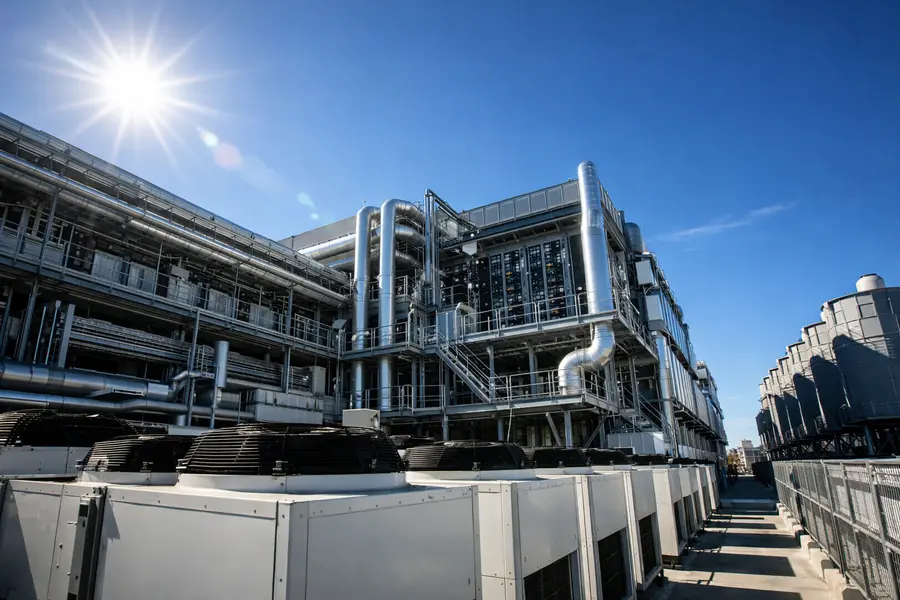
Nasdaq Meta (META) fell about 7% after Q3 2026 results showed record AI spending and negative free cash flow. A new nonvoting share class also unsettled the market.
- Meta's Q3 capex hit $34.9B, above $32.8B of operating cash flow, leaving free cash flow at negative $2.1B.
- Meta shares fell about 7%, a chip index lost 6.7%, and the Nasdaq Composite posted its worst day since June.
- Meta set a new class of nonvoting common stock and a full-year capex range of $135B to $145B.
Lead
Shares of Meta Platforms (META) fell about 7% after the company reported third-quarter 2026 results. The report showed capital expenditure of $34.9 billion and a plan to create a new class of nonvoting stock to raise capital. The selloff spread through technology. A chip index dropped 6.7%, and the Nasdaq Composite fell 2.6% to 26,008.86, its worst session since June.
Meta beat on revenue and earnings. Revenue rose 26% from a year earlier to $64.60 billion, and diluted earnings per share were $3.83 against a consensus near $3.57. Investors focused instead on the cost of the AI build-out and how it will be funded.
Why Did Meta Stock Fall Despite Beating Estimates?
Meta stock fell because AI spending outran the cash the business generated in the quarter. Capex of $34.9 billion exceeded operating cash flow of $32.8 billion, producing free cash flow of negative $2.1 billion. The result is the first negative free cash flow since the company went public in 2012.
The company also raised the low end of its 2026 capital expenditure outlook. It now expects $135 billion to $145 billion, up from $130 billion to $145 billion. The narrower, higher range removed the possibility of a lighter spending year.
Profitability also weakened. Operating income was $12.99 billion, down 37% from the third quarter of 2025. The decline reflected higher costs and a $9.9 billion legal settlement charge. Net income was $9.86 billion.
The core advertising business remained strong. Ad impressions across the Family of Apps rose 10% and the average price per ad rose 14%. Those figures were not enough to offset concern over the return on the infrastructure outlay.
What Is the New Nonvoting Stock?
The new nonvoting stock is a class of common shares that lets Meta raise capital without diluting the voting power of existing holders. Control stays with CEO Mark Zuckerberg and the current voting structure. The move signals that management expects to use external capital markets, alongside internal cash flow, to fund its data center and chip commitments.
For investors, the structure raises two issues. Nonvoting shares carry no say in governance, which can matter to index providers and stewardship-focused funds. The issuance could also add to share count at a time when free cash flow is negative. Both points added to the pressure on the stock.
How Did the Wider Market React?
The wider market sold off hard, led by chips. A chip index fell 6.7% as the Meta report revived questions about how long the AI investment cycle can be financed. Suppliers of accelerators, memory and networking equipment, whose revenue depends on hyperscaler budgets, saw sharp declines. The higher capex range supports their demand outlook, but the funding strain behind it weighed on sentiment.
The Nasdaq Composite lost 2.6%, the steepest one-day fall since June. The decline shifted attention to large-cap AI stocks, which have led the market on the premise that spending would convert into earnings growth. Funds tracking the Nasdaq QQQ, which has heavy exposure to Meta, Nvidia (NVDA), Microsoft (MSFT), Alphabet (GOOG) and Amazon (AMZN), faced the same pressure. Meta's slide was its worst single-day move since July.
What Does Negative Free Cash Flow Mean for AI Spending?
Negative free cash flow means a company spends more on investment than it earns from operations, so it must draw on cash reserves or raise outside capital. For Meta it is a shift from a business that funded its own expansion and returned cash to shareholders.
The change puts Meta alongside other hyperscalers that have turned to debt and equity markets to finance data centers. Capex at $34.9 billion in one quarter is the largest of the cycle for the company. The $135 billion to $145 billion annual range points to a similar pace through the end of 2026.
What Comes Next for Meta and AI Stocks?
The next test is whether revenue growth stays high enough to carry the cost base. Advertising pricing and volume growth give Meta a strong base, with 26% revenue growth supporting the case. The market will watch for evidence that AI-driven ad targeting and new products raise returns on invested capital.
Details of the nonvoting issuance, including size, timing and use of proceeds, will shape perceptions of balance sheet strain. Capex guidance for 2027 will also matter. Further increases would extend the period of negative free cash flow and keep chip and cloud suppliers sensitive to financing conditions.
Outlook
Meta's earnings beat was overshadowed by $34.9 billion of quarterly capex, negative free cash flow and the plan for a nonvoting share class. The 7% decline in the stock, the 6.7% drop in chips and the Nasdaq's worst day since June reflect a market focused on how the AI build-out is paid for. Near-term direction for technology depends on how Meta and its peers fund spending and on how quickly AI investment converts to revenue.
Mentioned tickers: META, NVDA, MSFT, GOOG, AMZN, QQQ