Pomegra
The Federal Reserve is set to hold rates at 3.75%-4.00% on Oct. 28, but oil near $117 and 3.7% inflation have futures pricing a December hike at about 70%.
- The Fed is expected to hold its target range at 3.75%-4.00% on Oct. 28; 94 of 100 economists polled forecast no change.
- Futures price roughly a 70% chance of a quarter-point hike at the Dec. 8-9 meeting, and all 100 economists polled expect one.
- September CPI rose to 3.7% on a 34.2% annual jump in gasoline, with Brent crude at a six-month high of $116.72.
Lead
The Federal Reserve concludes a two-day meeting on Oct. 28 with no change to the fed rate widely expected, even as energy-driven inflation pushes markets to price a tightening move before year-end. The benchmark federal funds target range stands at 3.75%-4.00%. Prediction markets put the odds of a quarter-point hike this month at about 7%, and a hold at about 94%. Pricing for the Dec. 8-9 meeting is far more aggressive.
What Is the Fed Expected to Do on Oct. 28?
The central bank is expected to leave interest rates unchanged and signal that its next move is more likely up than down. A survey of 100 economists found 94 expecting a hold this month. Hot September inflation data briefly revived bets on an October increase. Those bets faded after Fed officials indicated they were in no rush to move again.
The decision therefore turns less on the rate itself than on the language around it. Investors will look to the policy statement and the chair's press conference for confirmation that a December increase remains the base case. Most officials expect one more hike before the year ends.
Why Are Markets Pricing a December Hike?
Markets are pricing a December hike because inflation is running well above the Fed's 2% target and is accelerating. The consumer price index rose 3.7% in September from a year earlier, above the 3.6% consensus estimate, after a 0.6% monthly gain. Core CPI, which strips out food and energy, rose 0.3% on the month and 2.6% annually. Both readings were hotter than the 0.2% and 2.5% that economists had forecast.
That core overshoot matters. It suggests the energy shock is starting to leak into broader prices rather than staying confined to the pump. Fed funds futures show better than a 70% probability of a quarter-point increase in December. Every one of the 100 economists polled expects the move.
The bond market reflects the same repricing. The 10-year Treasury yield finished last week near 5%, after peaking at 5.365% in early October. The 2-year yield, which tracks policy expectations most closely, rose 5 basis points to 4.686%, well above the current top of the target range.
How Are Oil Prices Feeding Into Inflation?
Oil is feeding into inflation mainly through fuel costs, which flow quickly into consumer prices. Gasoline rose 9.1% in September alone and accounted for half of the monthly increase in the index. Pump prices were up 34.2% from a year earlier, following a 27.4% annual gain in August. The energy index climbed 5.2% on the month.
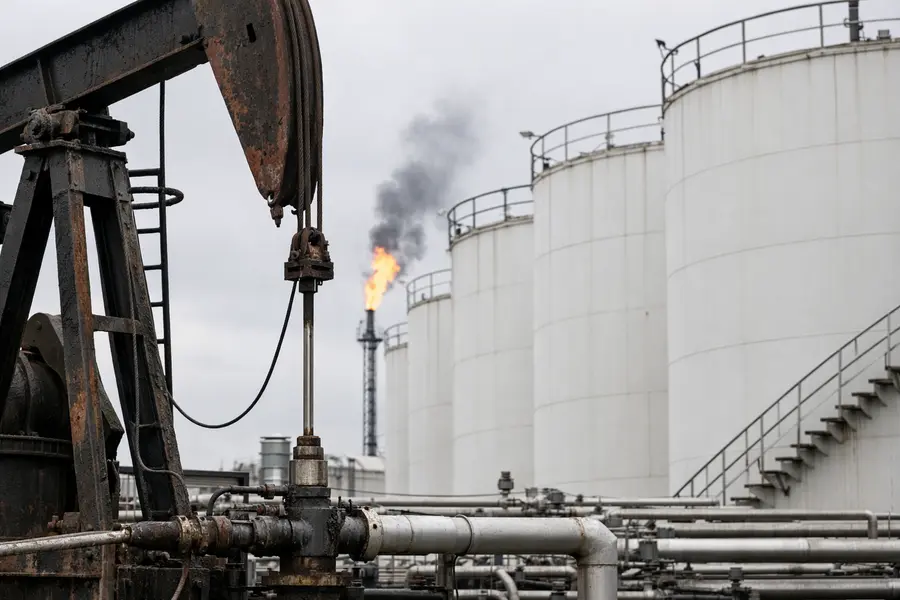
The driver is the war between the U.S. and Iran, launched in late February, which shows no sign of ending. Brent crude for December delivery settled Friday at $116.72 a barrel, up 3.1% on the day and about 6% on the week. It was the highest settlement since April 29 and the third straight weekly advance. West Texas Intermediate held above $103.
Market Reaction
Equities have started to price the combination of costly energy and higher borrowing costs. On Friday the Dow Jones Industrial Average fell 1.2%, more than 600 points. The S&P 500 slid 0.5% and the Nasdaq Composite 0.2%. The S&P 500 and Nasdaq each posted a second consecutive weekly loss.
Selling broadened beyond the artificial intelligence trade, which had been hit by a sharp semiconductor and tech sell-off a day earlier. Transportation shares were pressured by fuel costs. Some pockets rebounded, including Tesla (TSLA) and Meta (META), which recovered after declines in the prior session.
What Comes Next for Interest Rates?
The next move in interest rates is most likely a quarter-point increase on Dec. 9, which would lift the target range to 4.00%-4.25%. Banks' prime rate, which tracks the top of the federal funds range, would rise in step with any hike. Floating-rate consumer and business borrowing costs would follow.
Two data releases before then will test that path. The October CPI report, due in November, will show whether gasoline continues to climb or begins to stabilize. A pullback in crude would ease pressure for a move. A push toward $120 Brent would raise the risk that officials lean toward a larger or earlier response. The ECB also meets this week and is expected to hold, with December hikes still in play across major central banks.
Outlook
The Fed is expected to hold on Oct. 28 and keep its December option open. With headline inflation at 3.7%, core inflation rising and Brent above $116, the debate has shifted from whether policy tightens again to when and how far. Oil and the Iran conflict remain the dominant variables for rates, yields and equities into year-end.