Pomegra
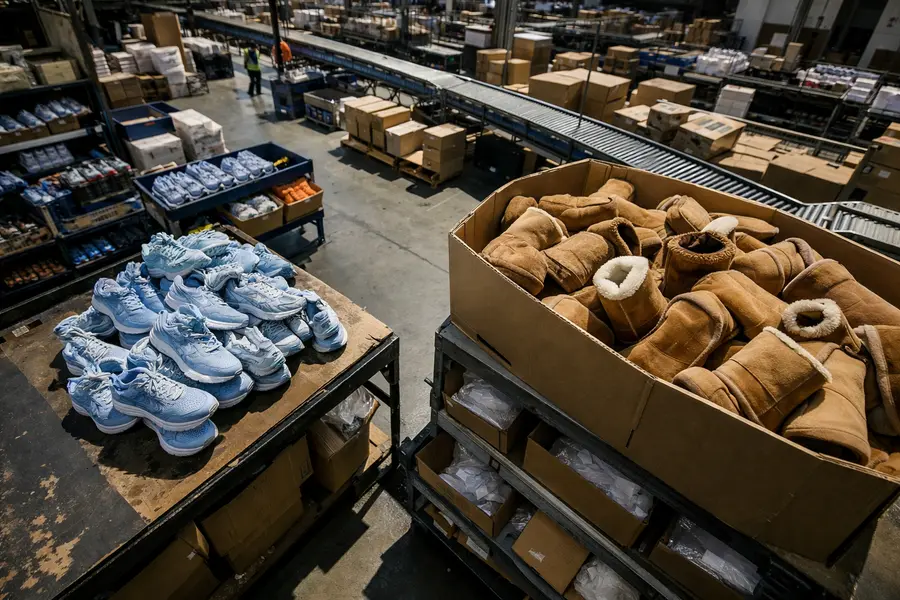
Deckers (DECK) fell about 7% premarket after the Hoka and UGG owner cut its fiscal 2027 sales outlook to $5.7 billion on heavier discounting and weaker demand.
- Deckers cut fiscal 2027 net sales guidance to $5.700-$5.725 billion from $5.86-$5.91 billion.
- Second-quarter sales of $1.481 billion missed the $1.51 billion consensus; EPS of $2.31 beat the $1.80 consensus.
- Tariff refunds lifted earnings, and full-year EPS guidance rose to $7.80-$7.95.
Lead
Deckers Brands shares dropped about 7% in premarket trading on Friday, October 23, 2026. The maker of Hoka running shoes and UGG boots lowered its full-year revenue forecast after reporting second-quarter results that missed on sales and beat on profit. The company now expects fiscal 2027 net sales of $5.700 billion to $5.725 billion, below the prior range of $5.86 billion to $5.91 billion. The new midpoint sits roughly 2.8% under consensus. Management attributed the reduction to a more promotional U.S. athletic footwear market and growing pressure on consumers.What Did Deckers Report for the Second Quarter?
Deckers reported net sales of $1.481 billion for the quarter ended September 30, up 3.5% from a year earlier and short of the $1.51 billion consensus. Diluted earnings per share rose 27% to $2.31, well above the $1.80 consensus.
Hoka sales rose 6.8% to $677.2 million, and UGG sales rose 3.5% to $786.4 million. Wholesale revenue increased 5.5% to $1.093 billion, while direct-to-consumer sales fell 1.8% to $387.5 million. Comparable DTC sales declined 6.4%, a sign of softer traffic and demand in the company's own stores and websites.
Gross margin reached 60.5%, up from 56.2% a year earlier, and operating income was $389.5 million. The profit beat leaned on one-time items: the company received $46 million in tariff refunds under the International Emergency Economic Powers Act, plus $3 million in interest. Together they added about $0.28 per share in the quarter.
Why Did Deckers Cut Its Sales Outlook?
Deckers cut its outlook because the brands are now expected to grow more slowly than planned, in a market where retailers are leaning on markdowns to move inventory. Hoka is now projected to grow at a high-single-digit rate for the year, down from low-double-digit. UGG is projected to grow at a low-single-digit rate, down from mid-single-digit.
The slowdown matters most for Hoka, which has been the company's main growth engine. Its 6.8% rise in the quarter is a marked step down from the expansion that made it a rival to established running brands. UGG, a seasonal business weighted toward the fall and winter selling period, faces a cautious shopper who is trading down or waiting for discounts.
CEO Stefano Caroti said the company delivered earnings above expectations by maintaining disciplined marketplace management and expense control. That approach prioritizes margin and brand positioning over chasing volume with promotions, which helps explain why revenue guidance fell while profit guidance rose.
Why Are Earnings Guidance and Sales Guidance Moving in Opposite Directions?
They moved apart because the profit outlook includes tariff refunds, while the sales outlook reflects underlying demand. Deckers raised fiscal 2027 diluted EPS guidance to $7.80-$7.95. Refunds received through October 8 totaled $87.9 million plus $4.7 million in interest, which contribute roughly $0.52 per share to the full-year figure.
The company now expects a gross margin of about 58.5% and an operating margin of about 23%, with a tax rate near 23%. Without the refunds, the earnings picture would look less favorable than the headline raise suggests. Investors are reading the cut in the sales line as the more durable signal about brand momentum.
Market Reaction
The premarket decline of about 7% adds to a difficult year for the stock. Shares have fallen roughly a quarter since the start of 2026 and trade more than 30% below their February 52-week high near $120.94, a level that reflected expectations of sustained double-digit growth at Hoka.
Deckers continues to return capital. It repurchased 6.5 million shares for $637.5 million in the first half of the fiscal year and has $4.4 billion remaining under its authorization. Buybacks at that scale offer some support to earnings per share, though they do not change the revenue trajectory.
Strategic Context
The report highlights a shift in the premium footwear sector. For several years, Hoka and UGG gained share with limited discounting, and their pricing power was central to the valuation of Deckers Brands. A more promotional athletic market weakens that advantage, as competitors and retailers clear inventory at lower prices and pull demand away from full-price sales.
The channel mix is also a factor. Wholesale growth of 5.5% against a decline in direct sales suggests partners are taking more product while the company's own channels, which carry higher margins, are losing momentum. That mix weighs on profitability if it persists.
Outlook
Deckers enters the key holiday and winter selling period with lower growth targets for both brands and a profit forecast that depends partly on non-recurring tariff refunds. The next test is the third quarter, when UGG's seasonal peak and the depth of promotions across U.S. athletic footwear will show whether the revised $5.7 billion outlook leaves room for further adjustment. The pace of Hoka's wholesale expansion and the trend in comparable direct sales are the main indicators to watch.
Mentioned tickers: DECK