Pomegra
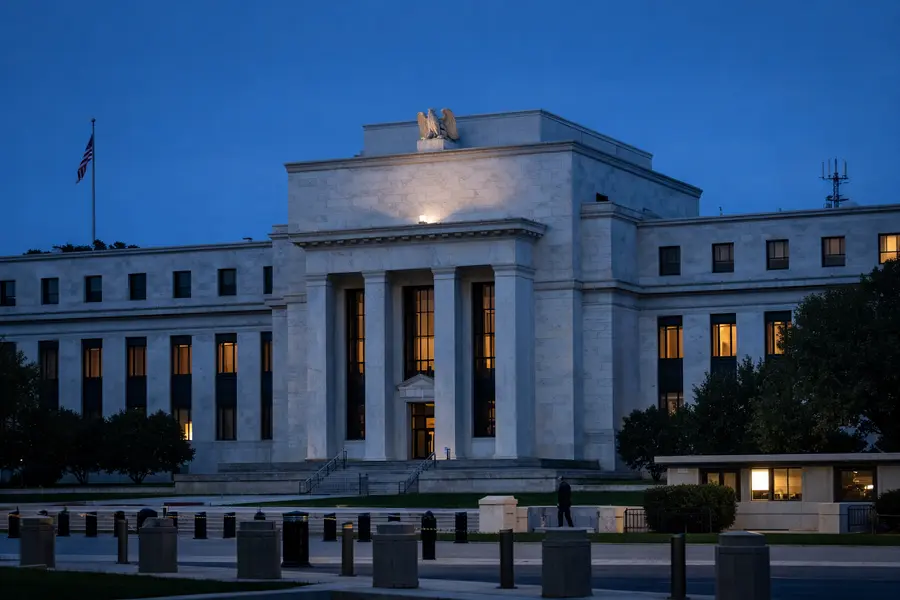
Nasdaq 100 futures climb 0.6% on June 17 as Wall Street braces for Kevin Warsh's debut FOMC decision and a market-moving dot-plot update.
- Nasdaq 100 E-Mini futures (NQM26) rise 0.6% in premarket after the index shed 1.89% on Tuesday; S&P 500 futures add 0.2%.
- The Fed is widely expected to hold rates at 3.50%–3.75%; the dot plot and Chair Warsh's first press conference are the real market catalysts.
- May CPI registered 4.2% year-over-year — a three-year high — with futures markets pricing more than 70% odds of at least one rate hike before year-end.
Lead
Nasdaq 100 E-Mini futures advanced 0.6% to 30,538 on Wednesday, June 17, 2026, as investors positioned ahead of the Federal Reserve's 2:00 p.m. ET rate announcement — the first FOMC meeting 2026 decision under new Chair Kevin Warsh. The move follows Tuesday's sharp retreat, during which the Nasdaq 100 Index fell 1.89% and the S&P 500 closed down 0.57% at 7,511.35. Dow Jones futures moved higher alongside equities, while oil prices edged lower after weeks of elevated readings tied to Middle East supply disruptions.What Happened
Nasdaq futures today opened at 30,329.00 and climbed to an intraday premarket high of 30,540.25, recovering from a session in which semiconductor stocks led a broad technology-driven selloff. S&P 500 futures gained approximately 0.2% in parallel, signaling a measured risk-on tilt before the Fed's midday announcement.The stock market live session will be shaped by events beginning at 2:00 p.m. ET, when the FOMC releases its policy statement alongside the quarterly Summary of Economic Projections (SEP). Chair Warsh holds his inaugural post-meeting press conference at 2:30 p.m. ET.
The Fed Decision: Hold Is Certain, Everything Else Is Not
The Fed rate decision itself carries little suspense. CME FedWatch places the probability of an unchanged federal funds target at 3.50%–3.75% at approximately 97%, marking the fourth consecutive hold. No analyst consensus projects a move in either direction Wednesday.
The real risk is elsewhere. The quarterly dot plot — the grid mapping each FOMC member's individual rate forecast — has emerged as the decisive catalyst. The March iteration penciled in two rate cuts for 2026; the updated version is expected to erase that guidance, with at least three voting members signaling a preference for rate increases before year-end. Fixed-income markets are pricing more than 70% odds of at least one hike materializing before December.
Compounding the uncertainty is Warsh himself. The new chair is widely expected to withhold his own individual dot-plot projection — a historically unprecedented move on a first meeting. How he frames that omission, and whether his opening statement recalibrates the policy tone, will be parsed closely across trading desks.
Economic Backdrop: Inflation Flare and Supply-Side Pressure
The macro environment entering Wednesday's decision is defined by a stubborn inflation surge that conventional monetary tools are ill-suited to resolve quickly.
Labor markets remain firm. May payrolls showed solid job creation and the unemployment rate held near 4.3%, removing any political or economic rationale for easing. The combination of above-target inflation and full employment leaves the FOMC with limited room to maneuver.
Market Reaction and Sector Rotation
Tuesday's decline was concentrated in semiconductor and large-cap technology names, sensitive to both rate expectations and ongoing U.S.-China export-control uncertainty in the advanced chip sector. Wednesday's premarket rebound in those names underpins the Nasdaq recovery.
SpaceX (SPCX) extended its post-IPO rally, rising 3.1% to $208 in premarket trading following the company's June 12 Nasdaq debut — which markets have characterized as the largest IPO in Nasdaq history. The aerospace and defense tilt in equity positioning reflects broader investor allocation toward sectors with geopolitical tailwinds and contracted government revenue.The expectation of a hawkish hold has accelerated a rotation out of long-duration technology positions into financials and industrials — sectors that historically outperform in higher-for-longer rate environments or benefit from elevated defense and infrastructure spending.
What the Dot Plot Signals
The June SEP is likely to mark a decisive shift in the Fed's official forecast trajectory. Where March showed two cuts, the new dot plot is expected to place the FOMC on hold through year-end at minimum, with a vocal subset of members openly projecting a return to tightening. Warsh's decision to withhold his own dot removes one data point while simultaneously sending a meta-signal: the new chair is distancing himself from the framework, and markets must infer his personal rate view from his spoken remarks alone.