Pomegra
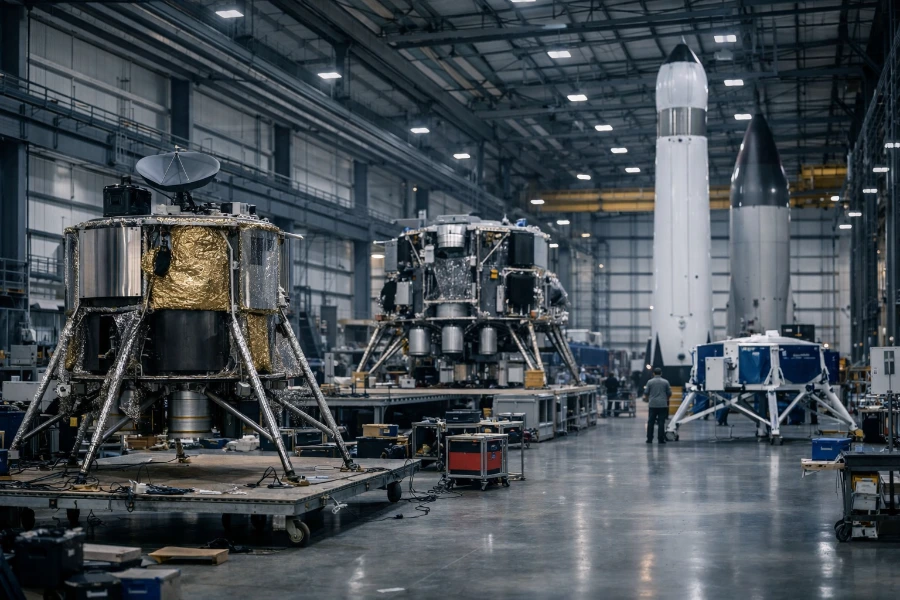
NASA's CLPS 2 contract gives eight firms, including SpaceX, access to up to $10 billion in moon base deliveries over 10 years; SpaceX shares rose about 5.6%.
- NASA named eight companies to CLPS 2, a 10-year contract with a $10 billion ceiling for lunar cargo deliveries.
- SpaceX (SPCX) rose about 5.6% on Monday to close near $142, above its $135 IPO price.
- The ceiling is not guaranteed revenue. Each company must win individual task orders.
Lead
NASA selected eight companies on Saturday, Nov. 7, for the second phase of its Commercial Lunar Payload Services program, known as CLPS 2. The awardees are SpaceX, Blue Origin, Firefly Aerospace, Intuitive Machines, ispace-U.S., Lockheed Martin Space, Northrop Grumman Space Systems and Voyager Technologies. The agency announced the awards at Kennedy Space Center. The multiple-award contract can reach $10 billion over 10 years and is meant to supply NASA's planned Moon Base with larger landers and cargo capacity.
What Does the CLPS 2 Contract Cover?
CLPS 2 is a multiple-award, indefinite-delivery/indefinite-quantity contract, so NASA commits to no minimum spending. The eight companies will compete for task orders covering lunar deliveries of cargo, instruments and infrastructure. Split evenly, the ceiling works out to about $125 million a year per company, but awards will not be distributed evenly.
NASA also raised the value of the original CLPS contract from $2.6 billion to $4.2 billion. That contract runs through November 2028 and can be extended five years, to November 2033. Administrator Jared Isaacman described the strategy as building the Moon Base "mission by mission."
What Else Did NASA Award?
The announcement included awards beyond CLPS 2:
- Blue Origin received a $94 million base contract, with a $140 million performance option, to deliver the PROMISE rover to the lunar south pole. It will use its Mark 1 lander, with launch targeted for late 2028.
- Launch services: Six task orders worth about $1.3 billion went to Arrow Science and Technology, Blue Origin and Impulse Space under a contract with a $5 billion ceiling.
- SpaceX won a 2028 Starship mission to deploy cislunar communications infrastructure.
- Infrastructure: Honeybee Robotics, Redwire and Yank Technologies received awards for energy storage, power generation and wireless power transfer.
How Did SpaceX Stock React?
SpaceX shares rose about 5.6% on Monday, Nov. 9, closing near $142 after a prior close of about $134. The stock traded between roughly $135 and $143, on volume of more than 100 million shares. The Nasdaq Composite gained about 2.7% the same session. SpaceX went public at $135 in June and trades about 37% below its 52-week high of $225.64.The move added roughly $106 billion to SpaceX's market value. The company was also reported to have proposed a $24 billion gas-fired power and computing facility at Starbase, Texas, which contributed to the day's sentiment.
Why Did Other Space Stocks Rally?
Smaller space companies moved more sharply because a single task order can matter more to them. Firefly (FLY), Intuitive Machines (LUNR) and Voyager (VOYG) have a combined valuation of about $8.5 billion. Space stocks broadly have climbed 20% to 60% since the Nov. 5 close, with Firefly leading.
Rocket Lab (RKLB) was not among the eight awardees. It still gained about 28% over two sessions, one of its strongest two-day runs in two years, as the sector traded as a group. AST SpaceMobile (ASTS) rose 14.1% on Monday.
Lockheed Martin (LMT) and Northrop Grumman (NOC) are diversified defense contractors. The contract is a small part of their revenue, so it is less likely to move their shares than those of pure-play lunar firms.
What Comes Next for Lunar Deliveries?
Task orders are the next milestone. NASA will issue them mission by mission, and the pace and size of the awards will determine how much of the $10 billion ceiling is used. The early marker is the late-2028 PROMISE launch, an 18-month mission, along with SpaceX's Starship communications deployment the same year. Contract ceilings in this program have been raised before, as the move from $2.6 billion to $4.2 billion for the original CLPS shows.
Outlook
CLPS 2 widens the pool of lunar delivery providers from the original program and sets a 10-year framework for the Moon Base. SpaceX's gain reflected its place in that pool, though revenue depends on task-order wins rather than the headline ceiling. The next test for the group is the first CLPS 2 task orders and the 2028 mission schedule.
Mentioned tickers: SPCX, FLY, LUNR, VOYG, LMT, NOC, RKLB, ASTS