Pomegra
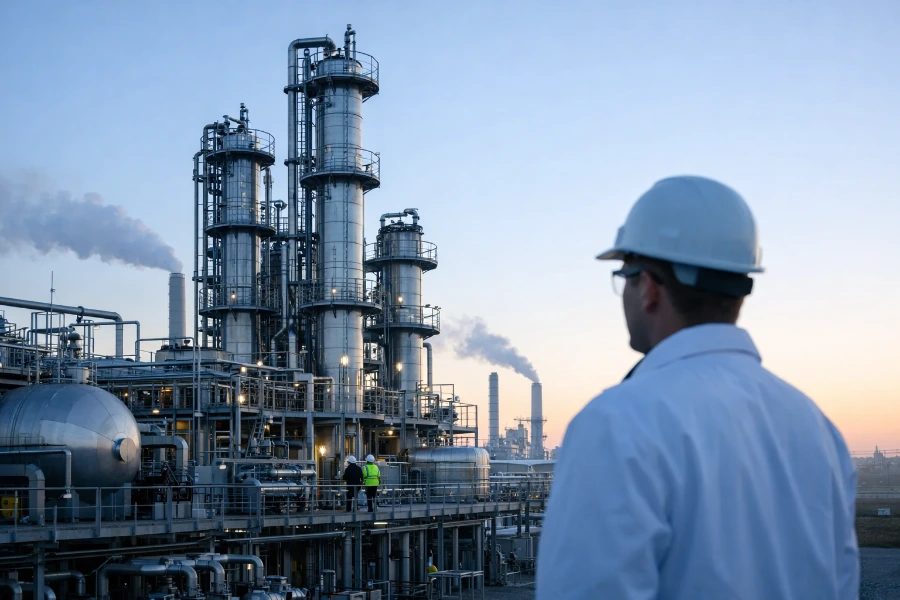
FluoRok, an Oxford spinout, has raised a $30 million Series A led by Orano Venture Fund and Supernova Invest to make fluorochemicals without hydrogen fluoride.
Key Takeaways
- FluoRok closed a €26.6M ($30M, about £22.8M) Series A, announced November 5, 2026.
- Orano Venture Fund and Supernova Invest led; Bidra Innovation Ventures joined.
- Funds go to demonstrator plants, hiring and customer validation. Valuation is undisclosed.
Lead
FluoRok, a UK company spun out of the University of Oxford, raised a €26.6M ($30M) Series A on November 5, 2026. The round was led by Orano Venture Fund and Supernova Invest. It will take the company's process for making fluorochemicals without hydrogen fluoride (HF) from pilot production toward industrial scale. The company did not disclose a valuation.
What Does FluoRok Actually Make?
FluoRok makes two product families: inorganic fluorides for pharmaceutical and agrochemical customers, and lithium hexafluorophosphate (LiPF6), the dominant salt in lithium-ion battery electrolytes. Both are conventionally derived from hydrofluoric acid, which is produced from fluorspar and is among the most hazardous chemicals in industrial use.
The company was founded in 2022 by Oxford chemistry professor Véronique Gouverneur and Gabriele Pupo, now chief executive. The technology grew out of Pupo's postdoctoral research at Oxford.
How Does the Process Avoid Hydrogen Fluoride?
FluoRok replaces the HF step with a patented mechanical activation process that runs on standard industrial equipment. It can use lower-grade fluorspar or fluoride recovered from industrial waste streams. That removes the need for the specialised HF handling infrastructure that, in practice, confines conventional production to a small number of large plants.
The claim is commercially significant if it holds at scale. It is also unproven at that scale: no customers have been named, and the funding is earmarked for customer validation.
Who Is Backing the Round?
Beyond the two lead investors, Bidra Innovation Ventures joined the round. Existing investors returned: Oxford Science Enterprises, BGF, Green Generation Fund, Volta Energy Technologies and the University of Oxford. Further participants reported include CPI Enterprises, EverQuest Capital Partners, WS Investment and angel investors.
The round included a $1.3 million Innovate UK grant. FluoRok had previously raised about $14 million in equity and more than $13 million in UK and European public funding. Total equity raised now stands at roughly $44 million.
Pupo described the round as oversubscribed and called it a testament to the strength of the technology. An oversubscribed label is common in press releases and tells little without a valuation. The more informative signal is the repeat participation from existing backers alongside a nuclear-fuel-cycle group's venture arm in the lead.
Why Does Supply Chain Policy Matter Here?
Policy matters because Europe depends almost entirely on China for LiPF6, and fluorspar itself is sourced from a handful of countries, predominantly China. Reshoring initiatives such as the EU Critical Raw Materials Act, the US Inflation Reduction Act and the UK's DRIVE35 programme all prioritise domestic battery-material production.
DRIVE35 is already funding a UK demonstrator for LiPF6 production. FluoRok leads that project with the Centre for Process Innovation (CPI) and Coventry University. The plant location was not specified in the announcement.
What Comes Next for FluoRok?
The next milestone is proof of unit economics at demonstrator scale. A process that avoids HF must still match incumbent cost and purity, particularly for battery-grade LiPF6, where electrolyte makers qualify suppliers slowly and cautiously.
Three variables will shape the outcome:
- Whether demonstrator output passes battery-grade purity specifications.
- Whether a cell or electrolyte maker signs a supply agreement.
- Whether policy support translates into offtake rather than grants alone.
A Series B would likely hinge on the first of these. Competing against Chinese producers with entrenched scale and low costs leaves little margin for a technology that is merely comparable.
Outlook
FluoRok enters its next phase with about $44 million in total equity raised, a state-backed demonstrator project and a lead investor group with industrial and strategic ties. Its pitch is safer and more local fluorochemical supply, but the evidence so far is pilot-scale. The coming 12 to 24 months of demonstrator results and customer validation will determine whether the round was an early bet on a durable process or a premium paid for policy tailwinds.