Pomegra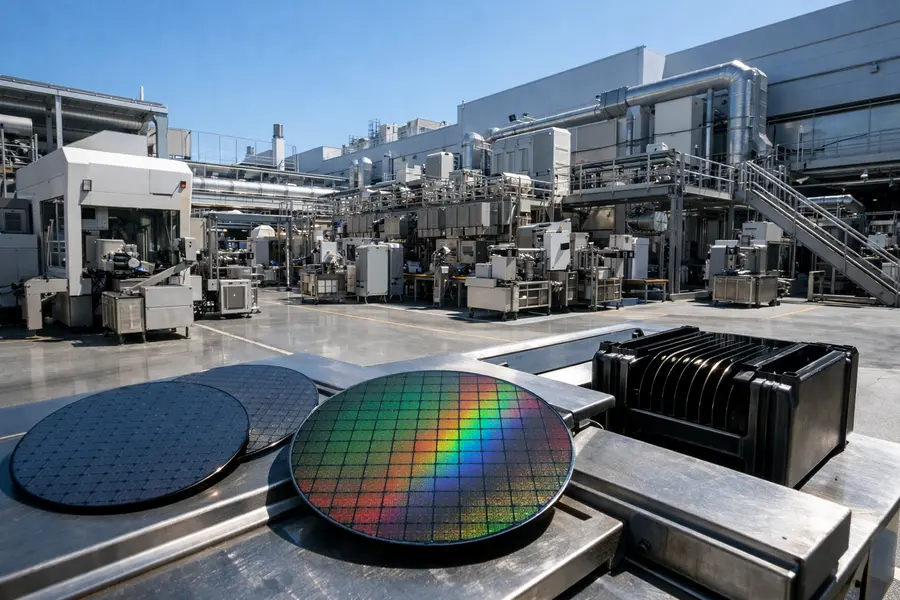
Micron Technology stock slid as much as 5% after China's CXMT flagged denser server memory by year-end, pulling Sandisk and other memory shares lower.
- Micron fell as much as 5% to about $942 on Oct. 13, closing down 3.6% at $953.19 after a 3.9% drop the day before.
- CXMT plans a server memory product on a denser 4F² cell design before the end of 2026.
- Sandisk fell about 4% and SK Hynix closed 10% lower in Seoul, as the selloff spread across memory names.
Lead
Micron Technology (MU) shares fell as much as 5% in New York trading on Tuesday, Oct. 13, to around $942, as investors weighed new competition from China's ChangXin Memory Technologies (CXMT). The stock closed at $953.19, down 3.62%, after ending Monday at $989.04, its first close below $1,000 since mid-September. The decline left the Micron Technology stock roughly 24% below its June record near $1,255, though it remains far higher for the year.What Did CXMT Announce?
CXMT said it has made progress on a 4F² cell architecture, a design that packs more memory cells into the same chip area, and will launch a denser server memory product based on it before the end of 2026. The company's president made the remarks at a chip conference in Shanghai over the weekend.
Higher density lowers the cost per bit and lets a manufacturer sell more capacity from each wafer. That matters in server memory, the most profitable segment of the DRAM market and the one fed by artificial intelligence spending. CXMT has not yet demonstrated large-scale production of the new design.
Why Did Sandisk and Other Memory Stocks Fall?
Sandisk (SNDK) fell about 4% to roughly $1,422 because memory stocks trade as a group, even though the company sells NAND flash storage rather than the server DRAM CXMT is targeting. Western Digital (WDC) and Seagate (STX) also slipped, and the Roundhill Memory ETF (DRAM) dropped about 5% to $51.73. The Invesco QQQ Trust (QQQ) fell 0.7%.
The reaction was sharper in Asia. SK Hynix closed 10% lower in Seoul and Samsung Electronics fell 7.4%. Those two companies and Micron control most of the world's DRAM supply, and all three have benefited from a shortage that lifted memory prices through 2026.
Why Is CXMT Seen as a Growing Rival?
CXMT is China's largest DRAM maker and became the country's most valuable listed company after its Shanghai debut in late July. The listing gave it access to capital for expansion at a time when Beijing is pushing for self-sufficiency in chips.
The company has also said it will begin producing high bandwidth memory, the stacked DRAM used in AI accelerators, around the end of 2026. Its first products are expected to be one to two generations behind the HBM4 now being introduced by leading rivals. The prevailing view is that Chinese producers trail on advanced memory and face technology hurdles in the near term, but that a lower-cost supplier could erode pricing power over time.
Strategic Context
The selloff came after Micron reported record fiscal fourth-quarter revenue of $54.23 billion at the end of September, lifting fiscal 2026 revenue to $133.19 billion. It guided fiscal first-quarter 2027 revenue to $61.5 billion, plus or minus $1.5 billion. The board authorized additional share repurchases on Oct. 8.
Those figures put the move in perspective. Valuations built on tight supply and rising prices are sensitive to any sign that supply could expand, and the 4F² announcement was read as such a signal. Micron has also been hit by earlier CXMT news, including sharp declines around the Chinese company's July listing.
What Comes Next for Memory Stocks?
The next test is whether CXMT delivers its server product on schedule and at volume. Production yields, customer qualification and access to chipmaking equipment under U.S. export controls will determine how quickly any new design reaches data centers outside China. Memory contract pricing and AI capital spending plans from large cloud customers remain the main drivers for Micron, SK Hynix and Samsung through the end of the year.
Outlook
Micron's record earnings and long-term supply agreements remain intact, but sentiment has shifted from supply scarcity to the durability of pricing. A visible CXMT product launch before year-end would keep competition at the center of the memory debate, while a delay would likely ease pressure on the group.
Mentioned tickers: MU, SNDK, WDC, STX, QQQ, DRAM